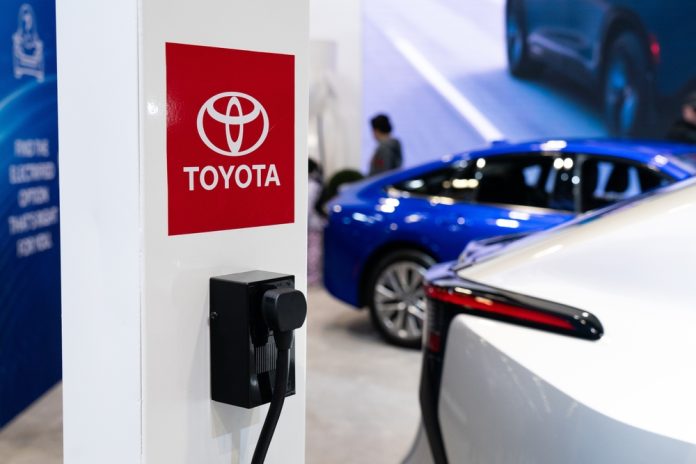
The UK Government and Toyota are joining forces in a landmark £30m investment to accelerate the development of zero-emission vehicles.
The initiative, led by Toyota in partnership with British academia and emerging tech firms, aims to supercharge electric vehicle innovation, support skilled engineering jobs, and strengthen Britain’s position at the forefront of clean automotive technology.
Commenting on the partnership, UK Industry Minister Chris McDonald said: “This shows the power of our partnership with industry, driving innovation and helping investors build a globally competitive electric vehicle supply chain in the UK.
“Economic growth is our number one priority, and by funding our world-leading auto sector, our modern Industrial Strategy is creating the right conditions for increased investment, bringing growth, supporting jobs, and opportunities to every part of the UK.”
Government-industry collaboration to drive electric mobility
Backed by £15m in government support and matched by private investment, the project will focus on advancing the feasibility of next-generation zero-emission technologies.
The funding, part of the Advanced Propulsion Centre UK (APC) Collaborative Research and Development programme, is designed to unlock further private investment and strengthen the country’s growing green manufacturing ecosystem.
This move aligns with the government’s Plan for Change, which outlines its commitment to delivering cleaner transport and supporting high-quality engineering jobs across the UK.
Toyota and UK partners spearhead innovation
At the heart of this initiative is Toyota, working alongside a network of project partners including the University of Derby and Elm Mobility Limited.
Together, they will combine research excellence with entrepreneurial agility to explore electric micro-mobility vehicles – compact, efficient, and sustainable transport solutions tailored for urban environments.
The collaboration will not only drive the development of cutting-edge zero-emission vehicles but also nurture specialist skills within the UK’s advanced manufacturing sector.
This is expected to create and sustain hundreds of highly skilled jobs while positioning Britain as a hub for clean vehicle design and production.
Cutting-edge technology for smarter, greener travel
The upcoming vehicle prototype will integrate several pioneering features, including a solar-powered roof for extended energy efficiency, advanced connectivity systems for seamless smart-city integration, and the use of lightweight, recyclable materials to reduce environmental impact.
These innovations represent a significant step toward sustainable, circular manufacturing and more efficient electric mobility.
Supporting the UK’s long-term zero-emission goals
This funding comes as part of a wider strategy to strengthen the UK’s zero-emission vehicle manufacturing supply chain.
Earlier this year, the government launched DRIVE35, a £2.5bn programme running until 2035.
The initiative provides capital and R&D support for projects ranging from gigafactories and start-ups to strategic vehicle prototypes, underpinning the UK’s ambition to become a world leader in green automotive technology.
Rik Adams, Innovation Delivery Director at APC, added: “APC is very proud to be able to support Toyota with this EV urban mobility project, which embodies much of what DRIVE35 aims to support – innovation, UK competitiveness, productivity, and zero emission vehicles.
“As an integral part of the UK automotive industry, we are delighted that Toyota is partnering with some of our innovative SME businesses, such as ELM, and our world-class academics from the University of Derby to deliver a cutting-edge vehicle concept designed, developed, and tested in the UK.”
Powering a cleaner future
By championing innovation and investing in collaborative research, the UK is paving the way for a new era of zero-emission vehicles.
This partnership between government, industry, and academia is more than an investment in technology – it’s an investment in the future of sustainable transport, cleaner air, and a stronger, greener economy.