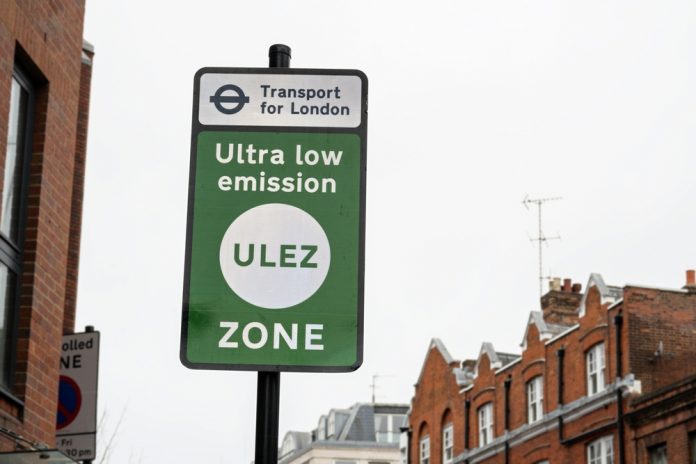
London air pollution has fallen sharply since the city’s Ultra Low Emission Zone (ULEZ) came into force in 2019, according to new research that reveals the policy’s far-reaching impact on cleaner air.
The study, led by the University of Birmingham, shows that harmful nitrogen pollutants have dropped dramatically across the capital – even in areas outside the zone’s original boundaries.
While the findings confirm that ULEZ has delivered real progress in tackling toxic emissions, scientists warn that London’s air still exceeds safe levels set by the World Health Organization (WHO), meaning the fight for truly clean air is far from over.
Significant reductions in toxic emissions
Researchers analysed air quality data from 124 monitoring sites across the city and found that nitrogen dioxide (NO₂) and nitrogen oxides (NOx) – two of the most harmful pollutants produced by vehicle emissions – fell sharply following ULEZ’s debut.
Within just three months of its launch in April 2019, NO₂ levels dropped by almost 20%, while NOx saw a reduction of nearly 29% at roadside sites in central London.
The impact extended well beyond the zone itself. Areas later included in the 2023 ULEZ expansion had already begun experiencing cleaner air, suggesting a spillover effect from the central zone.
However, when researchers assessed the latest expansion, they found no significant additional reductions – a phenomenon they attribute to what they call the ‘anticipation effect,’ where drivers upgraded vehicles in advance of the policy’s rollout.
Cleaner cars, fewer polluting vehicles
The study drew on Transport for London (TfL) data to assess how driver behaviour evolved alongside the policy.
When ULEZ was first introduced, 39.1% of vehicles in central London were non-compliant with emissions standards, meaning they were subject to daily charges. Within three months, that number had fallen to 27.5%.
By 2023, ahead of the zone’s expansion, just 7.4% of vehicles across Greater London were classed as non-compliant, falling again to 4.2% within three months of the new boundaries taking effect.
This steady decline highlights how ULEZ has accelerated the transition toward cleaner vehicles, reshaping the city’s transport landscape.
Machine learning offers new insight
To ensure accuracy, the University of Birmingham team used advanced machine learning models to separate the effects of weather and other environmental variables from the direct impact of ULEZ.
By analysing several years of hourly pollution data, the researchers could isolate the influence of the policy itself – confirming that the 2019 ULEZ introduction was the key driver of improved London air pollution.
The study’s lead author, PhD researcher Chengxu Tong, noted that these benefits were widespread, demonstrating that environmental policies in one part of the city can generate wider regional improvements.
Progress, but not yet clean air
Despite the clear success of ULEZ in curbing harmful emissions, the research underscores that air pollution in London still exceeds WHO guidelines.
Fine particulate matter (PM2.5) – tiny particles capable of entering the lungs and bloodstream – remains stubbornly high across the capital.
According to co-author Dr Suzanne Bartington, more comprehensive action is required to tackle pollutants not directly addressed by the current ULEZ framework.
She said: “While it is encouraging that ULEZ did reduce NO2 and NOx pollution across London over the study period, it is an ongoing cause for public health concern in London and many major cities around the world.
“It’s important to highlight that the current ULEZ approach does not fully address significant traffic-related public health issues, such as PM2.5 pollution.
“As a result, we need to see a modal shift to more active travel and public transport to reduce the number of vehicles on the road, which could reduce non-tailpipe-related PM2.5 emissions and improve public health.
The road ahead
The University of Birmingham team concludes that the ULEZ represents an important milestone in the fight against London air pollution, but not a complete solution.
Industrial, commercial, residential, and agricultural sectors must also take coordinated action to bring London’s air quality in line with global health standards.
As the capital continues to expand its environmental policies, the study offers both a cause for optimism and a reminder that the road to cleaner air is far from over.