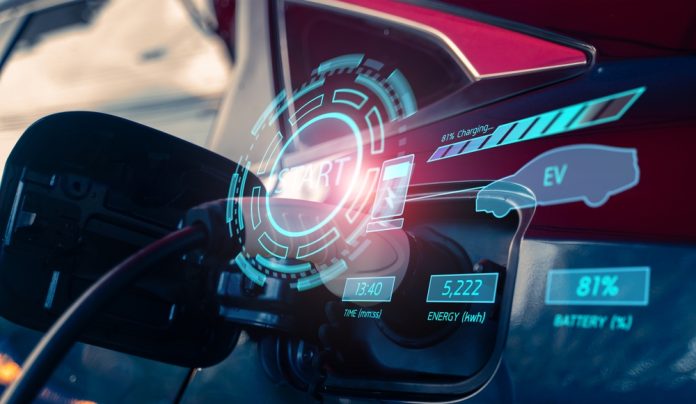
Ellie Gabel discusses how EV lightweighting – through smarter materials and AI-driven design – is boosting range and efficiency without bigger batteries.
Every kilogramme trimmed from an electric vehicle (EV) directly translates to more kilometres of range. This simple physics advantage is driving a new wave of design innovation.
Instead of relying solely on bigger or denser batteries, EV engineers now pursue efficiency through smarter material choices and structural rethinking. Automakers are redesigning chassis geometry, which reduces the need for redundant reinforcements.
This integration cuts mass and simplifies assembly, lowers costs, and boosts overall vehicle performance. As energy efficiency becomes the defining metric of next-generation mobility, EV lightweighting is emerging as one of the most effective strategies for pushing range and sustainability further without adding complexity.
How weight influences energy use
Lighter cars move more easily and respond better in nearly every way. With less mass to push forward or slow down, they accelerate faster, brake more efficiently and keep their components cooler under load. These advantages are achieved through detailed simulations of drag, inertia and rolling resistance to understand how every gram affects performance.
In fact, a 10% reduction in vehicle weight can translate into a 6% to 8% improvement in fuel economy or range, depending on design and drive cycle. Engineers view weight reduction as a powerful multiplier, which enhances handling and thermal stability without larger batteries or more complex systems.
Reinventing materials for mobility
The competition to make EVs lighter has become a science showdown among different materials. Each brings its own trade-offs.
For example, aluminium-lithium alloys offer excellent weight savings, carbon fibre delivers unmatched stiffness, and high-strength steels remain the most cost-effective option for mass production.
What’s remarkable is how these materials can now work together. New adhesive bonding and laser joining technologies let engineers combine metals and composites that were once impossible to fuse.
Tesla’s single-piece aluminium gigacasting showcases this shift, which replaces dozens of welded parts with one solid structure that reduces mass and manufacturing complexity.
Beyond metals, recyclable thermoplastics and graphene-reinforced polymers emerge as sustainable alternatives as they deliver strength and durability without the environmental burden.
Smarter structures and design tools
Engineers now harness artificial intelligence (AI)-based generative design tools to “grow” vehicle components that meet precise strength requirements while using the least amount of material possible.
Instead of manually drafting parts, they feed algorithms data on load paths, safety factors and material limits, which allows the software to evolve shapes optimised for performance and weight.
Digital twins bring these concepts to life virtually, simulating crash impacts, vibrations and heat transfer before any metal is formed. These models also use predictive analytics to uncover hidden issues long before production begins.
These issues include potential safety vulnerabilities, structural fatigue zones, or user interface flaws in control systems.
Additive manufacturing complements this approach, producing intricate lattice-structured components that are lighter and stiffer than stamped metal parts.
With 3D-printed carbon fibre, engineers can achieve greater weight reduction while lowering material waste and production costs, setting a new benchmark for efficient EV design.
The battery’s double role
Battery packs now function as the heart and backbone of modern EVs, serving as energy storage systems and structural components.
This integration exposes them to various stressors, such as vibration, heat and mechanical strain, that vary depending on whether the vehicle is built for consumer, commercial or industrial use.
Carbon-fibre battery shells enhance protection while reducing overall mass, which marks a step toward safer, lighter EV platforms.
At the same time, composite enclosures are evolving to include built-in cooling channels and impact protection layers moulded into a single piece, improving durability.
However, combining energy storage and structure presents challenges in safety and repairability, as engineers must design systems that remain easy to service and resilient under extreme conditions.
Scaling lightweight manufacturing
Materials that perform beautifully in the lab often face a tougher test on the factory floor, where cost, scalability and consistency determine real-world viability.
For example, carbon fibre remains one of the strongest and lightest materials available. Still, its high cost and slow production cycles continue to limit widespread use in mass-market EVs.
To bridge that gap, automakers are turning to new “hot-stamped” steels that approach carbon fibre’s strength-to-weight ratio at a fraction of the cost.
Meanwhile, closed-loop recycling programmes are gaining traction, allowing manufacturers to recover and reuse aluminium and carbon fibre without compromising quality.
Material innovation hinges on finding the sweet spot between manufacturability, cost efficiency and life cycle sustainability, which ensures every advancement makes sense on the assembly line.
What’s next for lightweight EVs
Recent advances in EV engineering highlight Hyundai’s use of an ultra-high-strength steel frame designed to enhance safety, stiffness and stability while maintaining a low centre of gravity for smoother, more controlled handling.
This construction approach reflects a growing shift toward holistic vehicle design, where structure and performance are developed hand in hand rather than as separate priorities.
The next phase of innovation will likely merge EV lightweighting with solid-state battery technology, which enables higher energy density, improved crash protection and greater structural rigidity.
As these technologies mature, future EVs will no longer be assembled as a patchwork of components shaved for weight. They’ll be conceived as fully integrated systems where every material choice and design element contributes to range and driving dynamics.
The art of doing more with less
EV lightweighting goes beyond simply removing metal. It’s a mindset rooted in smarter, more integrated design thinking.
Every gram saved is the result of close collaboration between materials scientists, AI-driven engineers and advanced manufacturing experts. They redefine how EVs are built, proving efficiency is engineered, not added on.