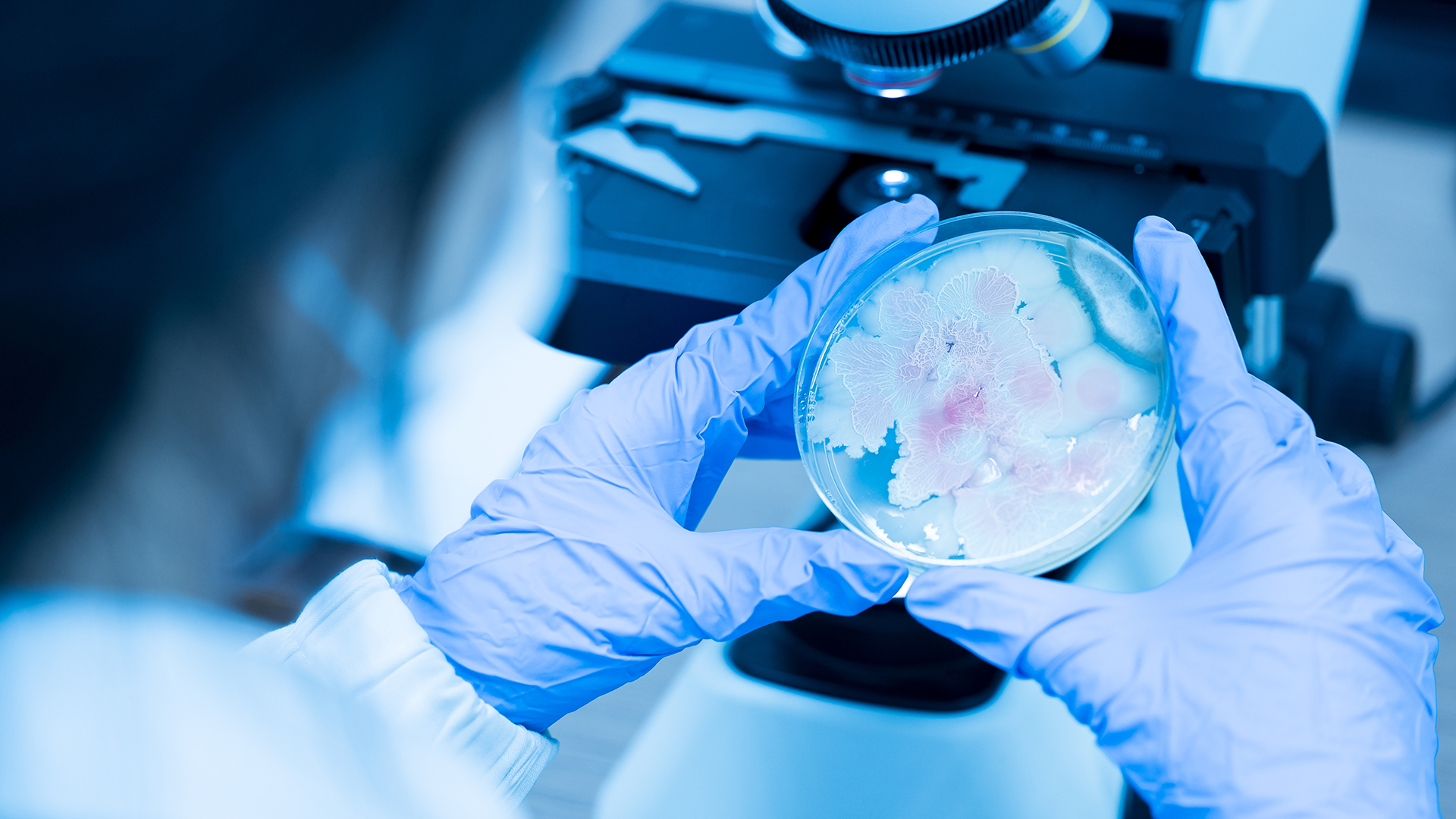
Work in the X-Food Research Laboratory is using co-culture fermentation as a platform to develop eco-friendly packaging materials.
In the processing of crustaceans like lobster, shrimp, and crab for human consumption, about 45-60% of the total mass is waste. In addition, only a part of this waste is used as animal feed or fertilisers, whereas the rest is often dumped in landfills or in the ocean, which can be a potential cause of pollution. Thus, shellfish waste management is a significant problem. The non-edible exoskeleton of crustaceans, such as lobster and shrimp, are rich sources of calcium, protein, and chitin.
Chitin is a natural polysaccharide that serves as the structural backbone of crustacean exoskeletons. Chitin and its derivative, chitosan, possess very good film-forming, antimicrobial, and biodegradable properties, making them excellent potential candidates for sustainable packaging materials. Conventional methods of chitin extraction involve a chemical process that gives rise to corrosive chemical waste which creates a disposal problem and can cause environmental pollution.
Disadvantages of chemical chitin extraction
Chemical methods of extraction include grinding the shells and exposing them to concentrated acids (hydrochloric acid) and alkalis (sodium hydroxide) for demineralisation, deproteinisation, depigmentation (using acetone or ethanol), and deacetylation to form chitosan and depolymerisation to form chitosan oligomers. The conventional chemical extraction methods rely on concentrated acids and alkalis, which produce large volumes of hazardous wastewater and degrade the quality of the recovered biopolymer. To address these issues, work in the X-Food Research laboratory is using microbial fermentation as a more sustainable pathway to recover chitin while minimising the environmental impact.
The X-Food method
X-Food Research Laboratory’s two-stage fermentation process mimics natural biodegradation but under controlled conditions. In the first stage, lactic acid bacteria are introduced into a slurry of finely ground lobster shells and then mixed with a carbohydrate substrate and fermented for several hours. During fermentation, these microbes produce organic acids, mainly lactic acid, which gradually dissolves the calcium carbonate minerals embedded in the shells. This mild acidification step, known as biological demineralisation, effectively softens the shell matrix without the need for harsh chemical reagents.
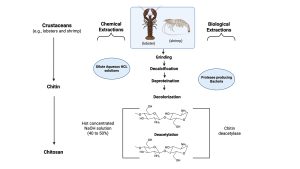
Once demineralisation is complete, the material undergoes biological deproteinisation – the second phase of the process. In this step, the protease-producing bacteria secrete enzymes that break down the protein components which are tightly bound to the chitin fibres. This step releases the chitin polymer while allowing for the recovery of proteins that can themselves be repurposed in other applications, such as animal feed or fertiliser.
The process is also streamlined using an approach known as co-culture fermentations, in which more than one type of lactic acid bacteria is introduced in the mixture, and the microbial species operate synergistically during fermentation. Co-fermentation not only reduces processing time but also has the potential to lower operational costs and simplify downstream purification. At the end of fermentation, the extracted chitin is carefully washed, dried, and purified, then its properties are characterised. These analyses are needed to help us better define the key parameters that influence the functionality of the packaging material applications. The purified chitin biopolymer is then blended with protein-rich components from other food manufacturing processes, such as soy protein and other plant sources to develop composite materials suitable for packaging. These blends are cast into thin films and evaluated for their tensile strength, flexibility, water vapour permeability, and biodegradability.
Our preliminary results indicate that fermentation-derived chitin and chitosan films show good promise, and, in some respects, the films have comparable properties to conventional packaging materials, but more work needs to be done to improve the strength and flexibility of the films. The combination of lobster shell waste and protein by-products exemplifies a circular system, where waste-streams can potentially be converted into high-value, sustainable materials.
Environmental benefits of microbial processes
Although microbial processes currently require longer processing times than chemical methods, they offer significant environmental advantages, including lower energy input, and reduced chemical waste. Thus, work beyond the lab should focus on exploring the scalability and economic feasibility of fermentation-based chitin extraction. These processes should integrate chitin extraction with the recovery of proteins, pigments, and minerals, thus maximising the overall resource efficiency of seafood processing. With the growing demand for eco-friendly packaging and increasing regulatory pressure to reduce single-use plastics, microbial co-culture fermentation of shell waste could potentially play a central role in advancing innovation in the sustainable materials sector.
Please note, this article will also appear in the 24th edition of our quarterly publication.