Centennial College is building the next generation of hospitality leaders – ready to meet the challenges and opportunities of an industry experiencing a global resurgence.
During a time of changing social and economic landscapes, one thing remains constant: people still seek connection, comfort, and care. And that’s exactly what the hospitality industry brings – whether through memorable meals, welcoming hotel stays, or transformative travel experiences. But what kind of skills does it take to lead in an industry so dependent on human touch, where digital transformation and cultural complexity abound?
Centennial College believes the answer lies in an education that is forward-thinking, entrepreneurial, and deeply rooted in real-world experiences. And they have a powerful story to share on how successful hospitality education sparks innovation, nurtures changemaking, and builds the leaders our industry needs next.
Centennial College’s leadership in Canadian hospitality
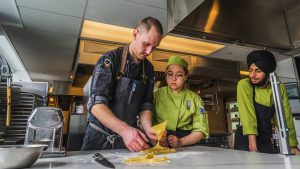
Centennial College is the first public college in Ontario, Canada. Its curriculum is shaped by input from over 1,500 industry leaders, its students have received the College Award of Distinction at Skills Ontario for seven consecutive years, and it has ranked number one in Canada for student engagement in applied research for the past four years. The College’s world-class training is reflected in its hospitality, tourism, and culinary arts programmes supported by cutting-edge experiential learning facilities – including a student-run full-service restaurant and events centre, hotel-style guest rooms, state-of-the-art culinary labs, and interactive classrooms – all taught by faculties with rich industry experience, having worked in top-tier establishments across Canada and internationally.
Centennial College’s School of Hospitality and Culinary Arts’ (SHCA) Professor Cyrus Cooper is one of the School’s many top-tier specialists who brings a wealth of experience to the classroom, having led a variety of restaurant and event operations with premier Canadian companies such as Oliver & Bonacini Hospitality, Pusateri’s Fine Foods, Granite Club, and the Royal Agricultural Winter Fair.
Professor Cooper, who has now taught full time at Centennial for the past eight years and is the Program Coordinator for the college’s Hotel, Resort and Restaurant Management programme, expressed: “There’s a growing opportunity for professionals to not only lead, but thrive within the hospitality industry. It goes beyond the traditional roles of hotel manager or restaurant manager.”
At Centennial, the classroom evolves with the industry. The college’s faculty champion this perspective, as seasoned professionals who bring decades of personal industry experience into their teaching. Students discover that hospitality today extends well beyond restaurants and hotels – encompassing entrepreneurship, event management, marketing, finance, and digital innovation, including the growing influence of social media.
“Each of our professors has brought in fresh ideas that have worked in the industry and adapted them for the classroom,” said Professor Cooper. “They’re constantly asking, ‘How can this help our students?’ so that what we teach stays relevant and immediately applicable.”
Through an educational approach that blends academic excellence with deep experiential learning, students stay connected to the industry’s latest trends — creating the perfect recipe to thrive in the new era of hospitality.
Shaping careers through work-integrated learning
Centennial’s hospitality programmes are renowned for integrating classroom learning with hands-on experience, including capstone projects, business startups, and other work-integrated learning (WIL) programmes where students work with real businesses to apply what they’ve learned. These partnerships include top employers in the Greater Toronto Area, providing an invaluable window to the real world that often shapes Centennial students’ future careers.

“We’re very proud of our work-integrated learning collaborations that we have with other institutions as well as with diverse restaurants, hotels and destination marketing organisations,” said Professor Cooper. “Students have an opportunity to get out there into industry and really apply their knowledge from what they’ve learned in the classroom.”
Entrepreneurship education: The magic ingredient
Beyond its industry collaborations, Centennial College also offers in-house WIL opportunities where students embark on an entrepreneurial project over the semester and develop their own product by the end – innovating within the industry rather than just joining it. This focus on cultivating students’ entrepreneurial mindset is what sets Centennial’s hospitality programmes apart.
Professor Cooper sees students develop this competitive edge firsthand. “At Centennial, not only are our students graduating with a toolbelt of knowledge and skills in various areas within hospitality, but they’re also graduating with this business acumen that is very important – the entrepreneurial aspect of the industry,” he expressed. “It’s something we’re really proud of.”
“In my programme, there is an entrepreneurial capstone where students work in a group to solve a problem within the industry and produce a product or service,” explained Professor Cooper. “They’re going through the Lean Startup methodology process where they actually go from an idea to the real-world market, and they’re learning all of that over the course of a 14-week work-integrated learning.”
In this way, students don’t just learn how to manage restaurants and hotels; they also learn how to market them, innovate within them, and even launch their own ventures. And with Centennial’s School of Hospitality and Culinary Arts being part of the College’s newly founded Faculty of Global Business and Creative Industries, this unique integration of hospitality expertise and entrepreneurial thinking will only grow stronger.
Baking sustainability into every layer of hospitality
The final piece in Centennial’s trifecta, alongside experiential learning and entrepreneurship, is sustainability: teaching students how to channel hospitality to spark social and environmental change.
Peer Sustain, a pioneering WIL initiative, transforms students’ theoretical culinary knowledge into practical application towards the UN Sustainable Development Goals. It has led to the development of many in-house, student-created, market-ready products such as:
- Eco Culinary Chef’s Soap created with repurposed wood ash and food waste, showcasing how value can be created through resourcefulness.
- Indigenous-inspired Woodland Berry Herbal Tea blends locally sourced and foraged ingredients with traditional Indigenous ways of knowing and doing, offering a unique learning experience about stewardship of the land and cultural heritage.
- Chipotle Espresso Spice Rub combines chipotle peppers from the community garden with repurposed espresso grounds, teaching students about the power of flavour repurposing and creative culinary problem-solving to minimise waste.
- Garden Soil Nutrient Enhancer crafted from composted food waste, espresso grinds, and wood ash from their oven – turning scraps into rich soil nutrients and instilling the value of sustainable soil management for ecosystem health.
- House-Crafted VQA Vinegar made of surplus wine from the college’s bar and beverage programme, turning potential waste into high-value products.
Other student innovations include wild rose apple jelly made from campus-foraged apples and rosehips, orchard crabapple jelly sweetened with honey from Centennial’s own rooftop apiary, and ketchup smoked in-house using sustainable wood and repurposed tomato and fruit scraps — all integrating local sourcing, waste reduction, artisanal techniques, and biodiversity into the learning experience.
Another recent WIL initiative is the Cook’n Feed programme, which engages students in transforming surplus ingredients from SHCA’s culinary labs into over 100 fresh meals and soups sold weekly for $1 and $2, directly addressing food insecurity within the student community.
Each of these innovative programmes immerse students on a comprehensive entrepreneurial journey, from conceptualisation to creating and marketing their retail food products and sustainable solutions. Along the way, students develop their creativity, critical thinking, technical skills, and passion for changemaking. The result is a generation of hospitality professionals who see environmental and social responsibility as essential ingredients in the recipe for success.
Investing in talent for a resilient future
Ultimately, Centennial’s hospitality education centres on developing skilled, adaptable professionals ready to thrive in the dynamic, global hospitality industry. It’s not just about filling jobs – it’s about shaping a workforce grounded in empathy, agility, and changemaking to one of the world’s most people-centric industries.
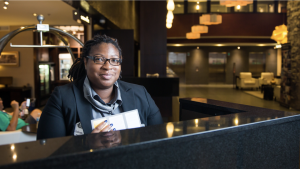
Take 2024 graduate Muriel Assandé, who attended Centennial’s Hospitality and Tourism Administration programme as an international student from the Côte d’Ivoire. An aspiring hotel owner, she chose Centennial because of its emphasis on putting learning into practice and sending students into the world. “Something drew me to Centennial College,” she recalled. “I really love how they organised different classes and courses – I would have so many different perspectives at the same time.”
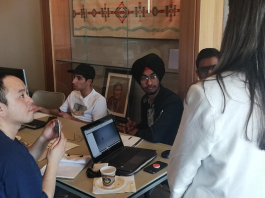
During her studies, she participated in the college-wide Global Goals Jam Canada – an experiential design jam weekend facilitated by the college’s Centre of Innovation and Entrepreneurship to foster changemaking skills and a sustainable entrepreneurial mindset. The weekend focused on advancing the Sustainable Development Goals by designing innovative, entrepreneurial solutions for global challenges.
“We chose ‘Ensuring human rights for migrant workers and immigrants’ [as the theme],” Assandé recounts her first Jam in Fall 2022. In less than three days, her team developed a complete business pitch to a panel of judges. Her solution, an app called ‘Agrirate’ to help immigrant agricultural workers find equitable employers through workplace transparency, won the top prize at the event.
“Migrant workers coming here do not have access to resources, they do not speak the language so they do not have anyone to turn to, and they live in poor working conditions,” Assandé explained. “We came up with an app that would be like Glassdoor, where migrant workers can rate their employers.”
Assandé would go on to lead the first and second place teams at two more Global Goals Jam Canada competitions in 2023 and 2024 respectively.
Following her success at the Global Goals Jam Canada in 2022, Assandé also applied for the Tourism Industry Association of Canada (TIAC) Future Leaders contest, where she presented at the industry’s national conference in Ottawa, sharing her student perspective on reimagining tourism and how she envisions the industry changing and evolving in the future. At the end of the contest, Assandé was honoured with the Certificate of Achievement as a Future Leader in the Canadian Tourism Industry. “They told me I would be making big changes in the industry in a few years and it was so great to receive that feedback,” Assandé said.
Assandé’s journey is a powerful example of how hands-on learning, entrepreneurial skills, and a global perspective can empower students to become changemakers in their fields. It’s this kind of forward-thinking talent that speaks to a wider movement Professor Cooper believes is reshaping the future of hospitality.
“A common misconception is that hospitality isn’t a good career – that jobs typically come with extended working hours and at low compensation. That’s not true,” said Professor Cooper.
“The careers that come out of this industry are so unique, fostering personal and professional growth, enabling the rapid development of leaders. Hours can be very flexible, and many careers actually pay very well. And you can be an entrepreneur too.”
At Centennial, cultivating this mindset of resilience and purpose is built into the learning experience. “If we prepare our students to do the things that failures aren’t willing to do, we set them up for success. We have a duty to the students that graduate every year to continue to produce the very best talent in the world of hospitality.”
In a time of renewed growth for the hospitality industry, Centennial College is shaping the very people who will lead it forward – with purpose, resilience, and an entrepreneurial drive to create meaningful change.
Please note, this article will also appear in the 24th edition of our quarterly publication.