Earth observation has rapidly become one of the most powerful tools in the fight to understand, protect, and restore Earth’s biodiversity.
By harnessing data from satellites, airborne sensors, and ground-based systems, scientists and policymakers can monitor ecosystems at unprecedented scales and detail. From tracking wildlife habitats to assessing ocean health and protecting endangered species, Earth observation enables timely action based on solid evidence.
Innovation News Network explores how Earth observation is transforming biodiversity conservation and why it matters more than ever.
Satellites on patrol: Monitoring forests, wetlands, and migration corridors
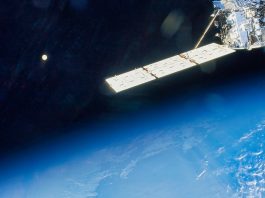
Earth observation satellites like Landsat and Sentinel are revolutionising how we map and monitor vital land habitats.
These orbiting observatories collect multispectral images that reveal changes in vegetation cover, land use, and habitat condition across vast areas and over time.
Since 1972, the Landsat programme has provided one of the longest continuous global records of Earth’s surface, enabling scientists to detect shifts in ecosystems that are otherwise too large or remote for traditional field surveys.
For terrestrial biodiversity, mapping forests, wetlands, grasslands, and other ecosystems is fundamental. Earth observation can track deforestation, fragmentation, and degradation – key threats to biodiversity worldwide. Copernicus’s Sentinel‑2 provides frequent high-resolution data optimised for vegetation monitoring, helping researchers quantify leaf area, chlorophyll content, and changes in plant communities that support a myriad of species.
Perhaps most critically, Earth observation helps identify and monitor migration corridors used by large mammals and birds. These are the lifelines of seasonal movement patterns that underpin healthy ecosystems.
With repeated, systematic imaging, conservationists can observe large-scale patterns in habitat connectivity and intervene when critical routes are threatened by human development or climate change.
Eyes on the oceans: How Earth observation protects marine ecosystems
The world’s oceans are teeming with life, but they also pose some of the greatest challenges for biodiversity monitoring. Field expeditions are expensive and limited in scope, whereas Earth observation provides broad, consistent snapshots of marine conditions that are otherwise impossible to obtain.
Earth observation plays a central role in assessing ocean health. Ocean colour remote sensing, derived from satellites such as Sentinel-3, characterises concentrations of chlorophyll a and other indicators of biological productivity across global seas.
This information helps identify regions of high productivity and biodiversity, which are often critical habitats for fish, turtles, and marine mammals.
Equally important, satellites help monitor harmful algal blooms (HABs)—rapid blooms of algae that can deplete oxygen, release toxins, and harm marine life and human health. Persistent monitoring via Earth observation alerts scientists to emerging blooms, enabling fisheries managers and public health officials to respond effectively.
The ocean is also subject to human pressures, including overfishing, shipping, and climate change. Recent studies demonstrate that satellite data can delineate marine seascapes –ecosystem units defined by biological and physical characteristics – to guide protective measures that safeguard biodiversity while minimising economic disruption.
From coral reefs to algae blooms: Mapping ocean health from space
Coral reefs are some of the most diverse ecosystems on Earth, yet they are among the most threatened. Earth observation techniques are increasingly used to assess reef condition and biodiversity indirectly by mapping habitat structure and water quality.
Research has shown that satellite-derived maps of benthic habitat diversity can serve as a proxy for coral and fish species diversity across large reef systems – an efficient complement to in-water surveys, which are often limited by cost and accessibility.
Hyperspectral imaging, a technology that captures detailed spectral information beyond conventional RGB imagery, holds particular promise for reef monitoring. It can help detect stress signals associated with bleaching events and quantify subtle changes in coral health over time.
Together, these tools allow scientists to monitor water-borne stressors such as eutrophication, sedimentation, and pollution, helping inform conservation decisions that balance ecological protection with coastal development.
Tracking the invisible threats: Poaching and habitat loss detection
Habitat loss from agriculture, infrastructure development, and illegal extraction not only reduces available living space for species but also increases their vulnerability to other threats.
Traditional monitoring methods rely heavily on field observations, which can be time-consuming and limited in scope. Earth observation fills that gap by providing frequent, large-scale data that can detect changes early – often before serious damage occurs.
For example, satellite imagery enables enforcement agencies to identify deforestation patterns in protected areas, enabling them to plan targeted responses to illegal clearing. Similarly, radar and optical imagery can detect changes in wetland hydrology, essential for species that depend on these habitats for breeding and survival.
In the marine realm, combining satellite data with other surveillance systems, such as Automatic Identification System (AIS) ship tracking, enables near-real-time detection of illegal, unreported, and unregulated (IUU) fishing – a major driver of ocean biodiversity loss.
Endangered species in focus: EO tools for wildlife conservation
Earth observation also plays a role in protecting endangered species. While satellites cannot count individual animals, they provide critical metrics on habitat conditions that influence species presence and abundance.
Long-term satellite records from programmes like Landsat help scientists assess how land cover changes affect species ranges and pinpoint emerging risks, such as habitat fragmentation.
Advanced analytics, including machine learning, are enhancing these capabilities. By integrating satellite data with biological observations and movement data from tagged animals (e.g., birds or marine turtles), platforms such as EO4wildlife provide habitat modelling and environmental assessment tools that scientists can use to understand migration patterns and habitat use.
Bridging science and policy: Turning satellite data into action
The ultimate value of Earth observation lies in translating data into meaningful policy and conservation outcomes. Governments, NGOs, and international bodies increasingly rely on Earth observation to inform environmental legislation, protected‑area designation, and global sustainability goals.
For example, the 30×30 target, an initiative aiming to protect 30% of the world’s terrestrial and marine areas by 2030, depends heavily on Earth observation to identify priority areas for conservation, monitor progress, and evaluate the effectiveness of protection measures.
In the UK and elsewhere, national conservation bodies use Earth observation to underpin habitat mapping and natural capital assessments, ensuring that conservation investments deliver measurable benefits for biodiversity.
The trend toward open and accessible Earth observation data – from programmes like Copernicus and NASA’s EarthData – means that conservationists everywhere can tap into this wealth of information to support evidence-based decision-making.
The future of conservation: AI, Big Data, and next‑gen Earth observation
Earth observation technology is evolving rapidly. Next-generation satellites with higher spatial, spectral, and temporal resolution will offer even richer insights into biodiversity patterns.
When paired with artificial intelligence and Big Data analytics, these data streams can detect subtle ecological changes faster and more accurately than ever before.
For instance, machine learning models can analyse vast satellite datasets to identify patterns that human analysts might miss, whether it’s early signs of habitat stress or emergent threats to species survival. This fusion of Earth observation and AI is reshaping biodiversity research by enabling predictive modelling and real-time monitoring.
The growth of collaborative platforms that integrate Earth observation, field observations, and citizen science further strengthens global biodiversity monitoring networks.
The future of biodiversity protection
Earth observation is no longer a niche scientific pursuit; it is a cornerstone of global biodiversity and conservation efforts.
From tracking the condition of forests and wetlands to observing ocean health and informing endangered species protection, Earth observation provides the data needed to understand and respond to complex ecological challenges.
As threats to biodiversity continue to mount, the ongoing advancement of Earth observation technologies and analytics offers hope that humanity can make informed, effective decisions to protect the diversity of life on our planet.