Artificial intelligence (AI) is no longer a futuristic concept in medicine – it’s actively reshaping how healthcare systems detect disease, manage patients, and make clinical decisions.
Across the world, hospitals, clinics, and research institutions are integrating AI-driven tools into clinical workflows with one primary goal: improving patient outcomes while making care more equitable, efficient, and proactive.

In this article, we explore the major ways AI in healthcare is driving transformation – from early disease detection to ethical considerations and the future of medical decision‑making.
Revolutionising early detection: AI spotting diseases before symptoms appear
One of the most promising applications of AI in healthcare is early disease detection – identifying illnesses before they cause severe symptoms or complications.
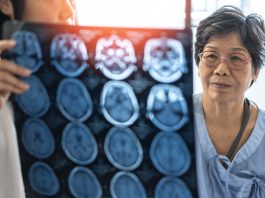
Traditional methods often rely on routine screenings or doctor intuition, but advanced AI models can analyse complex patterns in medical imaging and clinical data to detect subtle signs of disease that might escape human observation.
A recent example comes from a collaboration between Bristol Myers Squibb and Microsoft, where an AI-enabled radiology platform analyses X‑rays and CT scans to help identify lung cancer at earlier, more treatable stages.
The partnership aims to expand early detection capabilities even in underserved communities by enhancing clinicians’ ability to spot elusive lung nodules and diagnose non-small cell lung cancer sooner.
Similarly, trials in the UK are testing the use of AI for breast cancer screening in hundreds of thousands of women. Early evidence suggests that algorithms can compare new mammographic scans against vast databases, helping radiologists detect tumours earlier and improve diagnostic productivity.
AI models are also being developed for less visible diseases. For example, a model in India achieved nearly 99% accuracy in predicting chronic kidney disease in a high-risk region, leveraging local health data to flag disease before severe symptoms appear.
These examples show how AI in healthcare enhances early detection – reducing the time from symptom onset to diagnosis and enabling earlier intervention, thereby improving survival rates and quality of life.
How machine learning transforms healthcare accuracy
AI’s ability to process and interpret massive datasets, including micro‑patterns in images, genetic data, and longitudinal health records, drives more accurate and earlier diagnoses.
Machine learning techniques, such as federated learning, can build predictive models that preserve data privacy while allowing multiple institutions to share learning.
These approaches not only boost diagnostic performance but also open opportunities for broader deployment in remote or resource-limited settings.
Moreover, AI-powered medical imaging analysis now goes beyond simple pattern detection. Deep learning systems are used to interpret X-rays, MRIs, CT scans, and pathology slides with high precision, often highlighting abnormalities that might be missed by human analysts.
Beyond imaging, other AI tools use natural language processing (NLP) to extract diagnostic insights from clinical notes and unstructured data — reducing clinician reporting burden and improving documentation and interpretation accuracy.
This data-driven accuracy not only aids clinicians but also supports personalised medicine, aligning treatments more closely with each patient’s unique biology and medical history.
Predictive analytics in hospitals: Smarter decisions, better patient outcomes
Predictive analytics is a subset of AI that uses historical and real-time data to forecast future health events. In hospitals, this means identifying patients at risk of deteriorating, being readmitted, or developing complications after discharge.
Hospital systems in the US have leveraged predictive analytics to reduce readmission rates by analysing electronic health record (EHR) data, patient histories, and social determinants of health.
One study showed that predictive models could cut readmission rates by up to 24%, enabling targeted post-discharge care that keeps patients healthier and reduces costs.
Tools that combine clinical and behavioural data help hospitals stratify patients by risk and focus care teams’ follow-up efforts on those most likely to benefit, improving outcomes and hospital efficiency.
The use of AI in predictive analytics also extends beyond readmissions. Systems have been developed that forecast ICU demand during pandemics, helping healthcare leaders allocate resources strategically and avoid shortages.
Together, these efforts illustrate how AI in healthcare turns data into actionable foresight — improving patient care, reducing unnecessary costs, and enabling hospitals to act proactively instead of reactively.
Reducing readmissions and optimising care with AI insights
Closely linked to predictive analytics, reducing hospital readmissions is a priority for healthcare systems everywhere, both for quality of care and for controlling costs. In the US, readmission rates are publicly monitored and can affect hospital reimbursements — making effective risk prediction essential.
AI systems assess clinical histories, treatment details, and even lifestyle factors to identify patients at high risk of hospital readmission within 30 days of discharge. Care teams can then intervene with targeted education, follow-up calls, or tailored care plans — often before a patient’s condition deteriorates.
Some platforms also incorporate remote monitoring devices and wearables that continuously track patient health metrics after discharge. When combined with real-time analytics, these tools alert healthcare providers to early signs of complications, allowing for prompt, preventive measures.
By improving post-discharge management and reducing readmissions, AI in healthcare contributes to both better patient experiences and lower strain on healthcare facilities.
AI‑powered diagnostics: Bridging technology and clinical expertise
AI has rapidly moved from research labs into clinical diagnostics. In many medical specialities, AI aids clinicians by interpreting complex data more rapidly and consistently than was previously possible.
For example, AI systems are now integrated into radiology workflows to prioritise urgent cases, detect anomalies, and suggest potential diagnoses based on learned patterns from millions of prior images.
Other diagnostic innovations include machine learning models that assess risk scores for conditions such as sepsis, generating early warnings hours before traditional criteria would flag a case. Such early detection has been associated with lower mortality rates and shorter intensive care stays.
Critically, these tools are designed to support — not replace — human clinicians. The best AI systems deliver results that are interpretable and usable within existing clinical workflows, enhancing rather than overriding clinical judgment.
Ethics and accountability
As AI’s role in healthcare expands, ethical and accountability concerns grow in importance. AI systems reflect the data they learn from, and if those datasets are biased, the resulting models can propagate existing disparities in care.
Health equity advocates are pushing for “equity‑first” standards in medical AI to address bias and ensure fair outcomes across all demographic groups. These calls include requirements for algorithmic transparency, community‑engaged development, and ongoing bias audits.
Moreover, ethical frameworks emphasise the need for responsible AI deployment, including protecting patient privacy, preserving human oversight, and ensuring that AI decisions are explainable and accountable.
International initiatives like the FUTURE‑AI consortium are developing guidelines that articulate best practices for trustworthy AI tools in healthcare, covering fairness, traceability, usability, and robustness — key pillars for ethical adoption.
Balancing innovation with ethics is essential. It ensures that AI in healthcare enhances care without undermining patient autonomy or amplifying inequities.
The future of AI in healthcare
The future of AI in healthcare lies in collaboration, not replacement. AI augments clinician capabilities, helps healthcare systems operate more efficiently, and empowers patients with personalised insights and preventive tools.
Emerging technologies, including generative AI, real‑time monitoring, and precision medicine models, are poised to make care more tailored and predictive.
Wearable devices and telemedicine platforms powered by AI can extend quality healthcare into homes and remote regions, closing access gaps and reducing disparities.
However, realising this future requires thoughtful integration — combining robust AI models with strong ethical frameworks, clear clinical validation, and ongoing education for healthcare professionals.
With such infrastructure in place, AI will continue to transform healthcare — enabling early detection, improved diagnoses, personalised treatments, and more efficient health systems that deliver better outcomes for all.
By continuing to refine and responsibly deploy AI tools, healthcare systems worldwide can achieve better outcomes and set new standards for quality care.