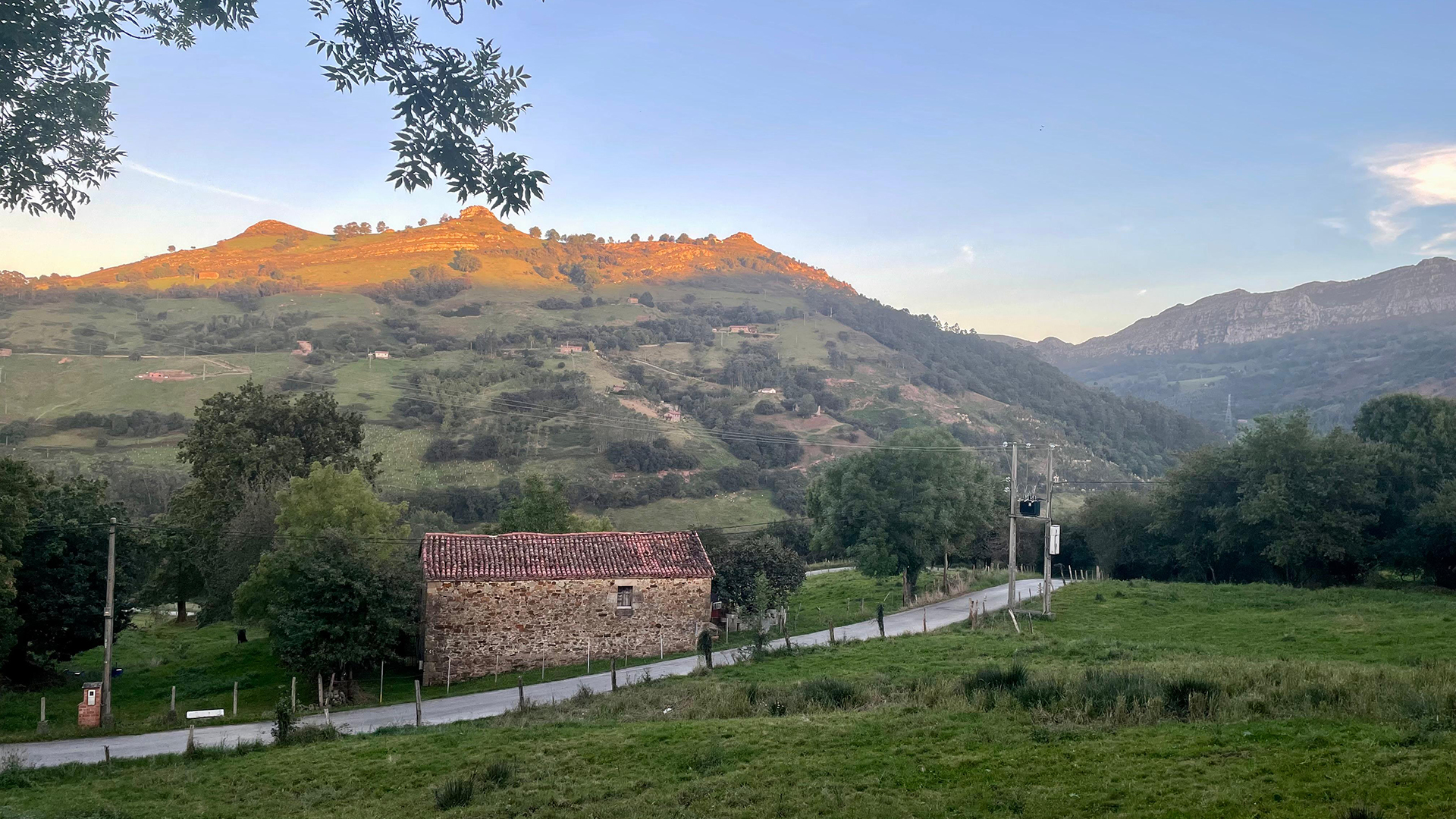
From one woman’s courage to a shared mission connecting science and community through the CELISE project for sustainable rural development.
In the early 1980s, during the protests in Nairobi, a woman with no political power or protection stood up against the men who were cutting down the last forest remaining in the city. She only had the conviction that the trees must survive. Her act stopped the destruction and became a symbol of environmental protection in rural areas.
“When we plant trees, we plant the seeds of peace and hope.”
Her words are a very simple and powerful truth at the same time. In rural and vulnerable areas, that message remains especially important. For social development to improve from the roots, preserving both natural and cultural heritage should be fundamental. Sustainability is based on three pillars, not only the economic, but also the environmental and social. Including people, traditions, and landscapes gives meaning to future solutions.
Harnessing biomass
The use of biomass resources in rural areas can be a good alternative to strengthen that balance. The future of these depopulating areas can be based on new businesses and local entrepreneurship through agricultural and forestry residues, which were previously considered waste. These can be transformed into sources of energy, new materials, and local income. This has been the focus of the CELISE project, which has explored sustainable solutions for rural and vulnerable regions by reusing local biomass residues. The project has shown that sustainability is strengthened when scientific knowledge is combined with community participation. The project is co-ordinated by the University of Cantabria in the north of Spain, and it has received funding from the European Union’s Horizon 2020 research and innovation programme under the Marie Sklodowska-Curie grant agreement No 101007733.
The intersection of knowledge and community empowerment
Experience in engineering projects confirms an essential lesson: without the voice of the people, technical solutions often fail. The economic aspect ensures feasibility; the environmental aspect ensures responsibility, but the social dimension ensures meaning and continuity. Without it, even the most advanced ideas can lose their purpose once they reach the ground.
The same happened with the life of the woman who once walked among the trees of Nairobi. When she travelled abroad to study biology, she discovered a world where education opened opportunities that were still closed to many women in her country. She realised that natural processes and social issues were deeply connected. Years later, she became the first woman in her nation to earn a doctorate. From there, she returned to her homeland and always advocated the idea that knowledge should not remain confined to laboratories, but should serve social progress in rural areas.
Combining collaborative research and local knowledge
Following this way of thinking, the CELISE project has brought together researchers from 24 institutions, both from academia and companies, in 11 countries across Europe and Latin America to develop sustainable innovations based on local realities. Through research exchanges among partners, the project has examined each solution from technical, economic, environmental, and social perspectives. Collaboration and dialogue have been key: teams have shared data, approaches, and experiences to build models that not only reduce waste or generate clean energy but also create local value and strengthen social cohesion, both for new models of small and medium-sized enterprises and for rural and vulnerable areas where culture has been one of the fundamental pillars.
The success of the project lies more in the method than in the scientific aspect: listening, sharing, and respecting local knowledge. Science can provide powerful tools, but truly sustainable solutions arise when technical expertise and cultural roots grow together.
Empowerment through environmental action
The real impact is reflected in the message sent by a rural woman during the execution of the project: “Good afternoon, I just wanted to express my gratitude for carrying out this project, where I felt heard and supported, just as I do for the rest of my colleagues. I believe it’s a project that unites us, gives us visibility, and supports us in the daily struggles each of us faces. A very visible approach, with a very creative and emotional participation from start to finish, fun and frustrating at the same time. With ideas like this, perhaps there’s a chance to position a world more sensitive to the entrepreneurial field and make an impact by supporting the desire and motivation we feel when we carry out the action. Thank you so much for contemplating and caring for it!”
That very idea was what inspired the woman in this article. For her, planting a tree was not just an environmental gesture but a way to build peace, justice, and hope. Her work mobilised thousands of people, especially women, who transformed the landscape and the spirit of a nation.
She is Wangari Maathai, who was awarded the Nobel Peace Prize in 2004. That day, she repeated the words that had guided her life: “You cannot protect the environment unless you empower people, you inform them, and you help them understand that these resources are their own, that they must protect them.”



This project has received funding from the European Union’s Horizon 2020 research and innovation programme under the Marie Sklodowska-Curie grant agreement No 101007733
Please note, this article will also appear in the 24th edition of our quarterly publication.