THOR is a Horizon Europe project developing predictive digital twins to accelerate battery design, performance, and safety validation.
Europe, Asia, and the US are locked in a strategic race to secure leadership in the energy transition value chain. Batteries are at the heart of this competition, underpinning both decarbonisation goals for stationary applications and the competitiveness of the automotive sector.
Yet, the European battery industry faces persistent bottlenecks. Physical testing campaigns remain excessive, taking years and requiring thousands of samples. They are resource-intensive, costly, and deliver only partial insights into battery degradation mechanisms. With competitors advancing rapidly, Europe must innovate in the way it designs, tests, and validates batteries to remain globally competitive.
Using digital solutions to improve battery testing
Some Horizon Europe projects are now developing a full ecosystem of digital solutions, AI algorithms, harmonised databases, multiphysics models, graphical interfaces, and digital twins, to reduce and optimise the industry’s heavy reliance on physical testing. Within this broader effort, the project THOR (2023–2027) addresses a crucial part of the challenge by transforming battery testing through digitalisation. Its mission is to replace large portions of physical testing with virtual simulations, accelerating design and reducing costs without compromising accuracy.
A digital twin for batteries
At the core of this transformation is the development of a digital twin for batteries. This tool will simulate performance, lifetime, and safety with high fidelity, aiming for a reduction of physical testing requirements by at least 50%. It will also generate richer datasets, enabling more precise optimisation of battery design, usage, and maintenance strategies.
THOR is developing three predictive models – at cell, module, and pack levels – that will be integrated into a single platform. This system will aim to provide real-time visualisation of capacity fade, thermal gradients, and safety margins, supporting faster and more reliable engineering decisions across the battery value chain.
To achieve these objectives, THOR brings together a pan-European consortium combining experimental, computational, and industrial expertise:
- CEA (France), INERIS (France), VUB (Belgium): Experimental testing, data generation, and model calibration.
- FEAC (Greece): Development of the hybrid digital twin framework and AI integration.
- Varta Innovation (Austria), Flash Battery (Italy), ENGIE-Laborelec (Belgium): Provision of prototypal cells, modules and battery packs, specifications, and testing applying stationary and EV profiles to validate models under real-world conditions.
- ICONS (Italy), UNE (Spain): Dissemination, communication, exploitation, and alignment with European standardisation strategies.
The consortium leverages advanced infrastructure, including pilot-scale manufacturing lines, abuse testing facilities, CAE software, and high-performance computing. This cross-sector and transnational collaboration ensures that the digital twin is not only scientifically robust but also industrially validated across the entire European battery value chain.
What is a digital twin?
A digital twin is a dynamic, virtual replica of a physical system, continuously updated with real-world data to reflect actual behaviour. In THOR, it becomes a predictive environment where batteries can be tested virtually under a wide range of conditions.
FEAC is developing hybrid models that integrate electrochemical-thermal simulations with deep learning techniques. This allows the digital twin to outperform traditional empirical models by capturing complex, non-linear dependencies, and degradation processes.
The twin will operate through a graphical interface that delivers real-time predictions of performance, safety, and ageing. By transforming testing from a retrospective into a predictive process, THOR’s digital twin enables faster innovation cycles and more reliable product qualification.
Hybrid strategy
To implement its vision, THOR combines physics-based high-fidelity models with AI-driven approaches. Multiphysics simulations capture electrochemical, thermal, and mechanical phenomena, while machine learning enhances predictive capacity by analysing large experimental datasets.
This hybrid strategy requires harmonised data formats to ensure interoperability and efficient use of big data and AI techniques. By merging models with experimental evidence, THOR aims to create a scaleable digital twin capable of real-time, multi-scale predictions.
Case studies
The project has already achieved significant progress. Varta Innovation has manufactured cells, and with the partner Flash Battery, they have distributed 757 cylindrical 21700 cells (3–4 Ah) with NMC/Graphite and LFP/Graphite chemistries – two of the most widely used configurations on the market.
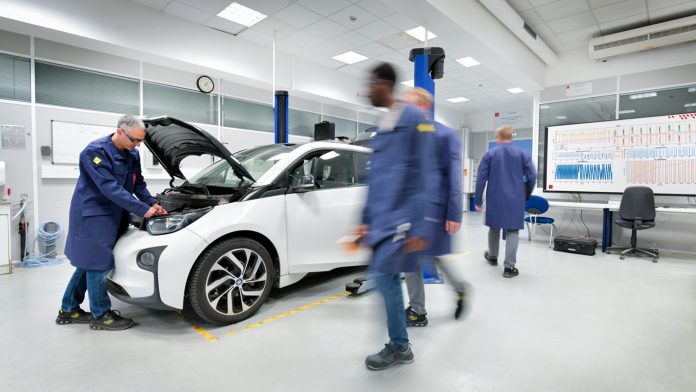
CEA, VUB, and INERIS have conducted extensive testing campaigns to calibrate high-fidelity models and establish new experimental methodologies. ENGIE-Laborelec has evaluated cell performance under photovoltaic cycling conditions, benchmarking predictive accuracy against real-world profiles.
On the modelling side, CEA and VUB achieved >95% accuracy in capacity predictions at cell level, while Flash Battery presented the first prototypes at module and battery pack levels, developed through dedicated technical development, thermal characterisation, and FEM analysis.
With extensive cell-level data now harmonised and stored in a dedicated web platform, THOR is entering a new phase. The focus will shift towards upscaling models to pack and module levels, ensuring predictive accuracy at higher system scales.
Subsequent work will concentrate on numerical integration and model simplification, a critical step to ensure the digital twin can deliver real-time results without sacrificing fidelity. This transition will pave the way for a deployable tool capable of supporting both R&D workflows and operational decision-making in industry.
Industrial partners underline the practical importance of THOR’s work. Flash Battery stresses that digital twins and predictive maintenance will deliver measurable benefits across the supply chain, including higher production efficiency, reduced operating costs, enhanced safety, and improved sustainability. Varta Innovation highlights that the digital twin reduces the physical testing burden while providing deeper insights into cell behaviour, directly enabling faster product optimisation. Furthermore, ENGIE-Laborelec emphasises the role of digital twins in the stationary storage sector, where safety, reliability, and lifetime are critical. By integrating operational insights, the tool will remain directly applicable at cell, module, and pack levels.
THOR also aims to demonstrate that digital twins can achieve results comparable to physical testing, supporting future updates to international standards such as IEC and CENELEC on safety, energy efficiency, and battery management.
THOR is also part of the TwinBatt Cluster, which unites four Horizon Europe projects – DigiBatt, THOR, AccCellBaT, and FASTEST – at the forefront of digital battery research. Each brings unique expertise, from continuous validation tools to hybrid testing platforms.
Disclaimer

Funded by the European Union. Views and opinions expressed are however those of the author(s) only and do not necessarily reflect those of the European Union or the European Climate, Infrastructure and Environment Executive Agency. Neither the European Union nor the granting authority can be held responsible for them.
Please note, this article will also appear in the 24th edition of our quarterly publication.