Scientists at Goethe University have achieved a major breakthrough in PFAS degradation, offering new hope in the global fight against these persistent ‘forever chemicals.’
Their newly developed catalyst breaks down PFAS compounds rapidly and efficiently, without relying on rare or toxic heavy metals.
As concerns over PFAS contamination grow worldwide, this innovative, low-cost solution could transform how we tackle one of the most stubborn environmental pollutants of our time.
Understanding the PFAS threat
Per- and polyfluorinated substances, better known as PFAS, have long been hailed for their remarkable properties.
Found in everything from non-stick cookware and water-repellent clothing to firefighting foams and industrial lubricants, these synthetic chemicals resist heat, oil, dirt, and water like few others. However, their strength is also their downfall.
The same chemical stability that makes PFAS so useful also renders them nearly indestructible in natural environments.
These so-called forever chemicals accumulate over time in soil, water, wildlife, and even the human body. With over 4,700 known variants, PFAS have raised serious concerns worldwide.
Some are linked to cancer, hormonal disruptions, and other health issues, prompting a growing urgency to develop safe and effective PFAS degradation methods.
A new era for PFAS degradation
In a significant scientific breakthrough, chemists at Goethe University Frankfurt have unveiled a new catalyst capable of breaking down PFAS compounds efficiently and without the need for toxic heavy metals.
Unlike traditional methods that often rely on rare and expensive elements like platinum or palladium, this novel approach uses a boron-based structure that is both cost-effective and environmentally safer.
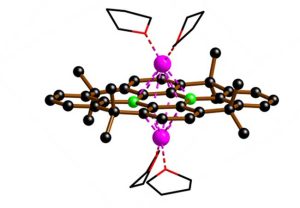
The core of the innovation lies in a carbon framework housing two boron atoms. This unique configuration not only provides the electrons necessary to sever the notoriously stable carbon-fluorine (C–F) bonds that define PFAS molecules, but it also remains stable in air and moisture – an uncommon trait for boron compounds.
Remarkably, this process occurs in mere seconds and at room temperature, dramatically reducing the energy requirements and complexity of PFAS degradation.
Toward greener chemistry
Currently, the catalyst is powered using alkali metals like lithium to donate electrons during the reaction.
However, researchers are actively exploring a transition to direct electrical current as the electron source.
This shift would mark a major step forward in making PFAS degradation not only more scalable but also compatible with green energy sources.
Switching from reactive chemicals to electrical input could streamline industrial applications and open the door for broader use in environmental remediation technologies.
It’s a promising development that aligns well with global goals for sustainability and reduced chemical waste.
Potential in pharmaceutical synthesis
While the immediate focus is on PFAS degradation, the catalyst’s utility doesn’t end there. Fluorine atoms are frequently used in pharmaceuticals to enhance drug stability and bioavailability.
This new catalyst could give scientists unprecedented control over fluorination in drug design, allowing for more precise synthesis of medicines with improved efficacy and reduced side effects.
Such dual-purpose functionality highlights the broader significance of the breakthrough – not only as a solution to a pressing environmental challenge but also as a tool to advance future innovations in health and chemistry.
A step closer to ending the PFAS legacy
With PFAS contamination increasingly affecting communities and ecosystems worldwide, the need for effective, scalable, and non-toxic degradation methods is urgent.
The catalyst developed at Goethe University represents a promising step in that direction, offering a viable way to dismantle these persistent pollutants while avoiding the use of harmful heavy metals.
As research continues, this discovery may pave the way for safer environments and cleaner technologies, turning the tide on decades of PFAS accumulation. In the fight against forever chemicals, this innovation may prove to be a game-changer.