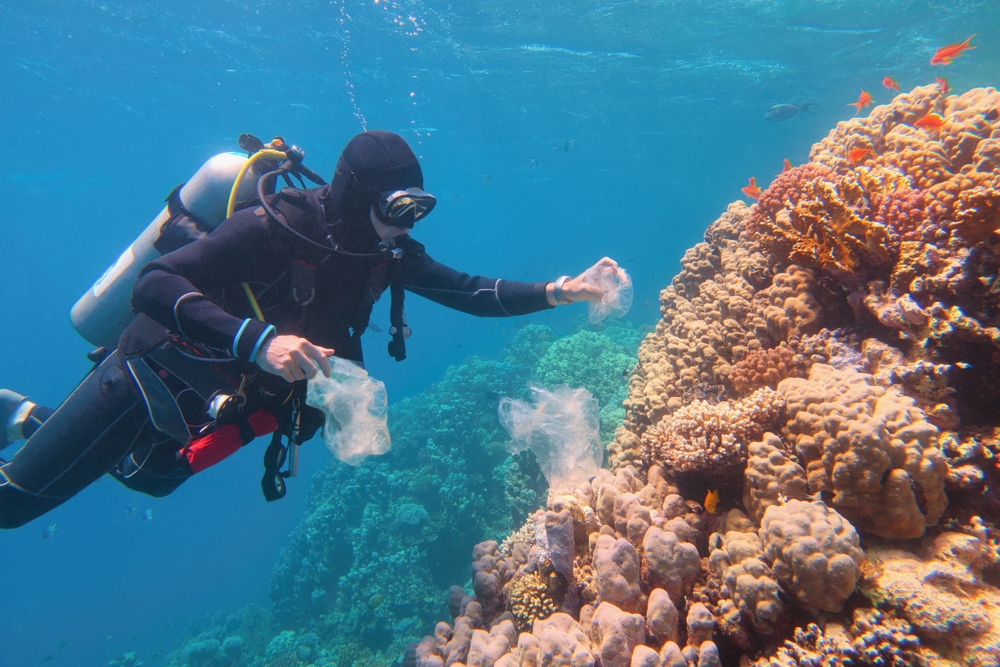
A momentous UN treaty marks a breakthrough in ocean conservation, protecting high seas biodiversity and ensuring sustainable use for future generations.
A major milestone for ocean conservation has been reached as the landmark Agreement under the United Nations Convention on the Law of the Sea (UNCLOS) on the Conservation and Sustainable Use of Marine Biological Diversity of Areas Beyond National Jurisdiction (BBNJ) is set to enter into force.
This pivotal treaty, adopted in June 2023, applies to more than two-thirds of the world’s oceans and marks a transformative step in protecting marine ecosystems from escalating threats such as climate change, biodiversity loss, and pollution.
The agreement is widely regarded as one of the most significant achievements in multilateral diplomacy in recent decades.
For the first time, countries have established a global framework to ensure the fair use and sustainable management of resources in international waters – long considered the ‘wild west’ of the ocean.
Commenting on the transformative development, António Guterres, UN Secretary-General, said: “The Agreement went from adoption to entry into force in just over two years.
“This rapid pace underscores the continued commitment of States to multilateralism. It also confirms that we can only face global challenges through collective efforts.”
Why the agreement matters
Nearly two-thirds of the planet’s oceans lie beyond national jurisdiction. These high seas and deep seabed areas are home to rich biodiversity and provide humanity with critical ecological, cultural, scientific, and economic benefits.
Yet they remain under mounting pressure from pollution, overfishing, deep-sea mining, and climate-driven degradation.
The BBNJ Agreement addresses these challenges head-on by advancing key UNCLOS principles: the duty to cooperate, the responsibility to protect marine environments, and the requirement to assess impacts before undertaking potentially harmful activities.
By strengthening these commitments, the treaty represents a more holistic and science-driven approach to ocean conservation.
From decades of talks to a global consensus
Negotiations for the BBNJ Agreement spanned more than a decade, with momentum building as the scale of the threats to the ocean became undeniable.
The treaty is the third major implementing agreement under UNCLOS, following landmark deals in 1994 on seabed mining and in 1995 on fish stocks.
The adoption of this new framework updates international law to reflect three decades of change, aligning it with the goals of the UN’s 2030 Agenda and Sustainable Development Goal 14: ‘Life Below Water.’
It also directly supports the Kunming-Montreal Global Biodiversity Framework target of protecting 30% of the ocean by 2030.
Key provisions: Protection, equity, and shared benefits
One of the most powerful tools the BBNJ Agreement unlocks is the ability to create large-scale marine protected areas (MPAs) in international waters.
These sanctuaries will safeguard fragile habitats and give marine life the breathing room needed to recover and thrive.
The treaty also requires rigorous environmental impact assessments for economic activities carried out in international waters, ensuring sustainable practices are the norm rather than the exception.
Importantly, equity is at the heart of the agreement. Developing countries will receive technical and financial support through capacity-building programmes, technology transfer, and a benefit-sharing mechanism that guarantees fair access to marine genetic resources.
The role of global coalitions
The European Union and its Member States were instrumental in shaping the treaty through the High Ambition Coalition, a group of more than 40 nations committed to bold, science-based ocean conservation.
This coalition’s political leadership and collective advocacy accelerated the negotiation and ratification process, pushing the agreement over the threshold for entry into force.
To support swift implementation, the EU has already pledged €40m through its Global Ocean Programme.
Coalition members are being urged to make similar contributions to ensure all nations – especially those with fewer resources – can fully participate in the treaty’s framework.
Next steps for implementation
The BBNJ Agreement will officially take effect 120 days after the 60th ratification is deposited. Once active, it will apply to all signatory states, transforming how humanity manages the high seas.
The coming months will be crucial in preparing nations for compliance. Capacity-building initiatives, monitoring systems, and financing mechanisms will need to be scaled up rapidly.
With strong global cooperation, the treaty has the potential to reshape ocean governance and secure a healthier, more resilient marine environment for generations to come.
This agreement represents a beacon of hope for the future of the world’s oceans. By prioritising sustainability, equity, and science, the BBNJ Agreement offers a roadmap to address the triple planetary crisis of climate change, biodiversity loss, and pollution.