


Innovation News Network brings you the latest research and innovation news from the fields of science, environment, energy, critical raw materials, technology, and electric vehicles.
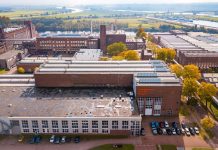
Arnhem implements new IoT solution to energy management
Arnhem, Netherlands, has adopted OpenRemote’s open-source IoT solution to develop an intelligent energy management system.
This new energy management platform will allow city officials to...
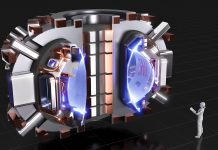
The SPARC emission-free power plant
MIT and Commonwealth Fusion Systems (CFS) have published a new series of papers outlining the progress of the SPARC project, which aims to create...

$1.1m to improve bypass grafts used to treat coronary heart disease
Researchers led by the University of Pittsburgh (UoP), USA, have received a $1.1m award from the National Institutes of Health to improve the bioscaffolds...

UK commits to protecting 30% of natural environment by 2030
Today, the British Prime Minister will commit to protecting 30% of the UK’s natural environment and biodiversity by 2030.
National parks, ‘areas of outstanding natural...
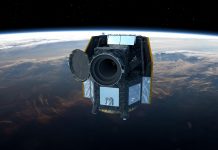
The first result from ESA’s CHEOPS mission
The results of CHEOPS, the first ESA mission dedicated to characterising known exoplanets, have been published in Astronomy & Astrophysics.
CHEOPS was developed as part...
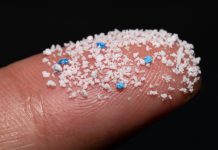
Capturing microplastics using acoustics
Scientists at Shinshu University, Japan, have developed a method of capturing microplastics from wastewater using specialist acoustic technologies.
Scientists estimate that the amount of plastic...

RetinaRisk allows you to calculate the risk of diabetic retinopathy
Professor Einar Stefánsson explains how the RetinaRisk app offers a truly personalised approach by identifying patients’ individualised risk of developing sight-threatening diabetic retinopathy.
The global...
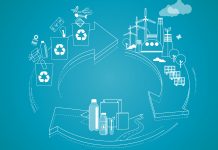
European chemical industry: Increasing sustainability and digitisation
Cefic’s Executive Director for Innovation, Pierre Barthelemy, spoke to The Innovation Platform about the clear role of the chemical industry in enabling Europe to...

Creating innovative materials with AI and fundamental physics
Dr Mazhar Ali of the Ali Group at the Max Planck Institute discusses the role of AI and fundamental physics in the creation of...
New algorithm to improve the efficiency of synthetic biology experiments
Researchers at the Department of Energy's Lawrence Berkeley National Laboratory have created a new tool that adapts machine learning algorithms to the needs of...