A major review has raised alarm over the growing risk of PFAS pollution in agricultural soils, with implications for food safety and human health worldwide.
Per- and polyfluoroalkyl substances (PFAS), often dubbed ‘forever chemicals,’ are increasingly entering farmland through the recycling of biosolids and wastewater irrigation.
Once deposited in soil, these persistent pollutants can infiltrate crops, potentially contaminating the human food chain.
The long legacy of PFAS
First created in the 1940s, PFAS have been widely used in products such as non-stick cookware, food packaging, firefighting foams, textiles, and cosmetics.
Their durability comes from the extremely strong carbon–fluorine bonds that make them resistant to natural breakdown.
While this property has made PFAS valuable in manufacturing, it has also turned them into one of the most persistent forms of chemical pollution.
Scientists have increasingly linked PFAS exposure to serious health risks, including hormone disruption, reproductive issues, and long-term toxicity.
Study highlights agricultural risks
The review examined United Nations global waste data alongside 115 research papers spanning 2005 to 2025.
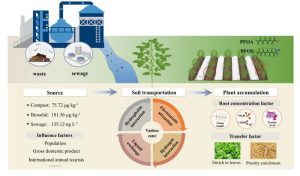
The findings identified biosolids – nutrient-rich residues from sewage treatment plants – as the dominant source of PFAS pollution entering farmland.
Geographic hotspots of contamination risk were highlighted in Western Europe, Australia, and East Asia, where wastewater reuse and biosolid application are widespread.
How PFAS behave in crops
One of the study’s most concerning revelations is how PFAS interact with plants. Longer-chain PFAS tend to attach tightly to soil particles and accumulate in plant roots.
Shorter-chain PFAS, by contrast, are highly mobile, moving with water through plant tissues and concentrating in edible parts such as leaves and grains.
Among staple crops, soybeans stood out as particularly vulnerable, absorbing higher PFAS levels due to their protein-rich composition compared to rice, wheat, and maize.
Weak PFAS regulations leave gaps
Despite mounting evidence of the dangers, global regulations remain patchy. Only a few countries, including the United States, Germany, and Australia, have set limits on PFAS levels in biosolids used for agricultural purposes.
The majority of regions still lack enforceable standards, leaving farmers and consumers exposed to hidden risks.
Researchers emphasise that restricting the use of PFAS-contaminated waste is the most effective strategy for preventing soil contamination, rather than relying solely on expensive cleanup efforts.
Call for smarter monitoring
To tackle this growing challenge, the review recommends developing predictive models that combine soil characteristics with PFAS migration patterns.
Such tools would help regulators and farmers assess risks more accurately across diverse agricultural systems. As circular economy practices expand worldwide, experts caution that sustainable recycling must not come at the expense of spreading PFAS pollution into the food supply.