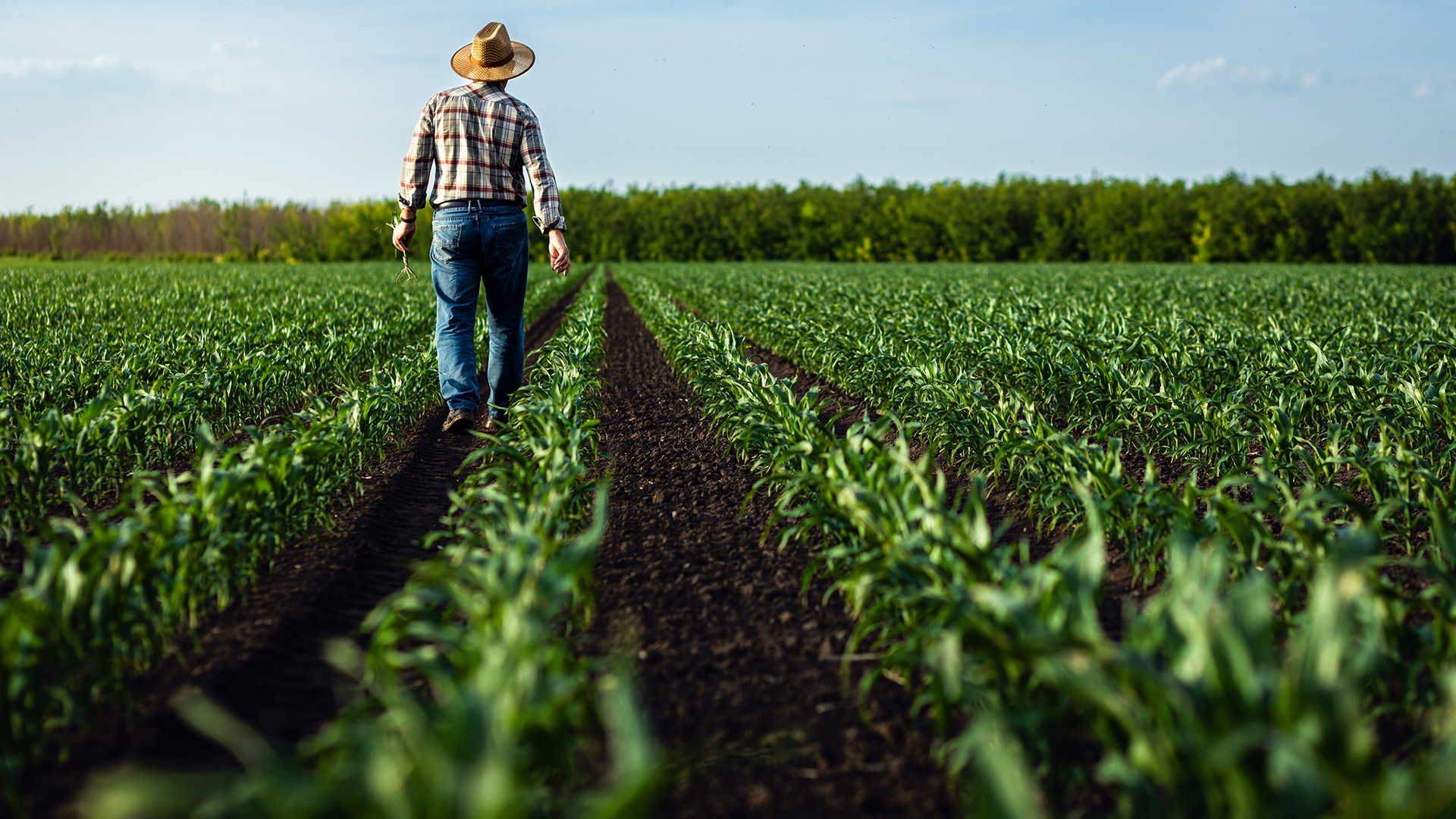
ReLEAF aims to produce controlled-release bio-based fertilisers from alternative sources prevalent in Europe, demonstrate their agronomic potential, and generate new circular business models.
Europe’s agriculture sector relies heavily on imported, non-renewable fertilisers – making food production vulnerable to supply chain disruptions and rising costs. At the same time, excessive fertiliser use contributes to environmental issues like water pollution, soil degradation, and greenhouse gas emissions.
Meanwhile, valuable nutrients are lost through organic waste streams such as manure, sewage sludge, and food scraps. Although rich in fertilising elements, these materials are often underutilised due to concerns over pollutants and processing challenges.
Advancing sustainable agriculture: The ReLEAF Project
CBE JU-ReLEAF is a project funded by the Circular Bio-Based Europe Joint Undertaking (CBE JU), UK Research and Innovation (UKRI) and the Swiss State Secretariat for Education, Research and Innovation (SERI), which aims to reduce Europe’s dependence on fertiliser imports and increase the sustainability of the agricultural sector through the production of bio-based fertilisers, using nutrients, biostimulants and bioplastics obtained from alternative sources such as wastewater treatment plant sludge or food chain residues (agricultural waste, food processing waste and food scraps).
Several studies have found that manure, sewage sludge, and food chain waste are the main sources of waste that can be turned into bio-based fertilisers (BBFs). Manure, the largest source, has over 70% of the nutrients needed for fertilisation. Despite the success of many studies in valorising manure over the past decade, challenges remain due to pollutants like heavy metals and volatile organic compounds. These pollutants limit manure’s suitability for centralised, high-quality fertiliser production. ReLEAF will focus on untapping the potential of sewage sludge and food chain wastes as they are currently understudied streams.
The ReLEAF project will tackle these challenges by advancing and demonstrating a suite of innovative extraction techniques. These techniques will focus on producing key BBF ingredients from diverse, widely available waste streams, including sewage sludge, fish processing waste and wastewater, mixed food waste, and agri-food residues.
The project aims to scale up the technologies and processes developed to pre-industrial scale. To ensure the viability of the new products, the project will conduct field trials and scale up technologies and processes, involving:
- Five technology demonstrators
- Two industrial fertiliser production demonstrators
- Four field demonstration sites across different European climates and soils
The ReLEAF project has the following objectives:
- Optimise new technologies for the extraction of fertiliser ingredients from alternative sources.
- Use biodegradable and safe materials as coatings for controlled-release fertilisers, avoiding the generation of microplastics and other contaminants that can harm soil health.
- Reduce fertiliser use and nutrient losses using controlled-release biobased fertilisers.
- Use agronomic assessments to ensure the viability of biofertilisers.
- Reduce Europe’s dependence on imported materials by establishing local, circular, and cost-effective supply chains.
- Engage stakeholders to ensure industrial adoption and social acceptance.
The industry as a biorefinery
There’s no doubt that society is undergoing a continuous process of change in the way we think and live. We are increasingly aware of the impact human activity has on the environment around us. This awareness is leading us to seek solutions to prevent and reduce these adverse effects, becoming a priority not only for researchers but also for public entities and companies. In this context, a paradigm shift is emerging from the traditional value chains of the linear economy, which rewarded the mass production of goods, toward a circular production model that encourages reuse and recycling to create new products, all within the framework of the concept of the circular economy.
The centralised treatment of both solid and liquid waste is becoming increasingly obsolete due to the rising cost of transportation and the complexity of efficiently managing large volumes of waste resulting from the rapid increase in population. As an alternative, the implementation of treatment systems that allow for decentralised waste management is attracting interest from the specialised public. This allows for the establishment of local value chains through the recovery of value-added products that can be used as secondary raw materials to produce new products.
Challenges in obtaining and marketing bio-based fertilisers
For the CBE JU-ReLEAF project, the priority is to produce biobased fertilisers from locally available waste (sewage sludge, agricultural waste, food processing waste, and food scraps) to increase the sustainability of the agricultural sector while closing the nutrient loop in the food chain.
To this end, technologies and treatment systems will be developed to obtain ingredients for the synthesis of controlled-release biobased fertilisers. This will include the recovery of macronutrients – nitrogen, phosphorus, and potassium – biostimulants – chemical and biological – and biopolymers that enable the formulation of polymer-bounded and polymer-based granulated fertilisers and, thus, precise fertilisation strategies, reducing fertiliser use and nutrient loss through leaching or volatilisation.
Furthermore, within the framework of the project, the fertilisers obtained will be tested in field trials to demonstrate the effectiveness and safety of the products obtained. This will improve social and consumer acceptance, facilitating the market introduction of ReLEAF products and strengthening their competitive position compared to traditional mineral fertilisers from non-renewable sources.
Thus, generating bio-based fertilisers from locally available waste will reduce the environmental impact of both the industrial and agricultural sectors by shortening supply routes, reducing Europe’s dependence on fertiliser imports, and improving soil health.
About the consortium
The ReLEAF Consortium is a collaborative initiative of leading European companies, technology developers, and research organisations committed to advancing sustainable agriculture and circular economy principles through the development of bio-based fertilisers. It counts with 17 institutions from nine different European countries.
The ReLEAF project (Recycling Locally Produced Bio-Wastes to Ensure Affordability and Availability of Innovative Bio-based Fertilisers) is funded by the European Commission through the Circular Bio-Based Europe Joint Undertaking (CBE JU) programme and its partners [GA: 101156998]. It has also received funding from the Swiss State Secretariat for Education, Research and Innovation (SERI) and UK Research and Innovation (UKRI).
Please note, this article will also appear in the 22nd edition of our quarterly publication.