Researchers have identified how new advances in 3D bioprinting, organoids, and organ-on-a-chip technology can help detect cancer earlier.
The new review, led by researchers at Oregon Health & Science University’s Knight Cancer Institute, explores several cutting-edge technologies that could revolutionise early cancer detection – enabling better treatment and higher survival rates.
The research highlights how advances in New Approach Methodologies and tissue engineering are offering powerful new tools to study the earliest stages of cancer development.
New Approach Methodologies utilise human-relevant technologies, such as in vitro tests, organoids, organs-on-a-chip, and computational modelling, to replace, reduce, or refine animal testing.
New approach methodologies open up new clues about cancer
These lab-grown models replicate the environment inside the human body and could unlock clues about how cancer begins.
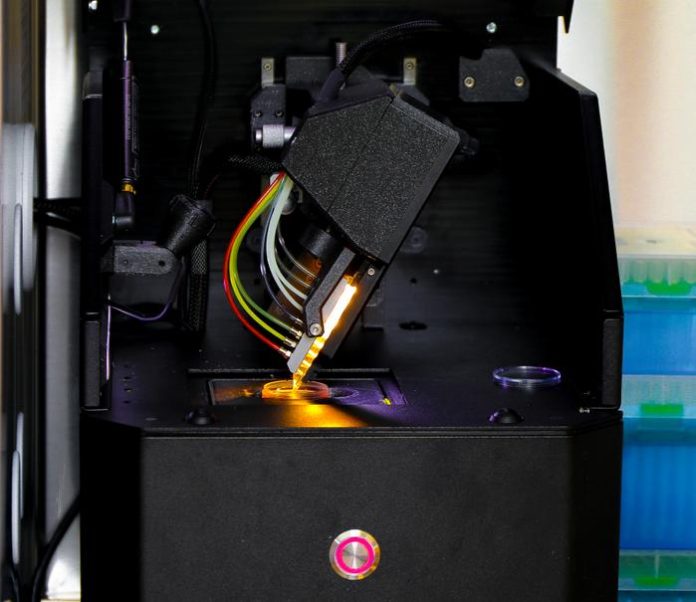
At the helm of a new chip-based system that more accurately mimics the human bone-tumour environment, the team is using advanced bioengineering to create more realistic in-vitro models.
This represents a significant step forward in the Food and Drug Administration’s shift toward human-cell-based systems, marking a key milestone in its transition away from animal testing.
Luiz Bertassoni, senior author of the research, explained: “Early cancer detection is one of the most important survival factors.
“These new technologies give us a window into how cancer forms and progresses, which opens the door to understanding early cancer, paving the way for earlier diagnosis and even predicting cancer initiation.”
Scientists don’t fully know how healthy tissue becomes cancerous
Despite years of cancer research, scientists know relatively little about what happens in the body during the early stages of cancer.
A major reason is the lack of access to early-stage tumour samples, especially in organs that are hard to reach. Patients usually come to the clinic after symptoms have already appeared, which is often too late.
Without samples of early cancer, it’s difficult to understand the changes that occur as healthy tissue becomes cancerous.
Tissue engineering improves early cancer detection rates
Tissue engineering is helping close that gap. Recent technologies developed over the past decade, including many designed at the OHSU Knight Cancer Institute, have enabled scientists to replicate the complexity of cancer in the lab.
These models, which have recently been prioritised as so-called New Approach Methodologies for medical research, enable researchers to recreate and manipulate the early tumour environment precisely, allowing them to test how specific cellular, genetic, or environmental factors influence cancer development.
This approach also supports the discovery of new biomarkers – biological red flags that could help clinicians detect cancer earlier and more accurately.
“This is a really exciting time in cancer research,” Bertassoni said. “There is momentum in bringing together cancer biology, engineering and clinical treatment. There are so many avenues that didn’t exist before.”