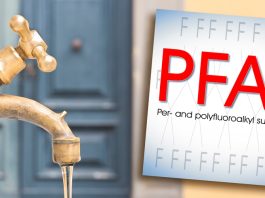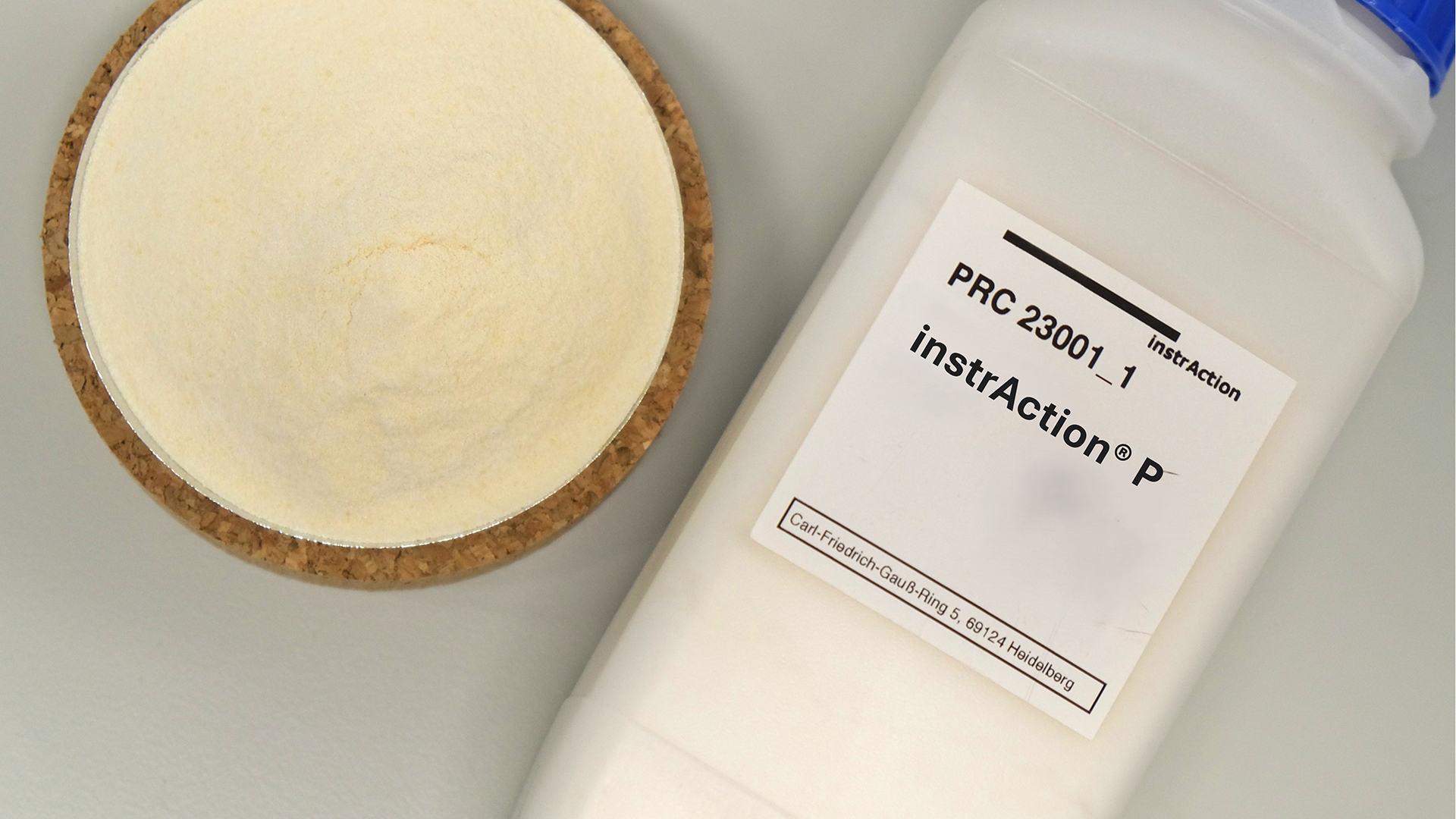
The fight against PFAS pollution has found a new ally in instrAction’s highly selective absorber resins.
Per- and polyfluoroalkyl substances (PFAS) have become one of the most pressing environmental challenges of our time. Known as ‘forever chemicals’ due to their extreme persistence, PFAS compounds are widely found in drinking water sources across the globe. Linked to adverse health effects, including cancer, immune dysfunction, and developmental issues, they are now subject to growing regulatory scrutiny, with governments in Europe and North America implementing stricter limits and guidelines for their removal.
Yet, despite their danger, PFAS remain notoriously difficult to eliminate. Conventional water purification methods, such as granular activated carbon (GAC), ion exchange resins, or membrane technologies, often struggle to remove PFAS effectively at low concentrations. With global demand for safer, decentralised, and efficient water treatment solutions on the rise, there is an urgent need for new materials that can address the shortcomings of traditional filtration technologies.
This is where instrAction steps in. Based in Heidelberg, Germany, instrAction develops proprietary absorber resins engineered for high selectivity and performance. With its latest generation of materials, instrAction is helping cartridge manufacturers and water utility providers tackle PFAS contamination more effectively, sustainably, and reliably.
The challenge of PFAS in water treatment
PFAS are a large family of over 10,000 synthetic chemicals used in non-stick coatings, firefighting foams, water-repellent textiles, industrial processes, etc. They are chemically stable, resistant to degradation, and mobile in the environment. This makes it difficult to remove them once they reach water bodies, especially at trace concentrations.
Many conventional removal technologies rely on physical adsorption or general ion exchange. These can be effective in some contexts but often lack the selectivity necessary to capture a wide range of PFAS molecules. Moreover, their performance can degrade in the presence of other contaminants, organic matter, or changing pH levels.
Regulatory frameworks are also evolving rapidly. In 2024, the EU proposed a group restriction on PFAS, while the U.S. Environmental Protection Agency introduced new maximum contaminant levels for several PFAS in drinking water, set in parts per trillion. These increasingly strict standards demand technologies that offer both high sensitivity and long-term stability, qualities that conventional filtration systems can struggle to provide.
instrAction’s selective absorber resins
instrAction’s core innovation lies in the development of functionalised absorber resins with tailored chemical properties. Unlike traditional resins, which are often designed for broad-spectrum removal, instrAction’s materials are fine-tuned to bind selectively the target molecules such as PFAS through a combination of chemical affinity, size exclusion, and charge interaction.
The result is a new class of purification media that offers:
- High selectivity toward key PFAS compounds like PFOA, PFOS, and PFBS.
- Strong performance at low concentrations, in the ng/L (ppt) range.
- Extraordinary high productivity up to 1000 BV/h.
- Longer service life and more consistent performance over time.
- Customisability, allowing integration into various cartridge and OEM designs.
These resins are manufactured without harmful solvents and are compatible with standard filter production processes. They can be easily embedded into carbon block filters, loose-fill cartridges, or high-flow filtration systems, making them ideal for point-of-use, point-of-entry, and industrial applications.
Real-world integration and collaboration
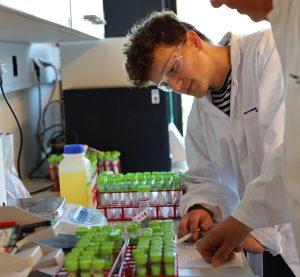
Rather than producing complete filtration devices, instrAction focuses on supplying the absorber resin and working closely with filter manufacturers and OEMs to develop high-performance systems. Recent collaborations have shown the resin’s effectiveness in consumer drinking water filters and portable filtration units, particularly in areas where PFAS contamination is a growing concern.
By embedding the resin within a carbon block filter or pre-filter, instrAction’s partners can offer enhanced PFAS protection without sacrificing flow rate or requiring significant design changes. The company also supports lab testing, HPLC-MS/MS-analytics, pilot studies, and co-development projects to ensure the best material configuration for each application.
This collaborative model allows for rapid scaling while ensuring that each filtration solution meets the unique demands of its environment – be it residential, commercial, or industrial.
Future directions: Beyond PFAS
While PFAS removal is a major focus, the potential applications of instrAction’s absorber resins extend much further. The same principles of selectivity and tunability can be applied to a wide range of water pollutants, including:
- Heavy metals such as lead, mercury, cadmium, etc.
- Precious metals (PGMs) from industrial waste streams.
Looking ahead, instrAction is also exploring the use of its technology in fields like precious metal recovery and circular chemistry, where selective binding is crucial for extracting valuable or hazardous substances from complex mixtures.
Research is ongoing into making the resins regenerable and biodegradable, further enhancing their environmental profile and cost-effectiveness. This continuous innovation reinforces instrAction’s role as a material science partner for the next generation of clean technology.
Conclusion
The global effort to eliminate PFAS from drinking water requires new tools, ones that go beyond traditional filtration and deliver precision at the molecular level. instrAction’s selective absorber resins offer a breakthrough approach, combining scientific rigour with practical integration into cartridge-based systems.
This represents a meaningful step forward in the fight against forever chemicals for municipalities, manufacturers, and consumers alike. By enabling efficient, scalable, and sustainable PFAS removal, instrAction is not just responding to a regulatory challenge; it is helping to create a future with clean and safe water for all.
Please note, this article will also appear in the 23rd edition of our quarterly publication.