The RECODYN project aims to move restoration ecology from an idiosyncratic discipline to a predictive and more globally applicable science.
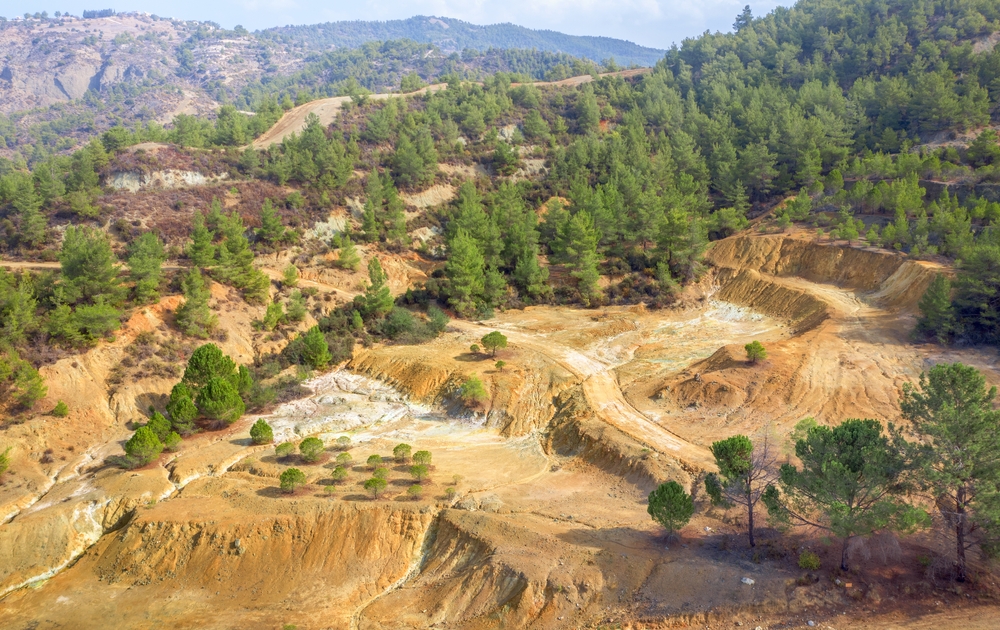
Anthropogenic global change has degraded the natural world to unprecedented levels, posing substantial threats to biodiversity, food security, water availability, health, and overall human well-being. In this context, ecological restoration has emerged as one fundamental strategy to stem the biodiversity crisis and repair damaged ecosystems.
The international consensus on the urgent need to understand ecological recovery and restore ecosystems is reflected by the UN Decade on Ecosystem Restoration, a programme launched in 2021 and continuing through 2030. The aim of this initiative is to restore 1 billion ha of a wide array of ecosystems, encompassing forests, grasslands, wetlands, coastal and marine areas, and urban environments. The question is: how can 1 billion ha be restored worldwide? More generally, how can we efficiently restore fully functional and stable ecosystems?
Although the science of restoration has incredibly advanced in recent times, its success has so far been limited. The reasons for this are social and economic, but also ecological or scientific. Scientifically, most restoration studies are largely phenomenological and context-dependent, which limits our ability to develop general principles for a firmer scientific theory.
To build this knowledge, it is essential to understand the patterns and potential mechanisms underlying ecological recovery dynamics, as well as the influence of global change on these processes. This is the motivation of the project RECODYN (Ecosystem recovery dynamics and their response to climate change and habitat fragmentation), funded by the European Research Council.
What is novel about RECODYN?
RECODYN kicked off in January 2023 and incorporates three key shifts in the focus of restoration ecology:
- Moving from a focus on ecological states to an examination of rates and trajectories. Our objective is to compile a high-resolution temporal dataset that will enable a more detailed exploration of recovery dynamics.
- Expanding our scope from individual species and populations to encompass communities and ecosystems. As opposed to studies that concentrate on specific species, habitats or locations, RECODYN aims to investigate the recovery of biological communities and ecosystems across multiple dimensions, including their biodiversity, functioning, and stability.
- Transitioning from primarily site-specific observations to a more integrated approach involving models and experiments. While much of restoration ecology relies on observations, artificial assemblages (such as chronosequences or space-for-time substitutions), and reviews (e.g., meta-analyses), we intend to establish a more balanced methodological framework incorporating models and experimental observations. We believe this integration is crucial for the robust scientific advancement of our discipline (or any scientific discipline).
The challenges of RECODYN
I spent six years as a postdoctoral researcher at the Theoretical and Experimental Ecology Station (SETE – CNRS, France). This station combines theoretical and experimental research and hosts some truly unique experimental setups, including the terrestrial Metatron. What makes the Metatron so special is its combination of large individual plot sizes (100 m²), which accommodate a high diversity of species (>200 plant species and >140 invertebrate species), along with a significant number of replicates (up to 48 plots, though we use 24 of them). Also, the Metatron can simulate two of the most important global change factors, namely temperature change and habitat fragmentation.
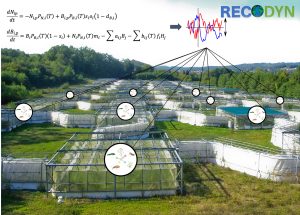
During my time at SETE, I began to develop a growing interest in the potential applications of the Metatron within the field of restoration ecology. Although the academic career led me to take a research position at the Basque Centre for Climate Change (Spain), such interest did not fade away and materialised when RECODYN was granted. The challenge was obvious: how can we repeatedly sample multiple variables on the Metatron platform (remember the temporal dynamics that we aim for), given the remote location of the experiment over 400km away and in a different country?
Indeed, this challenge has proven to be multifaceted. Firstly, we must navigate the complex bureaucracy across Spain, France, and the European Union. Secondly, securing housing and transportation for a seven-month period each year during the growing season in a rural area presents a logistical hurdle. Thirdly, the intense fieldwork days, involving long hours in the experiment, laboratories, and the greenhouse, coupled with daily close interaction among team members, could lead to physical and emotional exhaustion at times.
Furthermore, the application of several ecological theories and the transition between experimental/empirical and modelling approaches are intellectually demanding, but they also foster a very stimulating research environment.
Assembling a great team of people, including field/lab technicians, PhDs, postdocs, and an administrative project officer, along with the support of the Basque Centre for Climate Change (BC3) and the SETE – CNRS, has been fundamental to navigating the challenges of RECODYN. Each member fulfils key tasks and responsibilities essential to the project’s success.
Despite the challenges, this project offers a valuable opportunity to understand ecological community recovery after disturbances and under global change, and I believe the scientific challenges truly outweigh the logistical concerns. The goal of RECODYN is ambitious yet crucial: to contribute to moving restoration ecology from an idiosyncratic discipline to a predictive and more globally applicable science.
Please note, this article will also appear in the 23rd edition of our quarterly publication.