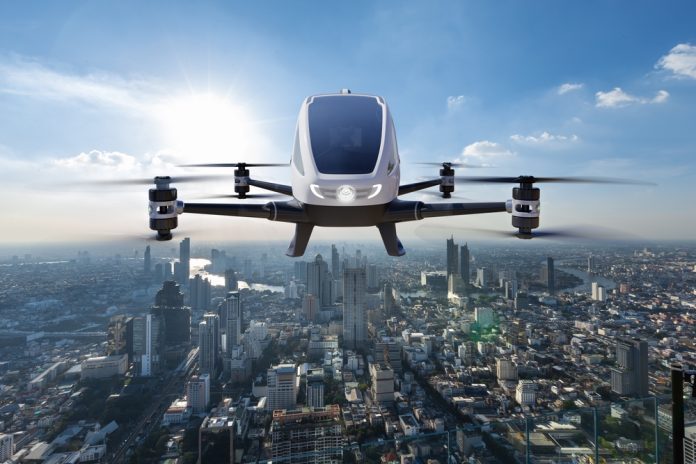
Urban Air Mobility (UAM) promises to redefine how we navigate cities, with air taxis poised to ease congestion and enhance connectivity.
As eVTOL (electric vertical takeoff and landing) technologies mature and pilot programmes prepare for launch by 2025, significant challenges remain.

Regulatory frameworks, safety protocols, and infrastructure development are critical hurdles that must be overcome before air taxis become a routine part of urban transit.
The journey from concept to reality is complex, leaving one to wonder: what will it take for these futuristic vehicles to evolve from test flights to everyday commuting?
What is urban air mobility?
As urbanisation accelerates, UAM offers a promising solution to growing traffic congestion in cities.
It envisions a future where air taxis and electric aircraft are integral to urban transportation, providing efficient and sustainable alternatives to traditional road travel.
This innovation is expected not only to alleviate traffic but also to meet the needs of a burgeoning urban population projected to reach 5 billion by 2030.
Successful implementation of UAM demands a robust infrastructure network, including vertiports and designated takeoff and landing zones that integrate seamlessly into urban environments.
The Federal Aviation Administration (FAA) forecasts the operational debut of electric air taxis by 2028, contingent upon significant infrastructure development and regulatory compliance.
A major obstacle remains: regulatory approval. Building public trust in safety will be equally crucial to fostering acceptance. With the UAM market projected to grow to $31bn by 2031, the sector is poised for transformation if it can overcome these critical hurdles.
eVTOLs: The technology powering urban air mobility
eVTOL aircraft represent a major leap forward in urban transportation, engineered for efficient operation within cities.
Utilising advanced electric propulsion systems, eVTOLs promise lower noise levels and greater energy efficiency compared to traditional aircraft.
Their ability to take off and land vertically eliminates the need for long runways, enabling operations in densely populated areas.
Several innovative eVTOL designs are emerging:
- Multirotor designs: Optimised for short-range, offering stability and maneuverability in tight spaces.
- Fixed-wing models: Combine vertical lift with aerodynamic efficiency, extending range for longer urban commutes.
- Hybrid systems: Blend electric and combustion engines, providing greater operational flexibility and range.
- Point-to-point aerial transport: Aims to reduce travel times and ease ground traffic congestion.
Ensuring the safe integration of eVTOLs into city airspace requires robust certification and safety protocols.
Notably, the FAA has recognised powered lift aircraft as a distinct civil category, highlighting the need for new regulatory frameworks in this rapidly evolving field.
Who’s leading the air taxi race?
Although UAM is still in its early stages, a competitive race among industry leaders is well underway.
Aerospace giants and agile startups alike are investing heavily – over $6 billion so far – in the development of cutting-edge eVTOL technologies.
Key players are advancing designs that promise to meet urban transportation demands while offering sustainable alternatives to ground travel. However, technological innovation alone is not enough.
Regulatory certification by the FAA, EASA, and other authorities will be crucial in ensuring that air taxi operations meet stringent safety and operational standards.
Collaboration between manufacturers, infrastructure developers, and regulators will be key to integrating air taxis into urban transportation ecosystems, paving the way for a new era in mobility.
Infrastructure and airspace challenges
Creating the infrastructure and managing airspace for urban air mobility presents a complex array of challenges.
A dense network of vertiports must be established, requiring significant investment and careful planning to minimise disruption to existing urban landscapes.
Integrating eVTOL operations into existing transportation systems also demands sophisticated air traffic management solutions and close stakeholder collaboration.
The road to mass adoption faces major obstacles:
- Vertiport networks: Essential for accessibility and operational efficiency.
- Airspace management: Complex coordination is needed to ensure safety.
- Regulatory compliance: Critical for certification and public acceptance.
- High costs: Infrastructure development and certification processes demand substantial investment.
Addressing these elements is essential to the future success of urban air mobility.
Safety, certification, and building public trust
Safety and certification form the foundation for the success of urban air mobility. The FAA’s recognition of powered lift aircraft underscores the importance of adapting safety standards to new technologies.
Certification for eVTOLs is expected to take 3-4 years, requiring strict adherence to navigation, surveillance, and operational benchmarks equivalent to those for commercial aviation.
Public trust will be pivotal. Transparent regulatory frameworks and high safety standards are essential to winning public confidence. Industry collaboration will also be key, ensuring safety measures align with existing air traffic regulations.
In parallel, the design and operation of vertiports must prioritise safety, further reinforcing public trust. Collectively, these efforts will create a robust foundation for the widespread acceptance of air taxis in everyday urban life.
Sectors set to benefit from air taxis
The rise of air taxis promises transformative benefits across a range of sectors. Key industries poised to gain include:
- Transportation: Air taxis offer a faster, more efficient alternative to traditional ground transport.
- Logistics and delivery: Rapid aerial transport could transform urban logistics, contributing to a potential $90bn market by 2050.
- Tourism and hospitality: Faster access to attractions and hotels could create new opportunities for high-end and experiential travel services.
- Real estate: Properties near vertiport hubs could see a surge in value, changing patterns of urban development.
Additionally, the environmental benefits of electric propulsion align with sustainability goals, reducing emissions and promoting cleaner urban living environments.
Pilot programmes and early launch cities
The rollout of air taxis will begin with pilot programs in select urban centers by 2025. These programs will integrate air taxis into existing transport frameworks, enhance access to busy hubs, and rigorously test infrastructure like vertiports under real-world conditions.
Collaboration between city authorities and air taxi operators will be critical to identifying ideal vertiport locations and achieving early regulatory compliance. The insights gained from these pilot projects will shape the next wave of regulatory frameworks, infrastructure planning, and operational strategies.
Cities leading these initiatives will set the benchmark for air taxi adoption. By 2028, informed by early learnings, full-scale commercial operations are anticipated, paving the way for broader adoption in the 2030s.
The road to mass adoption
Urban air mobility has the potential to revolutionise city transport – but widespread adoption hinges on solving several key challenges:
- Regulatory frameworks: Comprehensive rules are needed to ensure safety and efficiency.
- Public trust and safety: High standards must be maintained to build confidence.
- Vertiport development: A dense, accessible network of landing zones is essential.
- Technological advancements: Continued progress in battery technology and noise reduction will improve the economic and social viability of air taxis.
Stakeholder collaboration will be crucial to addressing regulatory gaps, developing infrastructure, and fostering public trust.
As the UAM market matures, overcoming these challenges will be critical to establishing air taxis as a sustainable, efficient alternative to traditional urban transport – potentially reshaping cities by the early 2030s.
This article is written in partnership with Centennial College.