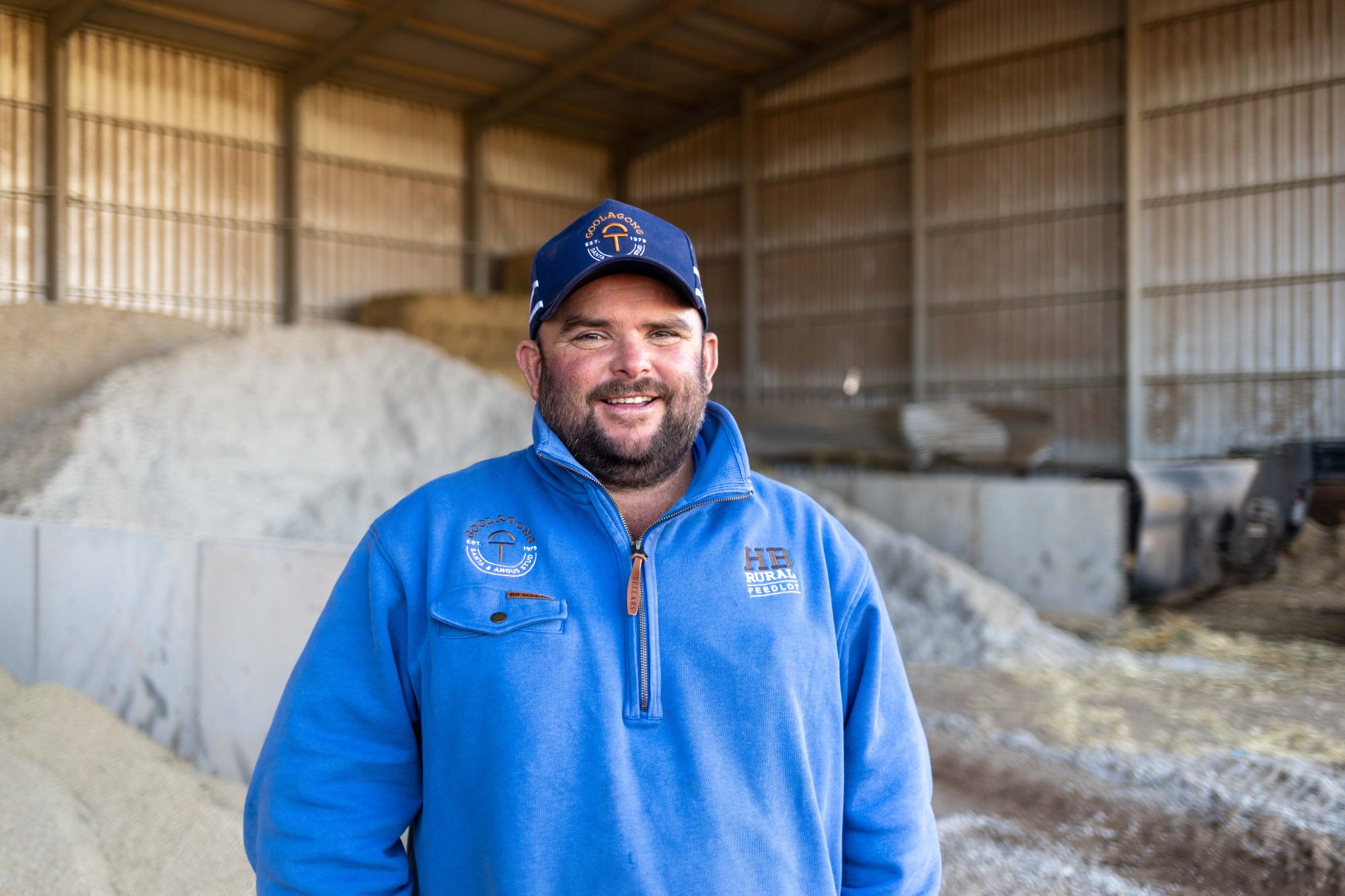
Heath Tiller, a farmer in South Australia, explains his decision to use CH4 Global’s Methane Tamer seaweed-based food supplement to help reduce methane emissions in his feedlot cattle.
This year, I made a decision that I think will change how we do business at my feedlot forever. After a few years of testing, I’ve started feeding a seaweed supplement to all of the 1,500 cattle in my feedlot operation in South Australia, about two and a half hours north of Adelaide near Port Pirie. It’s a big step, but it’s one that makes complete sense when you look at the numbers and the broader picture facing livestock farmers.
Methane emissions in the cattle industry
The methane emissions issue has been hanging over the cattle industry like a dark cloud for years now. For those of you who don’t spend your days around cattle, here’s the problem: every cow naturally produces methane in their stomach as they digest grass and feed, and they release it when they burp. It might sound harmless enough, but methane is actually 80 times more powerful than carbon dioxide when it comes to trapping heat in our atmosphere. And when you consider that there are 1.5 billion cattle on the planet, you quickly understand why livestock farming is one of the biggest manmade sources of methane out there.
I remember years ago when they first started talking about farms having to plant trees to offset the emissions from their livestock. Farmers like me were alarmed because the numbers just didn’t add up. How were we going to plant that many trees? We wouldn’t have any farm left to actually farm on! Like a lot of people in this business, I’ve been hoping something would come along that would let us keep doing what we do best while addressing the environmental concerns.
How it all started
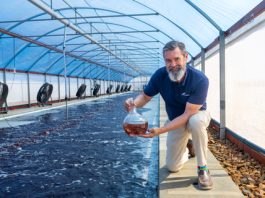
About five years ago, my friend told me about a company called CH4 Global. They were working with a red seaweed called Asparagopsis, which actually grows wild right here off the coast of South Australia, that research had shown could dramatically reduce methane production when added to cattle feed. My friend thought it sounded promising, so he made contact with CH4 Global and then got me involved.
I’ve always liked trying new things and keeping up with the latest technologies. When I heard about what they were doing with Asparagopsis, I thought: “Well, this is probably the way the world’s going to go.” You want to try and do the best thing by every animal you produce and keep it as clean and as green as you can.
What impressed me straight away was that CH4 Global wasn’t just some bloke sitting in an office somewhere dreaming things up. It is a proper company with operations in several countries, and its CEO, Steve Meller, seemed like a really good guy when I got to talk to him about it.
Building on feedback
A few years ago, I did an initial trial of a freeze-dried Asparagopsis prototype provided by CH4 Global. The first trial was pretty small — just ten head and ten without it, fed for 90 days. The cattle ate it no worries at all, and there were no issues with palatability. But that product was quite different from what we’re using now. It was more crumbly and dusty – not ideal for getting an even mix through our feed wagon.
This is where things got interesting. CH4 Global asked me what I thought, and they actually listened to the feedback. I told them they needed a very consistent product that could blend evenly through the mixer to ensure even consumption. Feedlotting is all about getting those little one percenters right – getting the ration spot on and achieving the best feed conversions possible.
CH4 Global went back to the drawing board and developed a formulated Asparagopsis-based feed additive that they called Methane Tamer. By the time we did a bigger implementation trial last year – 80 head with Methane Tamer and 80 without – they’d refined the product significantly. It was much more even and consistent. The improvement in handling made all the difference for us operationally.
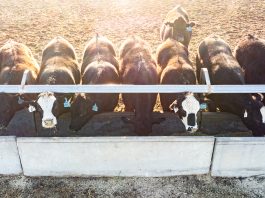
During that second trial, we monitored the cattle closely. We checked the feed bunks every morning to make sure they were eating everything, weighed them fortnightly, and tracked their performance carefully.
What we found was remarkable. The cattle on Methane Tamer were eating slightly less feed but achieving the same weight gains as the control group. That represents a feed conversion efficiency improvement of a few percent over the 100-day period. In the feedlot business, margins like that matter enormously.
The science behind this makes sense when you think about it. Research going back decades has shown that, when cattle produce methane, they’re essentially losing feed energy that could otherwise go towards growth. By blocking that methane production, more of the energy from their feed gets redirected into putting on weight or making milk rather than being burped away as gas.
Why I’m all in
In my experience, the best solutions in farming are the ones that make sense both environmentally and economically – and ideally don’t involve a bunch of synthetic chemicals that cause consumers to worry about what’s going in their food. Methane Tamer ticks all these boxes. It’s why I’ve committed my entire operation to this approach, and why I believe other feedlot operators will follow suit once they see the results.
What excites me most is that it’s a genuine win-win-win situation. Farmers get better feed conversion efficiency and access to premium markets. Consumers get high-quality beef with a reduced environmental footprint. And the planet gets a meaningful reduction in greenhouse gas emissions. CH4 Global estimates that, if just 10% of the world’s cattle were fed this seaweed supplement, it would deliver more climate benefit than taking 50 million cars off the road.
I won’t lie, there are still challenges ahead. We’re working with partners to establish dedicated distribution channels for low-methane beef, and we need to educate consumers about what this all means. But these are good problems to have. They’re the kinds of challenges that come with being at the forefront of industry transformation.
The way I see it, this innovation gives our industry a path forward that addresses environmental concerns without forcing us to fundamentally change how we operate. We’re not being asked to plant trees across our entire properties or reduce our herd sizes. We’re being offered a natural solution that makes our operations more efficient while addressing the methane issue head-on.
After years of watching this technology develop and seeing the results firsthand, I’m confident we’ve found something that works. The cattle are healthy, the operational efficiency is better, and we’re producing beef with a dramatically smaller environmental footprint. For an industry that’s been under pressure for years, that’s exactly the kind of breakthrough we need.
Heath Tiller operates HB Rural, a feedlot operation in South Australia.
Please note, this article will also appear in our Animal Health Special Focus publication.