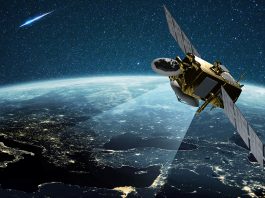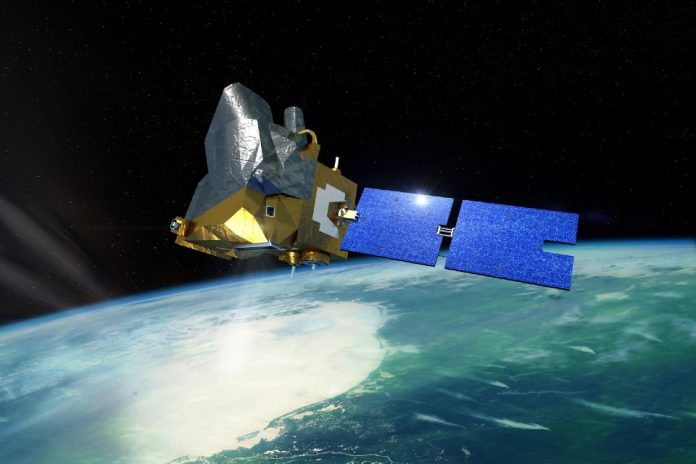
In a landmark achievement for climate science and space innovation, the UK and France have launched MicroCarb, Europe’s first satellite dedicated solely to CO2 monitoring.
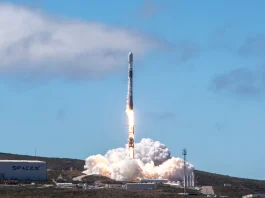
The satellite lifted off aboard a Vega-C rocket from Kourou, French Guiana, and is now orbiting 650km above Earth. Backed by a £15m investment from the UK Space Agency, this mission marks a significant advancement in global climate data collection.
Developed jointly by the UK and France’s CNES space agency, MicroCarb is the latest addition to the international greenhouse gas virtual constellation – a global network of satellites working in unison to monitor Earth’s atmospheric composition.
Dr Paul Bate, Chief Executive of the UK Space Agency, highlighted the significance of the mission: “Satellites like MicroCarb are our eyes in the sky.
“Over half of the critical data we use to understand climate change comes from space, and MicroCarb’s successful launch is a major leap forward in our ability to track carbon emissions and absorption with unprecedented accuracy, from the world’s cities to its forests and oceans.
“Backed by UK and French investment and expertise, it’s a proud moment for both our space sectors and a powerful example of international collaboration in action.”
Pinpointing urban emissions with unrivalled precision
What sets MicroCarb apart is its ability to track urban CO2 emissions at a highly detailed resolution of 2km x 2km.
With cities responsible for over 70% of global carbon dioxide output, this capability is crucial for understanding localised pollution and assessing progress toward net-zero targets.
The satellite’s city-scanning technology enables CO2 monitoring with unprecedented granularity, directly informing climate policies, national carbon inventories, and compliance with the Paris Agreement.
Illuminating the role of nature in carbon capture
Beyond cities, MicroCarb also provides key insights into natural carbon sinks such as forests and oceans.
It does so by measuring Solar Induced Fluorescence (SIF) – a faint glow emitted by plants during photosynthesis. This allows scientists to distinguish between CO2 absorbed by vegetation and human-generated emissions.
Understanding how much carbon the planet can naturally absorb is vital for improving climate models and identifying effective carbon capture and storage (CCS) solutions.
UK expertise driving global climate innovation
British scientists and engineers have been instrumental in every stage of the MicroCarb mission.
The National Physical Laboratory (NPL) provided crucial ground calibration systems, while RAL Space developed the satellite’s pointing and calibration technology.
UK-based Thales Alenia Space led the final assembly and testing of the spacecraft, and GMV UK collaborated with France’s Capgemini to design and validate the data-processing algorithms that will convert raw measurements into actionable climate insights.
Dr Rob Parker from the University of Leicester is spearheading the development of the SIF retrieval algorithm, and academic leadership comes from Professor Paul Palmer of the National Centre for Earth Observation (NCEO) and the University of Edinburgh, who will oversee the translation of MicroCarb’s data into detailed emissions maps.
Palmer, UK lead for Microcarb, added: “Currently, we are witnessing rapid and unprecedented changes in the global carbon cycle. MicroCarb will deliver SIF and atmospheric CO2 data that are crucial for understanding those changes.
“It will also reinvigorate an ageing virtual satellite constellation, providing high-quality data to inform the next Global Stocktake of the Paris Agreement.
“More broadly, MicroCarb exemplifies the world-class capabilities of UK science and engineering, working closely with our French colleagues.”
A milestone in international climate cooperation
The MicroCarb project stems from a 2014 bilateral agreement between the UK and France, renewed in 2021 to strengthen joint efforts in space and climate technologies.
The satellite represents a growing strategic partnership between the two nations and reinforces Europe’s commitment to climate action.
As the world strives to limit warming to 1.5°C, transparent, verifiable CO2 monitoring is more critical than ever.
The first data from MicroCarb is expected within a year and will play a vital role in shaping international climate assessments and future Earth observation missions.
With MicroCarb now in orbit, the era of high-resolution global CO2 monitoring has begun – offering hope, accountability, and science-based action in the race against climate change.