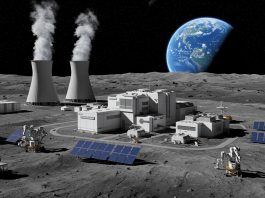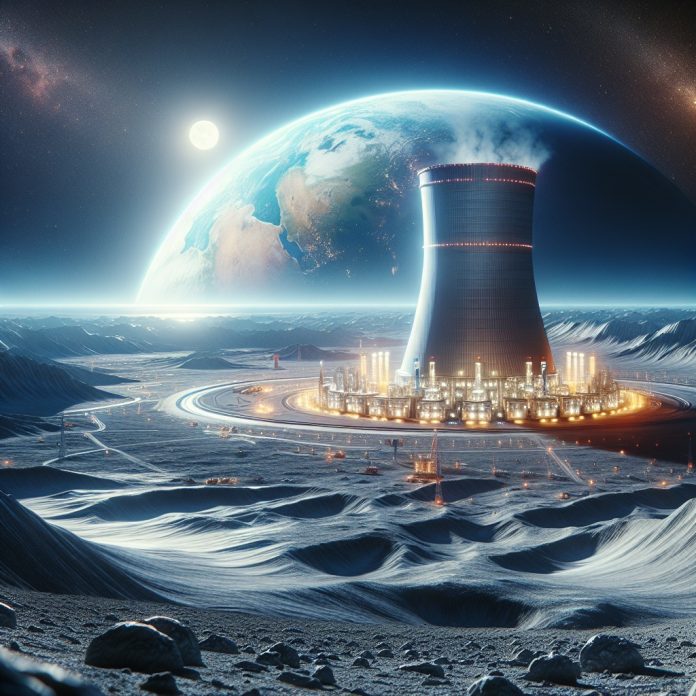
The United States Department of Energy (DOE) and NASA are taking a giant leap toward a bold vision: a nuclear reactor on the Moon.
In a newly signed memorandum of understanding (MOU), the two agencies have solidified their decades-long partnership to develop a fission surface power system capable of powering lunar missions – and eventually, future expeditions to Mars.
This initiative represents more than just scientific ambition. It’s a statement of US leadership in space exploration, ensuring America remains at the forefront of extraterrestrial energy and technology.
Officials project that the first lunar reactor could be operational as early as 2030, ushering in a new era of sustained human presence beyond Earth.
Commenting on the science fiction-like ambitions, Jared Isaacman said: “America is committed to returning to the Moon, building the infrastructure to stay, and making the investments required for the next giant leap to Mars and beyond.
Achieving this future requires harnessing nuclear power. This agreement enables closer collaboration between NASA and the Department of Energy to deliver the capabilities necessary to usher in the Golden Age of space exploration and discovery.”
Read our recent interview with Professor Michael Fitzpatrick, a nuclear expert from Coventry University, to discover why and how the US will build a nuclear reactor on the Moon.

Why the Moon needs nuclear power
The Moon is a harsh and unforgiving environment. Its two-week-long nights, frigid temperatures, and frequent dust storms make relying on solar energy alone unreliable. That’s where a nuclear reactor on the Moon comes in.
Unlike solar panels, a lunar nuclear reactor can provide continuous, high-density power, operating day and night without interruption.
This energy could support habitats, scientific instruments, communication networks, and even resource mining – essentially making permanent lunar missions feasible.
DOE and NASA are working together on every step of the process- from design and fuel development to authorisation and launch readiness – drawing on more than 50 years of collaboration in nuclear research and space innovation.
US Secretary of Energy Chris Wright added: “History shows that when American science and innovation come together, from the Manhattan Project to the Apollo Mission, our nation leads the world to reach new frontiers once thought impossible.
“This agreement continues that legacy. The department is proud to work with NASA and the commercial space industry on what will be one of the greatest technical achievements in the history of nuclear energy and space exploration.”
The global race for lunar energy
The United States isn’t the only nation exploring lunar fission power.
Countries worldwide are investigating nuclear reactors on the Moon as a solution to one of space exploration’s toughest challenges: reliable energy.
A small, compact reactor can overcome the Moon’s long nights and extreme conditions, offering an energy-dense solution for long-term missions and lunar bases.
For many, the Moon is just the beginning. Mastering nuclear power off-world opens the door to deeper space missions, including crewed journeys to Mars.
By developing reactors on the lunar surface, nations can reduce reliance on Earth-based supply chains while demonstrating technological leadership in the final frontier.
Powering the future of space exploration
The DOE-NASA initiative is a vision for the future.
A nuclear reactor on the Moon won’t just keep the lights on; it will make sustained lunar exploration possible, drive scientific discovery, and cement America’s role as a leader in space innovation.
The countdown to lunar energy independence has begun.