In a historic leap for precision science, the European Space Agency (ESA) has installed the world’s most advanced atomic clock system aboard the International Space Station (ISS).
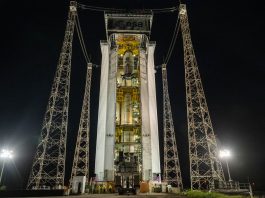
Known as the Atomic Clock Ensemble in Space (ACES), this groundbreaking facility was launched on 21 April 2025, aboard a SpaceX Falcon 9 rocket.
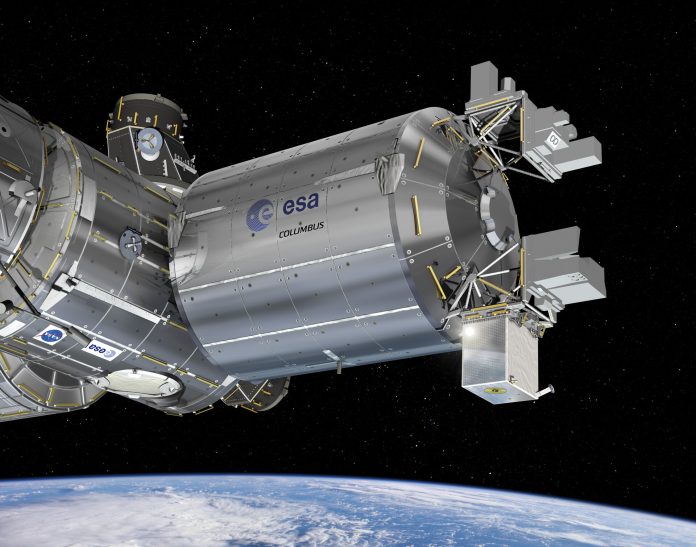
On 25 April, the Canadian robotic arm aboard the ISS carefully positioned ACES on the Earth-facing side of ESA’s Columbus laboratory.
Planned to operate for 30 months, ACES brings together the most accurate atomic clocks ever sent into space.
ACES is designed to keep time with unprecedented accuracy, push the boundaries of fundamental physics, transform global timekeeping, and help redefine how humanity measures the very fabric of time itself.
What is an atomic clock?
An atomic clock is a highly precise timekeeping device that measures time-based on the vibrations of atoms, typically caesium or hydrogen.
Unlike traditional clocks, which rely on mechanical parts or quartz vibrations, atomic clocks exploit the consistent frequency of atomic transitions.
This allows them to maintain astonishing accuracy – losing or gaining only a second over millions of years.
Atomic clocks are critical for GPS systems, deep space navigation, telecommunications, and scientific experiments testing the laws of physics.
The science behind ACES
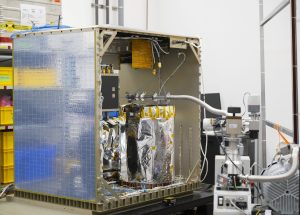
Developed with European industry leadership from Airbus, ACES carries two groundbreaking timepieces: PHARAO, a caesium fountain clock developed by France’s CNES, and the Space Hydrogen Maser from Switzerland’s Safran Timing Technologies.
These instruments, combined with sophisticated microwave and laser links, will enable time transmission from space with unparalleled precision.
By connecting clocks on Earth and in orbit, ACES will create a network of clocks, enabling scientists to explore the nature of time itself, test predictions from Einstein’s general relativity, and lay the foundation for redefining the second with next-generation optical clocks.
Simon Weinberg, ACES Project Scientist, ESA, added: “I’m so excited and proud that our incredibly complex and hugely important project is now in space after many years of hard work.
“This is a major achievement for ESA and the science community, and I look forward to seeing the results of the hard work done by Airbus, Timetech, CNES, Safran Time Technologies and ESA, together with partners all over Europe. This is ESA’s ‘jewel in the crown’ on the International Space Station.”
The road ahead
Following installation, the first activation of ACES is set for today (28 April 2025). Engineers will establish communication links with ground stations, stabilise thermal systems, and prepare the system for full operation.
Over the next six months, a rigorous commissioning phase will calibrate instruments and test the system’s extraordinary time-transfer capabilities.
ACES is expected to achieve time comparison accuracies within 10 quintillionths of a second – ten to one hundred times better than current GPS-based systems.
Once commissioning concludes, ACES will enter a two-year science phase, delivering new insights into fundamental physics and revolutionising the science of time measurement.