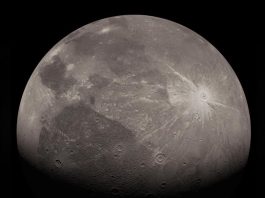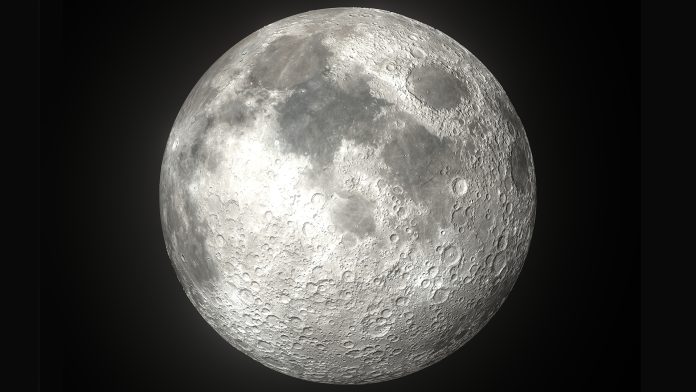
Walt Engelund, Deputy Associate Administrator for Programs in the Space Technology Mission Directorate (STMD) at NASA Headquarters, details how the agency is working to return humans to the Moon and advance towards Mars exploration.
Since NASA’s Apollo program first landed humans on the Moon in the late 1960s, the quest to return human explorers to the lunar surface and continue on to Mars has been a topic of continuous discussion, development, and analysis. For over 50 years, NASA has explored many different architectures that would resume crewed missions to the Moon or send them on to Mars.
In September 2022, NASA published its Moon to Mars objectives, setting out an objectives-based approach to the agency’s human deep space exploration efforts. Developed in close collaboration with industry, academia, international partners, and the NASA workforce, this approach focuses on the big picture – the ‘what’ and ‘why’ of deep space exploration – before prescribing the ‘how’.
To help deliver on these objectives, NASA developed a Moon to Mars Architecture, setting out a roadmap of key technologies and capabilities needed to return to the Moon and venture on to Mars. This Architecture is re-evaluated and updated on an annual basis – in the form of the Architecture Concept Review cycle – to realise change in response to new technologies, discoveries, and priorities.
As NASA embarks on the next era of space exploration, its Space Technology Mission Directorate (STMD) is dedicated to advancing technologies and testing new capabilities at the Moon – many of which will prove critical at Mars. To learn more about NASA’s plans for Moon and Mars exploration and the ongoing work to help achieve these goals, The Innovation Platform spoke to Walt Engelund, Deputy Associate Administrator for Programs in the Space Technology Mission Directorate (STMD) at NASA Headquarters.
Can you explain more about NASA’s goals in Moon and Mars exploration, and particularly the Moon to Mars Strategy?
NASA has been working on technologies and mission architectures for both Moon and Mars exploration, with the idea that things we can demonstrate and do on the Moon will feed forward and help us one day to be able to send humans to Mars. NASA’s Moon to Mars Architecture approach works with experts across the agency, industry, academia, and the international community to continuously evolve a blueprint for crewed exploration of the Moon and Mars.
In the past, NASA has relied on the ‘owner-operator’ model for most of our missions. In the new paradigm, NASA is working with industry and empowering them to do the things that they can do best and are asking them to own and operate the rockets and spacecraft, and we’ll be one of many users. There is, of course, some transition and learning on both sides, but I believe ultimately it will support the growing space economy and expansion into the solar system. This will enable NASA to continue developing new technologies allowing us to explore in new ways – including new robotic and human missions to the Moon, Mars, and beyond.
How is the STMD working to support these goals?
The Space Technology Mission Directorate is focused on the development and demonstration of transformational space technologies that will enable human and robotic exploration of space, including the Moon and Mars. Much of our current focus is on infrastructure technologies, which you can think of as the basic utilities for long-term sustained presence in space and on the lunar or Martian surface. Things like advanced power, optical laser-based communications systems, deep space navigation technologies, and advanced materials and in-space manufacturing capabilities. We are also looking at new ways to land larger payloads, more precisely and safely, on the Moon and other planetary bodies including Mars.
In STMD, we work closely with our industry and agency partners to support NASA’s Moon to Mars portfolio, including human exploration and robotic missions like the Commercial Lunar Payload Services (CLPS) initiative. The CLPS missions allow NASA to buy payload space on commercial lunar landers, instead of owning and operating the landers. Through this model, STMD has not only worked closely with several of the commercial companies to help them develop new technologies for their commercial lunar landers, but we have also developed and flown several of our own payloads to the surface of the Moon on their vehicles.
Can you share some examples of key missions and initiatives the STMD is currently pursuing in the area of Moon and Mars exploration?
Space power is a big push right now, and STMD is supporting the agency’s development of deployable solar power arrays for the Moon, small nuclear fission reactors, and advanced power storage including high efficiency batteries and fuel cells. We also need ways to distribute power to multiple places and lunar surface assets, so we are looking at things like wireless power charging and power beaming technologies. Things that have been developed and demonstrated for use here on Earth but can be adapted for use in space.
Another capability we’re developing is technology for precision navigation and landing. We have some technologies that are utilising laser light and Light Detection and Ranging (LiDAR) capabilities that we are adapting for space applications. When a spacecraft is approaching a planet’s surface for landing, we can use these space LiDAR systems to precisely navigate to a particular location and also to map and avoid hazards like craters and large rocks. These systems are much like the technologies that are being deployed on autonomous driving automobiles here on Earth.
What are the biggest accomplishments from the STMD in this area so far?
In the last several years, we’ve had a number of very successful technology demonstrations. Right now, we have something called the Deep Space Optical Communications (DSOC) experiment flying on the Psyche spacecraft out beyond Mars. Psyche is a robotic science mission to explore a metal-rich asteroid. We took advantage of some extra payload space on the spacecraft to demonstrate a new optical communications technology that uses laser light instead of traditional radio waves to beam signals back to Earth. In this case, the optical system can transmit terabytes of data over 100 times faster than the state-of-the-art radio systems at distances of almost 300 million miles away. This type of advanced communication will be useful when we send humans out to explore places like Mars and beyond.
We also successfully demonstrated something called Navigation Doppler Lidar (NDL) with two of the companies that are flying commercial payloads to the Moon. The NDL system provides very precise measures of velocity and distance to the surface during the landing phase of missions – much more so than traditional radar systems, and at the same time are much smaller, lower mass, and use much less power.
Another successful demonstration we did a few years ago was something called a ‘Hypersonic Inflatable Aerodynamic Heatshield’ (HIAD). Traditional spacecraft use heatshields for hypersonic entry into an atmosphere. The problem is that these headshields are typically very heavy, rigid structures and have to fit inside in a rocket fairing. A HIAD system uses an inflatable pressurised heatshield structure that folds up and packages very small, allowing us to take larger, heavier payloads into an atmosphere and land them on another planet, or even bring large things back to Earth much more efficiently.
What are your priorities for 2025?
We have been investing in power for space and, in particular, something we call fission surface power. Traditional solar power systems are limited in how much power they can provide and how long they can do it. Particularly as you get further away from the Sun at places like Mars. On the Moon, especially at the lunar South Pole, where future missions will land, solar power and batteries would be challenged to provide all of the power that we need as our exploration footprint expands. So, we’re developing a small fission system that we can demonstrate at the Moon and can also be used at Mars.
We’ve also been working on a new high-power electric propulsion thruster. Traditional chemical rocket engines for deep space transportation can provide high thrust but they are less efficient. Electric propulsion thrusters use high current electricity, that can be provided by a source such as solar power, to generate a strong magnetic field. They then use a gas like Xenon and accelerate it through the magnetic field to provide very efficient thrust. It’s been demonstrated at small scale, but we’re aiming to deliver a high-power (12.5 kWatt) electric thruster, which is the kind of power level that we might one day use to send humans to Mars.
The Space Technology Mission Directorate also fosters several industry partnerships to mature innovative technologies, support the agency’s goals, and energise the space economy.
You can learn more about our work and follow our progress at the Moon, Mars, and beyond here.
Please note, this article will also appear in our Space Special Focus publication.