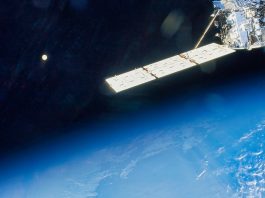
Marina Mercè Cañete, MANTIS Mission Manager, reflects on the recently completed MANTIS mission, which delivered high-resolution imagery and AI insights for the energy, mining, and environmental sectors.
Open Cosmos, a space company dedicated to solving global challenges using space, has recently celebrated the successful completion of its MANTIS (Mission and Agile Nanosatellite for Terrestrial Imagery Services) mission, delivering cutting-edge Earth observation (EO) data and paving the way for more sustainable space operations.
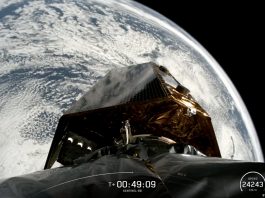
Launched on 11 November 2023 aboard SpaceX’s Transporter-9, MANTIS was the first ESA InCubed satellite, backed by the UK Space Agency, and carried Satlantis’ iSIM90 high-resolution camera and a reconfigurable AI processor from Ubotica.
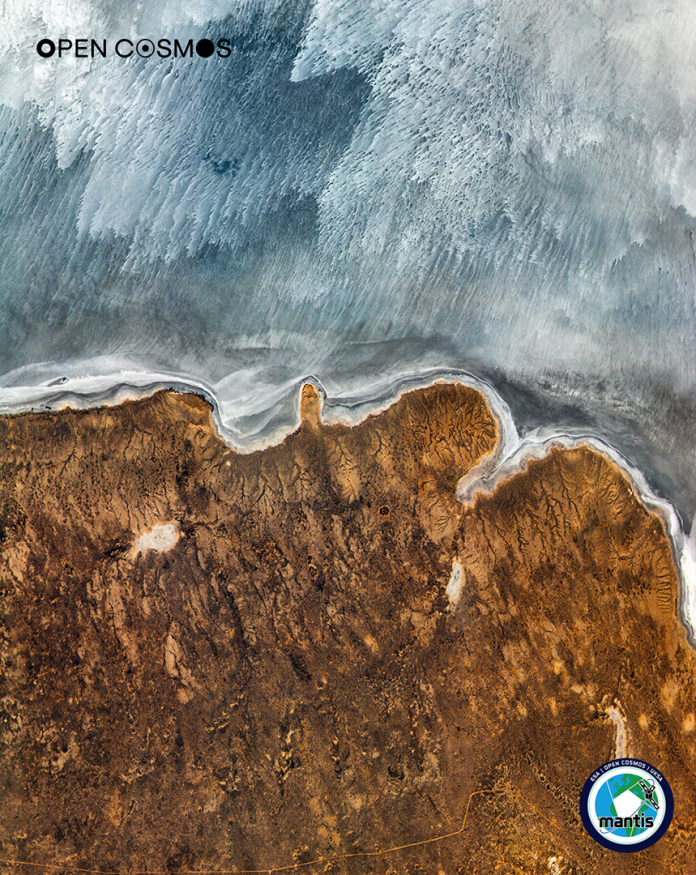
Throughout the two-year mission, MANTIS proved how a small, agile satellite could deliver outsized impact. It completed more than 10,000 orbits, capturing high-resolution daily imagery across half a million square kilometres. Its advanced optics and AI capabilities transformed raw imagery into actionable intelligence in near real time, faster and more efficiently than traditional missions. In turn, this enabled energy, mining and environmental sectors to make faster, more informed decisions.
With sustainability also at the forefront of the mission, the satellite was designed to be permanently shut down at an altitude of 300km and safely de-integrated during atmospheric re-entry, leaving no debris behind.
To learn more about the mission and its achievements, The Innovation Platform spoke to MANTIS Mission Manager Marina Mercè Cañete.
What were the main objectives of MANTIS and what made it unique?
The MANTIS mission was born with the objectives of targeting an addressable customer need; providing resolution EO data over a tailored area of interest to satisfy the needs of the oil and gas industry; and exploring and identifying other data application verticals with similar high-resolution EO data needs.
What made MANTIS unique was its combination of high-resolution multispectral imaging with onboard data processing and AI capabilities, allowing faster and more efficient access to insights directly from orbit. It was also one of the first missions to be designed around multi-user commercial applications, showing how a single satellite can serve different industries and governments simultaneously.
Did you achieve the results you expected?
Yes – MANTIS met and, in several areas, exceeded expectations. The mission successfully demonstrated the ability of small, affordable satellites to provide commercially viable, high-quality Earth imagery. It helped mature and validate our modular end-to-end mission infrastructure, from satellite platform to ground segment and data processing, confirming its reliability for future constellation deployments.
Did you encounter any major challenges during the mission and, if so, how were they overcome?
As with any pioneering mission, one key challenge was integrating multiple advanced payloads and onboard AI processing within a small 12U satellite form factor. This required innovative system engineering and close co-ordination across partners to optimise power, thermal, and data management.
The team overcame these challenges through a careful selection of the model philosophy, developing and testing on prototypes and qualification models before the flight model was built, as well as by leveraging Open Cosmos’ end-to-end mission platform, which streamlined design, validation, and operations. Despite global supply chain pressures at the time, MANTIS launched successfully and operated nominally, validating the approach.
Can you elaborate on the involvement of AI in the mission?
An innovative and reconfigurable AI processing board was onboarded on the MANTIS satellite to enable post processing and identification of features on board the satellite.
Onboard, algorithms enabled pre-processing and prioritisation of images — identifying areas of interest and optimising data downlink, reducing latency and bandwidth needs for the mission.
What benefits have been achieved by MANTIS from a sustainability standpoint?
MANTIS directly contributed to sustainability goals by providing optical imagery and analytics that support environmental monitoring and resource optimisation. Its data can be used for applications like monitoring land degradation, tracking energy infrastructure, and assessing water quality.
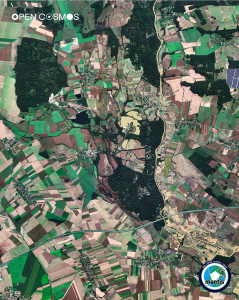
From a mission design perspective, MANTIS also demonstrated efficient use of resources – a compact satellite delivering high data yield, lower launch mass, and energy-efficient operations – setting a new benchmark for sustainable space missions.
Finally, at the end of its mission lifetime, MANTIS has been passivated and deorbited, leaving no space debris behind, contributing to a sustainable use of the low-Earth orbit environment.
How has MANTIS paved the way for future missions?
MANTIS has been instrumental in de-risking the technology and operational model now used in the Open Constellation and the upcoming UK Atlantic Constellation Pathfinder. It proved the viability of modular, AI-enabled satellites for scalable, multi-partner constellations.
The mission has successfully demonstrated that Open Cosmos has the capability to execute end-to-end Earth observation missions, progressing from concept definition to routine in-orbit operations – which has since enabled Open Cosmos to win export contracts in Greece and Spain. In short, MANTIS provided the technical and commercial foundation for a new generation of small satellite constellations focused on climate, sustainability, and international collaboration.
Please note, this article will also appear in the 24th edition of our quarterly publication.