For more than a century, scientists have been captivated by a powerful mystery racing through the cosmos – cosmic rays.
These high-energy particles, zipping through space at nearly the speed of light, bombard Earth from deep within the Milky Way galaxy and far beyond. But where exactly do they come from?
Now, groundbreaking research from astrophysicists at Michigan State University (MSU) is bringing us closer to an answer.
Led by Dr Shuo Zhang, assistant professor of physics and astronomy, two new studies delve into the elusive origins of cosmic rays and the extreme environments that produce them.
The findings offer valuable insights into the cosmic accelerators that launch these particles across vast interstellar distances.
What are cosmic rays, and why do they matter?
Cosmic rays are composed mainly of protons and atomic nuclei, some carrying energies millions of times greater than anything achieved in human-made particle accelerators.
They originate from some of the most energetic and violent astrophysical events in the Universe, such as black holes, supernova explosions, and star-forming regions.
But cosmic rays aren’t just a curiosity of deep space. They’re intimately connected to life on Earth. Every second, around 100 trillion cosmic neutrinos – tiny, ghost-like particles associated with cosmic rays – pass through your body. These neutrinos provide clues to the powerful events that produced the cosmic rays in the first place.
Uncovering the source of cosmic rays not only answers a long-standing question in astrophysics but also opens new doors to understanding galaxy evolution, the behaviour of dark matter, and the life cycle of stars.
Cracking the case: MSU investigates cosmic particle accelerators
Dr Zhang’s research focuses on identifying PeVatrons – astrophysical phenomena capable of accelerating particles to petaelectronvolt energies, or one million billion electron volts.
These cosmic particle accelerators are rare and difficult to study, but Zhang’s team is making significant headway.
In one of the newly published papers, postdoctoral researcher Stephen DiKerby analysed data from the Large High Altitude Air Shower Observatory (LHAASO), which had detected a potential PeVatron.
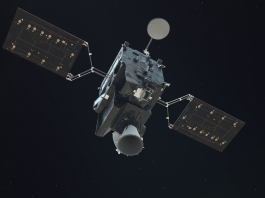
The team used X-ray data from the XMM-Newton space telescope to study the object and discovered a pulsar wind nebula – a bubble of high-energy particles energised by a rapidly spinning neutron star.
This marks one of the first times researchers have confidently identified a PeVatron as a specific type of cosmic ray source. The discovery brings scientists a step closer to understanding how these enigmatic accelerators work.
Students join the galactic quest
The second study involved three undergraduate students – Ella Were, Amiri Walker, and Shaan Karim – who used NASA’s Swift X-ray telescope to observe additional unexplored cosmic ray sources flagged by LHAASO.
Their analysis helped establish upper limits for X-ray emissions from these regions, laying the groundwork for future research.
These findings represent not just progress in cosmic ray science but also a significant opportunity for students to contribute to cutting-edge astrophysics.
What’s next in the search for cosmic ray origins?
Looking ahead, Zhang’s team plans to integrate data from the IceCube Neutrino Observatory with observations from X-ray and gamma-ray telescopes.
One focus will be understanding why some cosmic ray sources emit neutrinos while others do not – a question that could unravel more about the high-energy Universe.
Their research continues to bridge the fields of astronomy and particle physics, with funding support from NASA and the National Science Foundation.
Cosmic rays: A window into the extreme Universe
As MSU’s work shows, the study of cosmic rays is much more than a theoretical exercise. These mysterious particles carry the secrets of some of the Universe’s most extreme environments, and uncovering their origins could transform our understanding of physics and the cosmos itself.
Whether it’s through identifying pulsar wind nebulae or collaborating across scientific disciplines, researchers are inching closer to answering the cosmic question that has lingered for over 100 years: Where do cosmic rays come from?