


Innovation News Network brings you the latest research and innovation news from the fields of science, environment, energy, critical raw materials, technology, and electric vehicles.

Facing new computing challenges in high energy physics experiments
Professor Xavier Vilasis-Cardona explains why computer scientists are so important to the future of high energy physics experiments.
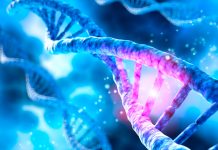
Footage of a DNA helix shows it dancing inside the cell
Researchers at universities in Yorkshire have developed videos based on high-resolution images of a DNA helix, allowing us to see ‘dancing DNA’ for the first time.

ESA is accepting applications for new European astronauts
For the first time in over a decade, the ESA is looking for new European astronauts to do experiments on the International Space Station.

LIFE programme invests €121m into environment, nature, and climate action projects
The European Commission has announced an investment of €121m for new integrated projects under the LIFE programme.
Scientists detect quantum information stored in 100,000 nuclear quantum bits
Researchers have detected quantum information in 100,000 nuclear quantum bits, bringing us one step closer to the quantum internet.
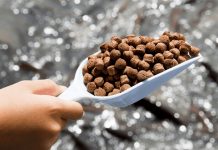
Reducing costs through innovative aquaculture feeding systems
Daniit A/S has now developed an aquaculture feeding system that can handle fish feed pellets without crushing them.
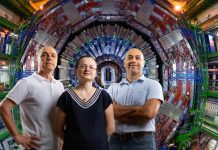
University at Buffalo’s high energy physics research
Professor Avto Kharchilava reports on University at Buffalo's involvement in high energy physics research, including joining CERN’s CMS Collaboration, measurements of SM processes and searches for BSM phenomena.
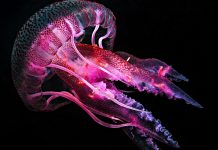
New underwater robot will gather extensive data on deep-sea species
Spanish researchers have developed a new underwater robot to conduct in-depth analyses of deep-sea species.
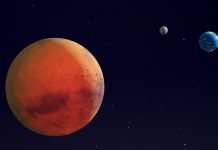
Oxidising atmosphere of Mars created by microbes
Astronomers suggest that the oxidising atmosphere of Mars was created when microbes began to respire and produce oxygen.
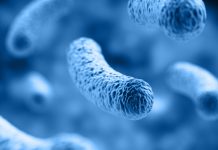
Studying bacteria to understand the functionality of DNA-repair proteins
The University of Gothenburg’s Dr Björn Burmann explains how his team’s research into bacteria is providing new insights into the functionality of DNA-repair proteins.