Stela Tkatchova, Programme Manager for Space Systems at the European Innovation Council and SMEs Executive Agency (EISMEA), explains how we can not only remove space debris but also consider space debris as a resource and learn to utilise it to create a greener and more sustainable space environment.
The European Innovation Council (EIC) funds high-risk and breakthrough technologies in the space industry, from very low technology readiness level (TRL) ( 1-4), and mid TRL (4-6), through to high TRL (6-9). It aids SMEs and start-ups through their innovation cycle and to overcome the ‘valley of death’ by bringing their innovations to the marketplace. The EIC space portfolio fully supports the EU Newspace industry.
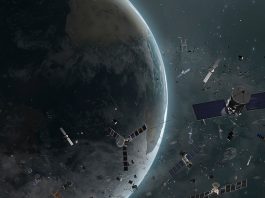
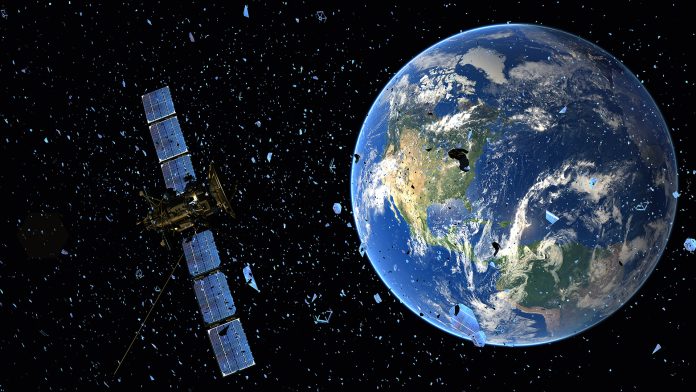
Maintaining a sustainable space environment is an extremely challenging task, and one that is growing in complexity as the number of satellites in space continues to accelerate at a rapid pace. A major threat to space sustainability is space debris, which consists of mainly manmade objects in low-Earth orbit and can range from a fleck of paint from a spacecraft to satellites that are no longer working. This is a concerning issue, with the mass of all space objects in Earth’s orbit totalling more than 15,100 tonnes.
In orbit, space debris can reach speeds of up to 18,000 miles per hour, posing a significant safety risk to spacecraft infrastructure and, in the long-term, to people and property in space and on Earth. Other sustainability challenges attached to satellites include emissions from rocket launches and debris burn-up.
With an extensive portfolio designed to tackle some of the biggest challenges facing Europe’s space sector, the EIC Space programme funds a wide range of projects to help accelerate innovation in space technologies – space debris and sustainability being one of its key priorities. To find out more about the EIC’s Space programme and its work around space debris sustainability, Editor Georgie Purcell spoke to Stela Tkatchova, Programme Manager for Space Systems at the European Innovation Council and SMEs Executive Agency (EISMEA).
What are the key priorities shaping the EIC’s current Space programme?
The EIC funds game-changing innovation and high-risk ideas from very low Technology Readiness Levels (TRL). Our Pathfinder programme supports developments from TRL 1-4; the Transition programme takes technologies from TRL 4-6; and the Accelerator programme advances innovations from TRL 6-9.
When I joined EIC over three years ago, I started to analyse the EIC space projects and there were quite a few. Having a EIC programme manager (PM) on Space Systems and space challenge topics in the EIC annual work programme, the EIC space portfolio grew in the last three years through the three EIC Schemes. Today, the portfolio consists of three pillars. The first pillar, Space Debris Sustainability, tackles issues related to active debris removal, including debris removal, space debris monitoring, in-orbit satellite servicing, laser ablative debris removal approaches, using radar and optical data, etc. The second pillar is Enabling Space Technologies, which looks at cargo capsules, propulsion technologies, manufacturing of solar arrays, and flat panel antennas for satellite communication, etc. The last pillar is Earth Observation and Meteorology, which has, for example, constellation microsatellites and looks at water stress detection using thermal infrared (TIR) data. We also have projects which have developed artificial intelligence (AI) algorithms using Earth observation data for predictive monitoring of infrastructure grids or precision agriculture.
Today, we have around 55 projects in our portfolio overall. The beauty of the EIC is that the programme managers define and propose topics for annual work programmes and perform pro-active portfolio management. In my role as a PM for Space Systems & Technologies, I bring critical and strategic technology/market foresight and identify future challenges/opportunities for emerging space technologies and market-driven innovations, and propose space-related challenges for the annual EIC work programme. Basically, I propose and shape the EIC space vision and lead the R&I activities of the EIC space portfolio projects from TRL 1 to TRL 9. I also provide R&I, technology demo, and early commercialisation guidance to the EIC space portfolio projects.
In 2023, I proposed a topic on in-space solar energy harvesting – a space challenge aimed at the collection, conversion, and wireless power transmission of solar energy in space among various spacecraft, grids, or re-transmitting stations in space.
In-space solar energy harvesting will change the way we perform space exploration. As the need for clean and renewable in-space energy and in-space propulsion increases, that will encourage breakthrough innovations in approaches, methods and technologies for further E2E efficiency in the collection, conversion and WPT of in-space solar energy. The selected nine pathfinder projects work in three working groups – solar cells (WG1), wireless power transmission (laser/microwave)(WG2), and in-space propulsion (WG3). In each working group, I have requested the projects to perform a state-of-the-art analysis of the existing technologies and identify gaps and opportunities for the development of R&I innovations. For additional information on the progress of the portfolio, please see their newsletter.
In WP2023, an additional topic I proposed was ‘customer-driven’ innovative space applications for an Accelerator calling for technologies in the following domains:
- S/C inspection
- Collision avoidance
- Collection, recovery, and reuse of space debris
- In-orbit satellite servicing, active debris removal, and end of life
- In-space assembly manufacturing (ISAM)
- Microgravity platforms
In 2024, we launched a Pathfinder on strengthening the sustainability and resilience of the EU space infrastructure, looking at space debris mitigation, remediation, and in-space recycling.
In 2025, I proposed the Accelerator call ‘Innovative in-space servicing, operations, robotics and technologies for resilient EU space infrastructure’. The call addresses the need for cost-effective, scalable, and resilient mature space technology capabilities and services to extend the lifetimes of and protect space-based infrastructure. The need for resilient EU space infrastructure is evident to be able to protect from spoofing, jamming, denial of service, intrusion and data interception – this is of critical importance. Thus, addressing the need for resilient EU space infrastructure from space-based cyber threats for satcom, EO, and navigation systems.
The topic focuses on
- In-orbit servicing and maintenance: Proximity operations, rendezvous, capturing, in-space robotic manipulations, maintenance, in-space assembly and operations.
- In-space transportation and in-space refueling/recharging: Orbital transfer vehicles (OTV), etc.
- Space-based resilience: Space-based cybersecurity for satcom, navigation, Earth observation and in-orbit servicing missions.
Focusing on the space debris element of your work, how is the EIC helping to foster a sustainable and resilient space environment?
There is a long-term need for green, interoperable and affordable space debris mitigation and remediation technologies. Very soon, satellite owners will be exposed to complex mission scenarios and high costs for space operations facing increased technical, operational and market risks. In order to understand, prepare and mitigate these risks for satellite operators, cross-cutting portfolio management can potentially contribute to risk mitigation.
At present, there are more than 40,500 space debris objects greater than 10cm, and over one million between 1-10cm. These hit spacecraft and can also lead to increased collision avoidance manoeuvres from satellite owners. Unexpected fragmentation events create breakups which can lead to complex mission scenarios, increasing the cost of space operations, and causing a number of technical, operational, and market risks.
We already had several ongoing projects in this area, so I wanted to concentrate our efforts in this important field and draw from the existing projects we had.
The objective of this portfolio is to address the long-term emerging need for green, compact, and affordable de-orbiting solutions and in-space recycling of space debris. The proposals selected are expected to address environmentally friendly, efficient, and affordable space debris mitigation and remediation solutions and in-space recycling ones. This challenge is addressing all sizes of space debris (small, medium, large) and all orbits (e.g., LEO, MEO, GEO, etc.).
We selected this portfolio just this year, and the projects kicked off their portfolio activities on 10 November. We chose seven projects that will work together across the domains of Space Debris Mitigation; Remediation; and In-Space Recycling:
- gEICko: gEICko aims to develop a capture kit to capture uncooperative and unprepared spacecraft removal with gecko-inspired micro-patterned dry adhesives (MDA) that mimic a gecko’s foot, enabling strong yet reversible attachment to surfaces like solar panels.
- STORM: The project will develop constellations of sensing satellites for space weather that will provide an early warning and forecasting system to prevent and mitigate space debris creation caused by solar weather events.
- Albator: The objective of Albator is to design, protype, and validate a de-orbiting ion beam gun for space debris mitigation and active debris removal. The ion gun system for space applications will be based on existing electron cyclotron resonance (ECR) accelerator technology.
- DEXTER: DEXTER will develop robotic tools that will build structures re-using spacecraft structural components and will demonstrate turning aluminium into a propellant.
- Stratolaser: This project is about developing an experimental concept of stratospheric laser ablative debris removal.
- SPIDAR: SPIDAR will aim to design, fabricate, and test a PIC-based LiDAR transmitter for in-situ small debris removal.
- AstraAware: This project will use onboard SST sensors for real-time monitoring of space debris. It will employ a sensor suite that incorporates innovative dynamic vision sensors with novel data processing pipelines. Central to this system is the integration of a neuromorphic camera, optimised for detecting debris through its heightened sensitivity to illumination changes, alongside an adapted star tracker that functions as a dynamic vision sensor.
As an example, projects planning to design and develop in-orbit-servicing vehicles, including innovative deorbiting, propulsion and capture technologies, may benefit from the advanced capabilities developed by other companies on space debris detection and recognition services. Through pro-active portfolio management, it will be possible to find solutions to address the growing complexity of space mission operations and, in the long-term, prepare new capabilities to mitigate the technology, operational, and market risks.
Programme managers at the EIC have a golden opportunity to perform proactive portfolio management and identify R&I project synergies. In the context of this portfolio, there will be three prime working groups: space debris mitigation and detection (WG1), space debris remediation (WG2), and in-space recycling (WG3). The projects choose themselves in which working group they see different synergies, and they discuss them with programme managers. In the end, the groups will work together to prepare a strategic portfolio plan – a bottom-up roadmap for the state-of-the-art gaps, challenges, and opportunities they identify for new research and innovation activities and opportunities for innovative application and of early commercialisation.
What are your biggest achievements from your recent work?
My biggest achievement is that, in the last three years, I managed to introduce the EIC to the EU space ecosystem, grow the EIC space debris sustainability pillar, and attract the most innovative EU Newspace companies to apply to the EIC programmes. In addition, I managed to invite JAXA, the Japan Aerospace Exploration Agency, to share its lessons in front of the EIC space portfolio from its Commercial Removal of Debris programme and build collaborations with the Directorate-General for Defence Industry and Space (DG DEFIS) and EU Space Surveillance and Tracking (EU SST) in this domain.
Topics I proposed bring not only research and technology benefits, but have the potential to result in innovative space applications. I believe that proactive portfolio management best works for complex topics such as in-space solar energy harvesting and space debris mitigation, remediation and in-space recycling, because of the technical, operational and market challenges mentioned earlier (technology, complex mission scenarios, the market, etc.).
A portfolio that is much more mature is the in-space solar energy harvesting. When I first prepared the call in 2022, I wanted to encourage the advancement of in-space solar energy technologies, but also of in-space propulsion technologies. I wanted the projects to assess the state-of-the-art of solar cells, wireless power transmission and in-space propulsion; and the existing gaps for technologies for collection, conversion, and transmission for in-space solar energy harvesting.
The selected projects have already identified common synergies to achieve the portfolio objectives, which are to advance in-space solar energy harvesting technologies for collection (perovskite cells, new types of antennas, rectennas, solar concentrators, etc.), solar energy conversion, wireless power transmission (e.g. laser, microwave) and in-space green propulsion (e.g. solar electric propulsion and electrodynamic tethers).
The projects proposed innovative concepts that address end-to-end energy (E2E) efficiency conversion or transmission, demonstrate interoperability and high efficiency conversion, and address lightweight aspects. They proposed technology areas that need further work to be matured or developed. From here, we selected a total of nine projects. These very exciting projects range from TRL 1-4.
Green SWAP
Green SWaP will prove and validate a technology that will use solar energy to produce propellants (hydrogen peroxide and hydrogen) from water for in-space green propulsion.
JUMP INTO SPACE
JUMP INTO SPACE project aims to create high-efficiency, lightweight, flexible solar cells using advanced all-perovskite tandem solar cells. These new solar cells will help achieve 30% efficiency and exceed current technological limits.
REMPOWER
The REMPOWER project will develop a 100 GHz modular, flexible, and lightweight rectenna for high-power energy reception in millimeter-wave frequency range.
E.T. Compact
E.T. COMPACT will develop a Bare Photovoltaic Tether (BPT) demonstrator with power harvesting and propellant-less propulsion capabilities and a tandem PVK/CIGS 2 terminal thin film solar cells standalone device, with over 15% efficiency and a power-to-weight ratio exceeding 50 W/kg, aimed at reducing solar panel costs.
APACE
APACE will demonstrate a novel type of bio-inspired sunlight pumped laser, based on photosynthetic complexes capable of upgrading diffuse natural sunlight into a coherent laser beam.
S4I2T
The S4I2T project will develop a cost-effective and environmentally friendly solar electric water propulsion system. It aims to use water as a propellant to enable autonomous spacecraft docking and propellant refilling for facilitating in-orbit servicing, robotics, and in-space manufacturing. The project explores in-space water extraction and utilisation from celestial bodies based on solar energy harvesting.
POWERSAT
POWERSAT project aims to develop a platform that captures energy from the IR spectrum and converts microwave spillover from satellite antennas into a DC power supply. This energy will power low-power embedded electronics within satellites and enable efficient intersatellite communication links.
ZEUS
ZEUS will advance the development of innovative, highly efficient, lightweight and radiation-resistant nanowire solar cells designed for in-orbit solar energy collection. While current space-tested nanowire solar cells offer around 15% efficiency using single-band gap cells, ZEUS aims to significantly enhance this efficiency, potentially reaching up to 47%, by employing triple junction nanowire cells.
RePowerSIC
RePowerSiC will establish a new highly-efficient cost-effective high-power laser transmission (HPLT) technology for space applications.
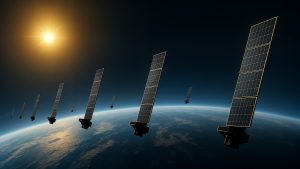
They work together under four working groups on solar cells (WG1), wireless power transmission (WG 2), in-space green propulsion (WG3) and system engineering (WG4). Through the analysis performed, a number of interesting use cases have emerged from the ongoing projects, such as space-based solar power (SBSP), active debris removal (ADR), In-space assembly and manufacturing (ISAM), in-situ resource utilization (ISRU), cis-lunar exploration, asteroid mining, etc.
My personal vision is that both solar energy and space debris become resources in space that we can use. I then asked the projects to identify innovative space applications and elaborate on a ‘bottom-up’ roadmap, that will be presented in the Strategic Portfolio Plan.
In terms of the future, what are you hoping to see or explore in the area of space debris and sustainability?
For space debris, in the long-term future I would like to see more technologies designed and developed for in-space recycling.
For mitigation, I would like to see an advancement in LiDAR technologies, for example, combined with event-based cameras for describing debris. Other important innovations include operations using AI machine learning navigation, and laser scanning of space debris and mapping.
In space debris remediation, I want to see propellant-less technologies that result in fuel cost savings. We must look at alternative options, such as using tethers or having laser-ablation experiments, for space debris removal.
My biggest long-term vision is to address how we can reuse and recycle space debris. For example, I would like to see more and more recycling technologies, methods, and processes for recycling (mechanical, space welding and additive manufacturing) or re-using of parts and components of defunct satellites or upper rocket stages. I would really like to see these types of technologies explored. Space debris is an issue, but it’s also a resource that we need to utilise.
Today, we have more than 12,000 operational satellites in Earth’s orbit. Whilst we are witnessing SMEs and startups designing, developing, and testing for the space debris domain, the markets are mainly institutionally driven at present. I would love to see technologies developed by SMEs and startups that also have commercial applications.
Having more than 15,100 tonnes of space objects creates not only increased collision avoidance manoeuvres for satellite owners, but shorter lifetimes of satellites due to fuel depletion and increased costs of space operations. Very soon, Earth’s orbit might become unusable. In two or three years’ time, I would like to have green, compact, interoperable, and affordable technologies for space debris mitigation, removal, and in-space recycling.
When considering future technologies, we must also think about the economic and strategic autonomy benefits. It’s very important to have technologies that are user-driven, affordable, green, and with future commercial traction.
Please note, this article will also appear in the 24th edition of our quarterly publication.