A 3D satellite monitoring system developed by British academics and engineers is set to become the first in the world to measure the condition of the Earth’s forests from space.
The 3D satellite will be crucial in helping us understand how tropical forests are changing so we can protect future generations from climate breakdown and accelerate the transition to net zero.
From conception to construction, the Biomass satellite has been built in the UK, capitalising on our industrial and academic expertise in space technology while opening up new opportunities to attract future backing from global investors.
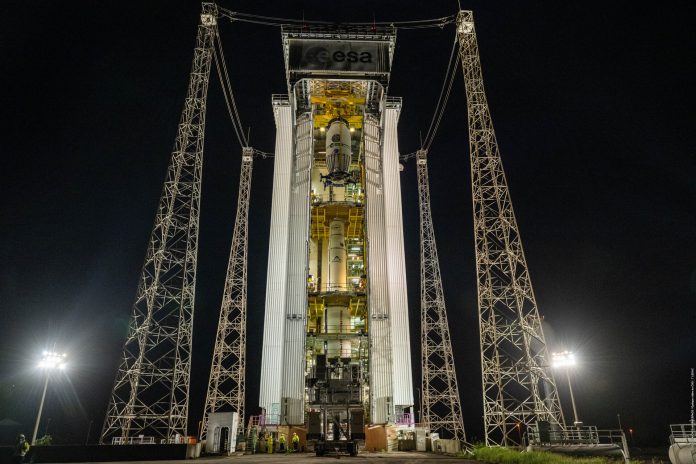
Its landmark launch will commence on 29 April.
Boosting the UK’s space workforce
Throughout construction, the satellite monitoring system has supported approximately 250 highly skilled jobs at Airbus UK, where it was manufactured, supporting the local economy and bolstering the UK’s 52,000-strong space workforce.
The Biomass satellite will launch from Europe’s spaceport in Kourou, French Guiana. Since 2016, the UK has won almost €91m in contracts for Biomass through its membership of the European Space Agency.
Conceived by University of Sheffield academic Professor Shaun Quegan, it is a hallmark of British innovation, facilitating jobs in everything from design and development to assembly, integration and test.
The Biomass satellite will create a 3D map of tropical forests after 17 months, then new (non-3D) maps every nine months for the rest of the five-year mission. This will provide insights normally hidden from human sight because of the difficulty in accessing these environments.
Minister for Space Sir Chris Bryant said: “The Biomass mission showcases British ingenuity at its very best, from conception in Sheffield to construction in Stevenage.
“Contributing to such a great extent to a European mission set to deliver vital global results is a testament to the UK’s industrial and academic expertise in space technology and will attract global investment into our vibrant space ecosystem.”
Monitoring Earth’s forests in more detail than ever before
The Biomass satellite’s revolutionary technology will help scientists capture vital data on the changes to carbon in forests as ecosystems are increasingly impacted by deforestation.
Both deforestation, which releases carbon dioxide, and forest growth, which soaks up CO2 from the atmosphere, are crucial parts of climate change.
Data on the biomass of tropical forests is very limited because they are difficult to access.
The satellite monitoring system will be able to penetrate cloud cover and measure forest biomass more accurately than any current technology, which only sees the top of the canopy.
Providing better data will help create a more accurate global carbon budget and a better understanding of carbon sinks and sources, which will help develop and implement effective strategies to achieve net-zero goals.
Observations will also lead to better insight into the rates of habitat loss and, as a result, the effect this may have on biodiversity in the forest environment.
The future of satellite monitoring and its impact on climate change
“The Biomass satellite represents a major leap forward in our ability to understand Earth’s carbon cycle,” commented Dr Paul Bate, CEO of the UK Space Agency.
“By mapping the world’s forests from space in unprecedented detail, it will provide critical insights into how our planet is responding to climate change, helping scientists, policymakers, and conservationists take informed action.”
Kata Escott, Managing Director of Airbus Defence and Space in the UK, added: “Biomass is a groundbreaking mission that will advance our understanding of how carbon is stored in the world’s forests – delivering crucial data in the fight against climate change.
“With more than 50 companies involved across 20 nations, the team in Stevenage has shown exceptional leadership in delivering this flagship ESA mission.”