The European Gravitational Observatory, home of the VIRGO detector, discusses the record detection of 200 gravitational wave signals and the value of collaboration in advancing our understanding of the Universe.
The Virgo, LIGO, and KAGRA collaboration recently announced the detection of its 200th gravitational wave signal, marking a significant moment in the field of gravitational wave astronomy.
Located in Cascina, Italy, the European Gravitational Observatory (EGO) is home to VIRGO, a state-of-the-art facility that utilises highly sensitive laser interferometry to capture the minute ripples in spacetime caused by cosmic events.
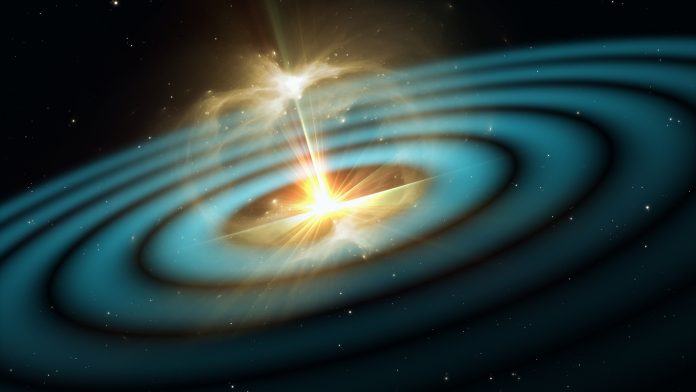
Gravitational waves are generated by some of the most violent and energetic processes in the cosmos, such as the collision of black holes or neutron stars. Their detection opens a new realm of astrophysics, allowing scientists to observe phenomena that are invisible to traditional optical telescopes.
We spoke with EGO to learn more about this significant achievement and how the insights gained from these observations promise to enrich our knowledge of the cosmos and contribute to ongoing discussions in astrophysics, cosmology, and fundamental physics.
The milestone
Reaching the milestone of 200 gravitational wave detections marks a transformative moment for gravitational wave astronomy. It demonstrates that we are now firmly in the era of routine detections, allowing us to shift from individual event analysis to population studies. This enables us to probe the astrophysical properties of compact objects like black holes and neutron stars, their formation channels, and their distribution in the universe. For the broader field of astrophysics, it opens a new window for understanding the dynamics of the cosmos, complementing traditional electromagnetic observations and enriching our models of stellar evolution, cosmology, and fundamental physics.
VIRGO: Key features and technologies
Virgo is a highly sensitive laser interferometer with 3km-long arms located in Cascina, Italy. Its core technologies include ultra-stable laser systems, precision mirror suspensions, seismic isolation platforms, and vacuum systems designed to minimise environmental noise. Virgo’s distinctive feature is its advanced mirror suspension system, known as the ‘superattenuator,’ which significantly reduces ground vibrations. Additionally, the detector is equipped with sophisticated data acquisition and noise reduction systems, which are essential to extract faint gravitational wave signals from a background of terrestrial noise.
Understanding gravitational waves through previous runs
Gravitational waves allow us to observe the universe in a completely new way – through the ‘sound’ of spacetime itself. They provide unique insights into phenomena invisible in traditional light-based astronomy, such as black hole mergers and the interiors of neutron stars. During the three previous observing runs (O1, O2, O3), we detected a wide range of events: binary black hole mergers, binary neutron star mergers, and neutron star–black hole systems. Notably, the detection of GW170817, the first binary neutron star merger observed in both gravitational waves and electromagnetic signals, launched the era of multi-messenger astronomy, confirming theories about kilonovae and the origin of heavy elements like gold and platinum.
Combining expertise: The value of collaboration
The global collaboration between LIGO (USA), Virgo (Europe), and KAGRA (Japan) significantly enhances both the sensitivity and sky coverage of the gravitational wave network. Each detector contributes unique orientations and geographic locations, which are crucial for triangulating the position of gravitational wave sources in the sky. Virgo, in particular, often plays a pivotal role in narrowing down the sky localisation, even when the signal-to-noise ratio is modest. KAGRA adds a vital fourth node, increasing detection confidence and enabling better parameter estimation. Together, the network can alert astronomers worldwide in real time, facilitating rapid follow-up observations across the electromagnetic spectrum.
Advancing multi-messenger astronomy
The current observational run continues to build on the foundation laid by GW170817. We have strengthened coordination with observatories across the world, enabling prompt follow-up of gravitational wave events. While no confirmed multi-messenger detections have matched the impact of GW170817 yet, several candidate events have triggered extensive electromagnetic and neutrino follow-ups, refining our understanding of source environments and emission mechanisms. The integration of gravitational waves into multi-messenger frameworks allows us to explore questions ranging from the speed of gravity to the equation of state of neutron stars.
Improving sensitivity and detection capability
Virgo has undergone significant upgrades to enhance its sensitivity, including improved mirror coatings to reduce thermal noise, upgrades to the laser system for better stability, and the implementation of squeezed light technology to lower quantum noise. We’ve also refined our seismic isolation systems and introduced advanced data analysis algorithms for better signal extraction. These improvements allow Virgo to detect weaker and more distant sources, increasing both the event rate and the scientific yield of each detection.
The role of community collaboration and data sharing
Community collaboration and open data sharing are foundational to our success. Prompt public alerts and open data policies allow scientists worldwide to contribute to the analysis and interpretation of gravitational wave events. This collaborative model has enabled rapid scientific breakthroughs, such as the kilonova identification in GW170817. It also fosters interdisciplinary research, bringing together experts in astrophysics, nuclear physics, cosmology, and data science to maximize the impact of every detection.
Upcoming research and observational goals
In the near term, Virgo and EGO aim to complete the ongoing observational run and prepare for the next one with further sensitivity enhancements. Beyond that, we are laying the groundwork for the next-generation detector, the Einstein Telescope, a European project that will push gravitational wave detection to unprecedented sensitivity levels. EGO will continue to serve as a hub for European gravitational wave research, expanding its role in education, outreach, and coordination of global efforts. As the field matures, EGO will be central to fostering innovation and international cooperation in gravitational wave science.
Please note, this article will also appear in the 22nd edition of our quarterly publication.