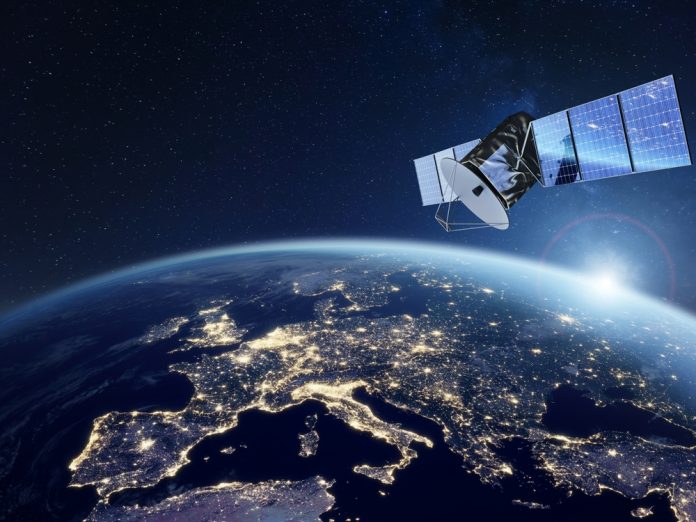
Satellite communications take centre stage as the UK Space Agency unveils new projects and investments at the UK Space Conference, highlighting the sector’s growing economic and national security role.
The UK’s booming space sector reached a new milestone today as the UK Space Conference opened in Manchester, bringing together government, industry, and international partners to shape the future of the space economy.
Marking the occasion, the UK Space Agency announced a wave of new investments aimed at strengthening satellite communications and space-based technologies.
Among the headline announcements: £4.5m in funding for cutting-edge projects pushing the limits of satellite-enabled 5G and 6G networks, and £1.6m to boost collaboration across the UK’s network of space clusters.
Space and Telecoms Minister Sir Chris Bryant emphasised the significance of the investment: “The innovations on display at the UK Space Conference demonstrate our strengths in key technologies that will shape Britain’s future, from seamless connectivity and data services to advanced manufacturing and launch.
“With satellite technologies supporting more than £450bn in annual economic activity, and crucial to climate monitoring and national security, it’s vital that we are coordinating right across government to unlock space’s incredible potential.”
Satellite communications identified as national priority
Satellite communications have officially been named one of five strategic space capabilities by the UK Government.
This recognition comes as new figures reveal the sector now supports activities valued at £454bn – equivalent to 18% of the UK’s GDP and a £90bn increase year-over-year.
To stay ahead in this fast-growing arena, the UK Space Agency has backed four pioneering projects:
- MDA Space UK’s SkyPhi mission: Aims to deliver 5G and 6G connectivity directly to smartphones via low Earth orbit (LEO) satellites.
- Orbit Fab’s Radical project: Developing in-orbit refuelling tech to extend the lifespan of telecom satellites.
- SSTL’s lunar communications system: Enabling robust communications for missions in deep space.
- Viasat’s GEO-LEO hybrid network: Designed to provide global 5G Direct-to-Device coverage.
These projects are set to cut infrastructure costs and boost global connectivity, cementing the UK’s place at the forefront of next-generation satellite communications.
Local clusters and national growth
Beyond new tech, the UK Space Agency is also fuelling regional innovation. A further £1.6m investment will support the UK’s growing space cluster network, helping regions share expertise and drive local economic development.
Manchester – a city with deep industrial roots and a growing space presence – was chosen to host this year’s event. The North West is home to over 180 space organisations and more than 2,300 professionals.
Local highlights include MDA Space UK’s expansion near Manchester Airport and the globally renowned Jodrell Bank Observatory.
Dr Paul Bate, CEO of the UK Space Agency, added: “The Industrial Strategy recognises we are living in the age of space, with satellite services hardwired into the UK economy and security.
“The UK Space Agency’s budget uplift to £682m will help us drive forward our work to build stronger national capabilities and catalyse more private investment, in close collaboration with the sector, wider government bodies and international partners.
“Together we are creating jobs, driving economic growth and tackling the key challenges. The UK Space Conference in Manchester is a powerful reminder that space is not just about looking up, it’s about moving forward.”
International missions and climate leadership
The UK is also taking a lead on global space initiatives. A landmark partnership between Viasat, SSTL, and MDA Space UK, revealed at the conference, will support the European Space Agency’s Moonlight programme.
This initiative aims to establish a commercial lunar communications and navigation system, laying the groundwork for future Moon missions.
On the environmental front, the UK will soon co-launch MicroCarb, Europe’s first satellite dedicated to measuring global atmospheric CO₂.
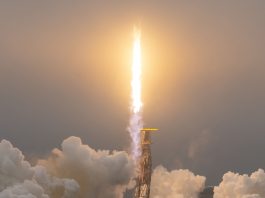
Set for launch on 25 July, this joint UK-French mission will play a vital role in tracking emissions and shaping climate policy.
Sector growth defies economic headwinds
According to the newly published Size and Health of the UK Space Industry report, the sector continues to expand despite broader economic challenges. In 2022/23, the number of UK space organisations grew to 1,907, with employment up by 7%.
UK Space Agency activities catalysed £2.2bn in investment and revenue last year. And for every £1 the UK invests in ESA programmes, the return to the domestic economy is £7.49, reinforcing the value of continued public funding.
In line with this momentum, the UK recently issued a £75.6m tender for its first mission to actively remove defunct satellites from orbit – part of a broader push to advance In-Orbit Servicing, Assembly and Manufacturing (ISAM) capabilities.
Inspiring the next generation
The conference also celebrates future talent, with appearances from British astronauts including Tim Peake and new ESA recruits Rosemary Coogan, John McFall, and Meganne Christian.
Their presence underscores the UK’s commitment to inspiring young scientists and engineers, while showcasing the nation’s broader space ambitions.