Having been awarded the ERA Chair in Foodomics, the University of Ljubljana discusses its work in metabolomics research in food and nutrition, addressing challenges in the food industry while promoting interdisciplinary collaboration and innovation.
The biotechnical faculty of the University of Ljubljana (UL BF) has been successful in the call for proposals of the European Research and Innovation Programme Horizon Europe and has been awarded the ERA Chair – Chair of Metabolomics in food and nutrition (Foodomics) project, which will establish a new interdisciplinary Centre for Metabolomics led by Prof Dr Urška Vrhovšek. The project is coordinated by Prof Dr Nataša Poklar Ulrih from UL BF, and in addition to researchers from UL BF, collaborators from the Faculty of Mathematics and Physics and Faculty of Medicine are also involved.
Food systems are affected by climate change, the loss of agricultural land and biodiversity loss, and need to respond to all these changes. Not surprisingly, the food industry faces many challenges, including maintaining food sufficiency, safety and quality, reducing food waste, improving nutrition and health, responding to changing consumer preferences and lifestyles (e.g. increasing demand for organic food), increasing urbanisation, and assessing the benefits and risks of new technologies.
The establishment of the Metabolomics Research Centre will catalyse and accelerate the integration of several excellent and existing research groups working together to create the critical mass of interdisciplinary knowledge needed to improve national food, nutrition and health research. The established network of researchers and professors will also integrate the knowledge generated into the educational process at UL.
FOODOMICS
The ERA Chair FOODOMICS aims to promote progress in science by developing new analytical methods and providing measurement services for plants, animals and humans, including the corresponding cell models. The ERA Chair will develop new holistic methods to improve knowledge at the molecular level of nutritionally and sensory important compounds. As a new centre of excellence, it will extend the reach of metabolomics to nutritional intervention studies, tracking the pathway of natural bioactive compounds in the human body, the study of human-microbial co-metabolism and the discovery and validation of biomarkers. This information will ultimately contribute to a better understanding of the impact of diet on human health, particularly obesity and diabetes.
Understanding the inter-individual variability of metabolism leading to different metabotypes (a necessary step towards personalised nutrition) and producing food with higher added value by applying new processing technologies to improve the bioavailability of micronutrients. The intended social impact and benefits of research in the ERA Chair FOODOMICS are good health and well-being of society, which will also be visible through the reduction of the healthcare burden.
The ERA Chair will also continue the study of the molecular mechanisms underlying the biosynthesis of secondary compounds in plants (e.g. polyphenols, vitamins), knowledge of which is essential for progress in the fields of bioactive compounds in food, biotechnology applied to plants, microorganisms and breeding programmes. This new knowledge can feed into the design and development of modules on platforms for the combinatorial biosynthesis of natural products, which may attract considerable interest and demand from the pharmaceutical industry (dietary supplements) and the food industry (functional foods and novel foods).
The ERA Chair will address structural integration and infrastructure building to generate a critical mass of state-of-the-art datasets suitable for use in multimodal experiments, striving for interdisciplinarity and respecting the principles of open science. Optimal dissemination, access and sharing of scientific knowledge through the tools of digital ERA will be used to facilitate access and sharing of knowledge and to pursue the principles of open science for citizens, civil society and end-users.
The ERA Chair project will enable us to create the new research centre as a part of the Biotechnical Faculty of University of Ljubljana (RRC UL).
Organisation of ERA Chair FOODOMICS
The ERA Chair will be established as a Research Centre included in the network of existing research ERA Chairs at the University of Ljubljana. The ERA Chair will be responsible for all activities to constitute the new centre. Prof Dr Urška Vrhovšek – ERA Chair holder and Prof Dr Nataša Poklar Ulrih will be responsible for the management and coordination of the project. Project management activities in FOODOMICS will include scientific and administrative management, guidance of decision making, contractual management, financial management, management of knowledge, coordination of communication, dissemination and exploitation activities and supervision of and compliance with ethical standards.
The main metabolomic topics detected in the field of food and nutrition at UL include: (i) metabolomics of food source production, (ii) metabolomics in food processing and (iii) nutritional metabolomics
Analytical platform
Through the analytical platform in FOODOMICS, the ERA Chair will connect all infrastructure/equipment available at UL, located at different faculties and at supporting institutions, to serve the research and innovation and educational and knowledge transfer aims of FOODOMICS through joint research collaborations (through new projects, PhD students, postdoc researchers, master students) to create the sustainability of the ERA Chair.
The focus is to introduce Data Management and Computational Biology and to exploit it via end-user industries. Metabolomic technologies produce large and complex datasets and therefore require organised, accessible, transparent and safe storage facilities (hosting both the data and the advanced software to process the raw data, assuring both interactive access, the output of required processed/cumulative data and long-term storage) and advanced statistical and bioinformatics tools to aid in their interpretation. FOODOMICS aims to create an infrastructure for the validation, conservation, analysis and display of metabolomics data and metadata.
Facilitating knowledge transfer
The project represents an important link in the transfer of knowledge and technologies between UL and relevant stakeholders, including industry, which is critical in relation to impact and sustainability. The knowledge which will be developed in FOODOMICS with the help of support institutions will be transferred to the industry and the general public. Knowledge and technology transfer will be managed in two ways (push & pull strategy): (i) FOODOMICS with the help of the UL Office for Knowledge Transfer and Intellectual Properties will promote new knowledge, developed at the faculties, to our relevant stakeholders and offer it for implementation (industry, healthcare); (ii) UL will identify the challenges of the industry and healthcare organisations and promote them among UL’s researchers in order to provide potential solutions for the challenges. UL will promote interdisciplinary collaboration among researchers and interdisciplinary solutions to the identified challenges. UL will take special care to support researchers in protecting the intellectual property, by identification of potential innovations; advising on patentability, conducting procedures for taking over service inventions, advising on strategy of legal protection of intellectual property, managing procedures for acquiring a patent or other industrial property right, marketing and identification of industrial partners, managing negotiations of the conclusion of license or assignment contracts, promoting creation of spin-out companies in cooperation with Ljubljana University Incubator (LUI), providing legal assistance in drafting Innovative Research and Development (R&D) project’s contracts, conducting training in the fields of legal protection and commercialisation of intellectual property, raising awareness about the significance of intellectual property within the UL.
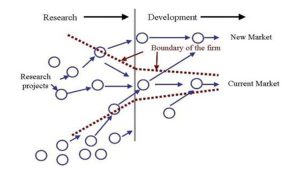
In addition, knowledge management will ensure the highest quality of project results and the widest possible reach, as well as enriching collaboration between knowledge actors through an open innovation model. Adherence to these principles supports knowledge discovery, innovation and knowledge integration and promotes data sharing and reuse across disciplines, as well as supporting new discoveries through the collection and analysis of multiple datasets. UL Alumni Clubs and the UL Career Centre will actively participate in networking activities. The increasing adoption of open innovation models makes it necessary to pay even more attention to networking between researchers and companies.
The concept of open innovation is the combination of internal and external ideas and internal and external routes to market to drive the development of new technologies. Companies have begun to look for other ways to increase the efficiency and effectiveness of their innovation processes. Participatory approaches and tools (inviting experts, focus groups, round tables, world café methods, etc.) are available to all stakeholders and are strongly encouraged to set objectives at each stage of the project. The use of a FOODOMICS knowledge base will make it possible to publish various articles, research results and other knowledge so that everyone can access it. It will also help in reviewing the progress of the project. The combination of virtual training courses, webinars and workshops will improve the knowledge of both parties and enable them to utilise the collected knowledge for the project. Joint conferences are also beneficial for both parties as they serve learning, networking and exchange. (iv) The combination of these activities will bring people from academia and industry together for the benefit of the project. It will promote knowledge sharing between both sides and will be very helpful for the purpose of the research.
Measuring impact
The overall expected impact is a measurable and significant improvement in the overall scientific and innovation capacity (excellence) of UL and its ability to perform metabolomics-based analysis as relates to the food research, including food sources, processing and diet for humans, in establishing and reinforcing collaboration amongst Faculties. This will have not only strengthened the UL nationally and in the Western Balkan region, but also within Europe as a whole (widening participation).
Such improvement will be measured through visible research collaboration with leading institutes (number of the new national and international collaborative projects), increased research and educational network, and through an increase in the number and quality of peer-reviewed publications (based on the merits of individual articles and other new research assessment guidelines developed by the EU research evaluation reform) in three major research fields.
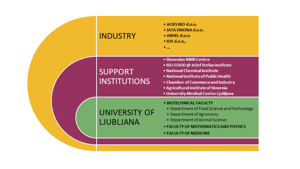
Furthermore, within the economic impacts, through the project consortium, an important improvement of the Research, Development and Innovation (RDI) capacity within the food processing industry is expected through access to novel services and key support to new food products and food supplements design. For this, support for the design of novel personalised food products targeted to people with special nutritional needs (food industry and dietitian services), as well as novel or more precise means of diagnostics, monitoring and nutritional management of food-related diseases (medical science) will provide an invaluable access to a metabolomic profiling platform.
Beyond the established consortium, wider impacts enable similar support possibilities for products/services tailored to different nutritional preferences (meat-free diets, alternative proteins, diets for elite athletes, etc.). Obtaining an highly coordinated expert network and sophisticated analytical services in metabolomics in food and nutrition will lead various public bodies, such as local and national authorities, as well as international organisations to more focused/optimised public health strategies and intervention measures (guidelines, standards and regulations for harmonised risk assessment and management at national and European level) and for the development of improved monitoring (early warning) tools and more effective use of resources (water reuse, food by-products, food waste), and on a wider scale enable also better environment and ecosystem management approaches.
Furthermore, due to a better understanding of the effect of dietary habits as well as food composition, an additional expected social impact lies in higher awareness and better attitude towards the food culture. Fostering metabolomics in the ERA Chair FOODOMICS ties in directly with the key strategic orientations (KSOs) of Horizon Europe, especially KSO A through enabling emerging technologies and value chains, KSO B through sustainable food systems, KSO C for circular and clean economy and KSO D for food health and ever-improving high-quality and accessible healthcare, as well as strengthening resilience for emerging threats.
Access and utilisation of a strong food metabolomics network will catalyse several UN sustainable development goals (SDGs). For example, improving nutrition and promoting sustainable agriculture (SDG2), metabolomics holds the power to reveal the value of wholesome diets, as well as diverse sustainably produced food. For ensuring healthy lives and promoting well-being for all, metabolomic profiling of food and nutritional metabolomics enables unlocking efficient diagnostics and therapeutic approaches and respective individualised diets or food products, also fostering innovation through. The realisation of food processing residues and side-streams into high-added value and/or high-nutritional value feedstocks by their in-depth compositional understanding is a strong drive for food waste reduction and sustainable consumption and production.
Please note, this article will also appear in the 24th edition of our quarterly publication.