


Innovation News Network brings you the latest research and innovation news from the fields of science, environment, energy, critical raw materials, technology, and electric vehicles.

Pioneering the energy transition with revolutionary heat storage systems
EIRES researchers have developed a way to utilise heat storage in a safe, sustainable, and loss-free way.
Efficient storage and transport of heat is one...
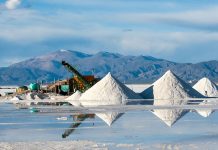
Lithium mining in Argentina poised to dominate the global market
Argentina Lithium & Energy Corp shares the exciting results from their 64,000 hectares lithium mining projects in Argentina.

Energy output of active galactic nuclei underestimated by scientists
Active galactic nuclei are even more powerful than previously thought, as a study has revealed that dust dimming was not take into account.

Using underwater vehicles to identify changes in the ocean environment
Using autonomous vehicles, a scientist is mapping changes in the ocean environment, including tropical and temperature changes.

Lithium prices continue to rise – LPI explains why
Learn about the the challenges facing the lithium market as demand soars and material costs climb with Lithium Power International.

UK Energy Demand Observatory and Laboratory receives £8m funding
An £8.7m project will pioneer an Energy Demand Observatory and Laboratory (EDOL) in the UK to help achieve net zero carbon emissions.

Efficiency of flapping drones to be increased with wing-folding research
According to a recent study led by Lund University, wing-folding could be the next step in increasing the efficiency of flapping drones.
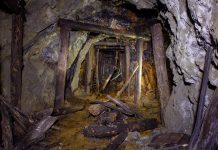
Abandoned mines could soon become energy storage hubs
A new IIASA-led project will transform decommissioned abandoned mines into long-term energy storage solutions.
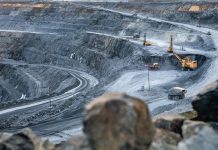
LPI commences drilling at Greenbushes lithium project
Lithium Power International has commenced drilling at its East Kirup lithium prospect, part of the Greenbushes project in Western Australia.
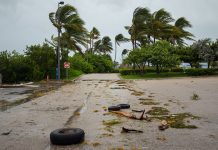
Monitoring climate-induced natural hazards with Machine Learning
Climate induced-natural hazards can be better tracked by combining satellite technology with Machine Learning.