Daniel Smith, Founding Director of AstroAgency and Fire Arrow & Trade and Investment Envoy for Space at the Scottish Government, discusses recent sustainability initiatives to address the climate emergency in the UK space sector and beyond.
The global space industry is growing at an incredible rate, and the value of space technology in our daily lives is indisputable. Yet, like all other industries, there is also an increasing urgency to adopt more sustainable practices, as governments aim to achieve net-zero carbon emissions and reduce greenhouse gas emissions.
This challenge also presents an opportunity for the UK space sector, given its unique position, to contribute to tackling the climate emergency.
By embedding meaningful, sustainable practices now and exploring promising new technologies, the insights from space will help all sectors better understand and respond to the environmental challenges ahead.
The growing number of satellites in space
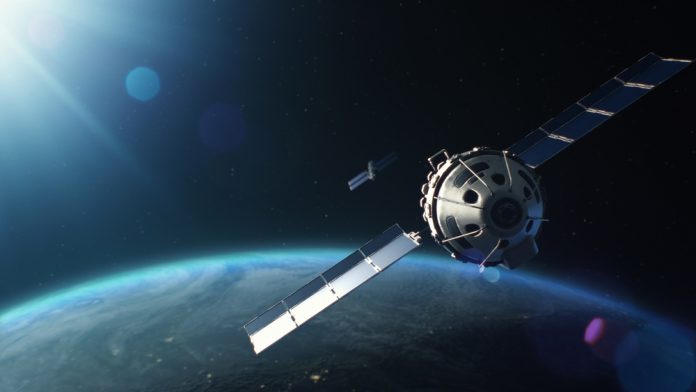
In just 10 years, the number of satellites orbiting Earth has leapt from 1,000 to 10,000. Many send valuable data about our planet, including detecting crop diseases and moisture stress before they are visible to the human eye, warning personnel monitoring infrastructure of potential landslides, informing defence strategies, and flagging illegal activities such as fishing, mining, and even human trafficking.
The space sector’s innovations underpin almost every other industry across the environment, the economy, and society. Earth Observation (EO) from satellites is driving a huge impact on daily activities, logistics, security, and environmental efforts. Two-thirds of the United Nations Framework Convention on Climate Change (UNFCCC)’s 55 Essential Climate Variables are either exclusively or largely measured by satellites.
Yet more satellites mean increased congestion in parts of Low Earth Orbit (LEO), contributing to overcrowding and concerns about space debris. The industry must strike a balance between providing these essential insights while ensuring space remains a safe ecosystem to operate in, without harming our Earth in the process.
Growing sustainability initiatives in the space sector
Fortunately, there’s already momentum for a greener sector. Beyond exciting space initiatives such as the Astra Carta and the Earth and Space Sustainability Initiative (ESSI), the European Space Agency (ESA) has launched initiatives, including the Statement for a Responsible Space Sector, with AstroAgency as the UK’s first commercial signatory collaborating with the ESA to onboard dozens of more companies at Space-Comm Europe.
Meanwhile, the US-based Secure World Foundation (SWF) organises annual conferences focusing on this topic. It was at a SWF conference that AstroAgency unveiled its work on an industry-first, national space sustainability strategy, mapping out work packages that cover a period of more than twenty years.
This is just the beginning of driving positive change. The next great leap is also grounded in technological innovation and industry-wide accountability, alongside a sustained effort to implement effective space sustainability practices across the entire sector.
Embracing the full value chain
Thinking holistically about net-zero goals means considering the entire value chain, from mission design to data access. Improvements can be made at every stage, from manufacturing satellite components to launch methods and locations, and how the yielded data is acted upon.
A single rocket launch has a carbon footprint—but so do associated activities, such as spectators’ flights and extra fuel consumption from ship rerouting. Luckily, we are seeing the beginnings of a change in mindset on this front.
Investing in R&D and industry-wide collaboration
Smaller players are at the forefront of change. European entrepreneurs and startups are driving innovation in critical areas, such as space domain awareness, satellite refuelling, and active debris removal.
Last year, the UK Space Agency, which has a growing Space Sustainability division, announced £33m in funding to invest in high-potential technologies, drive innovation, and propel growth across the UK space sector.
£24m of this funding is distributed across eight projects, including:
- Orbit Fab’s solution for satellite refuelling and tackling single-use satellites.
- Lúnasa Space’s endeavour to ensure satellites dock safely in response to increasing space debris.
Moreover, Scotland is building more small satellites than anywhere else in Europe. Companies like Glasgow-based Spire Space Services have built and launched payloads that track debris in orbit and provide vital insights around global soil moisture levels, defence, security, and forest fires. Their aviation data helps airlines optimise flight paths and reduce fuel consumption.
Another recent arrival is PCI Geomatics, DBA CATALYST, a Canadian geospatial company that now has offices in Edinburgh and Harwell. CATALYST supports everything from vegetation management to landslide warnings to flagging infrastructure weaknesses.
Outside UK space, companies like Hydrosat are developing satellites that utilise cutting-edge thermal infrared technology and proprietary algorithms, validated through field testing, to provide timely information for more efficient irrigation and crop management practices.
More than 90 countries are stepping up to the global commercial space stage. However, it’s in Scotland where my own space sustainability journey began, alongside members of our 180+ space business ecosystem. Underpinned by academia, we recognised an opportunity in 2020 to embed more sustainable practices from the get-go.
Since then, Space Scotland’s Environmental Task Force (ETF) has established a collaborative community that connects industry, government, and academia in designing sustainable initiatives. In 2022, the ETF was supported by Scottish Enterprise, AstroAgency, and Optimat to produce the world’s first space sustainability ‘Roadmap’, which is used by members every week as a blueprint in guiding their valuable, voluntary, and open-source contributions to this globally relevant topic.
Perhaps the most exciting part of this year for followers of grassroots space sustainability initiatives will come at Space-Comm Scotland in December, when the ETF will provide an in-depth update on their progress as the strategy transitions from short to medium-term tasks.
Looking at launch and LEO sustainability initiatives
Satellites are becoming smaller, cheaper, and longer-lasting; however, what about launch vehicles? Industry giants like SpaceX and Honda have been making headlines with their launches, but the UK has also achieved exciting milestones.
Scottish-based Skyrora has developed Ecosene, a rocket fuel synthesised from unrecyclable plastic. Working with chemists at the University of Edinburgh and circular-economy NGOs, Skyrora engineers have developed a solution that reduces greenhouse gas emissions by 45% compared to traditional kerosene. Skyora also addresses manufacturing emissions by 3D printing rocket engines and recovering up to 80% of rocket components post-launch.
Orbex Space, meanwhile, has unveiled plans to use bio-propane that produces up to 96% lower carbon emissions than comparable space launch systems using fossil fuels. Additionally, spaceport design and delivery experts Fire Arrow have emphasised their aims to help international launch sites develop in a manner that is sustainable, responsible, and forward-thinking.
Combined with efforts being made by the sites where rockets will launch from, things look promising. SaxaVord Spaceport has also been making significant strides to embed greener approaches in its spaceport operations, and Orbex’s Sutherland spaceport, although recently paused, had positioned itself as the “greenest spaceport on the planet.”
LEO also needs to be considered in sustainability efforts as an integral part of the ecosystem, or as Professor Moriba Jah of the University of Texas at Austin often champions, an extension of Earth’s environment. Companies such as Spaceflux, who specialise in Space Situational Awareness (SSA) and Space Domain Awareness (SDA), have been pioneering cutting-edge technologies to monitor and manage the increasing congestion in Earth’s orbit, via a global network of advanced optical sensors, AI-powered analytics, and Short-Wave Infrared (SWIR) tracking of space objects.
Bold innovation and the leveraging of environmentally conscious technologies are key to creating a greener space landscape. We also need to embed sustainability in every stage of the value chain, from design and launch to deorbit and data, for long-term efficacy. Sustainability must become the norm, not the exception, limited to emerging space players and nations.
About Daniel Smith
Daniel Smith is the founder of AstroAgency, the world’s first space-focused strategic marketing firm with more than 70 clients across industry, government and academia. He serves as Trade & Investment Envoy for Space to the Scottish Government and has been a founding director of five space companies. He sits on the UN High-Level Expert Group on Data & Frontier Technologies and the UK Space Agency Sustainability Working Group. Daniel is also a Producer of the AppleTV documentary Fortitude and a Trustee of Dnipro Kids, a charity supporting Ukrainian orphans. His passion is bridging technical innovation with public understanding to promote space as a vital tool for life on Earth.